
Utah canyon BASE jump kills 2, including extreme athlete Andy Lewis
Utah Canyon BASE Jump Tragedy Claims Lives in Utah Canyon
Utah canyon BASE jump kills 2 including – On a Sunday in June, a dramatic BASE jumping incident in a Utah canyon resulted in the tragic loss of two individuals, one of whom was Andy Lewis, a renowned extreme athlete. The Grand County Sheriff’s Office confirmed the incident, which occurred at Mineral Bottom, a secluded desert region straddling the Utah-Colorado border. Lewis, who had gained fame for his daring feats in the world of extreme sports, was among those who perished during the accident. His co-owner and close friend, as noted by Aerial Arts Moab, a company he partnered with, was also involved in the tandem jump that led to the fatalities.
A Legacy of Risk and Skill
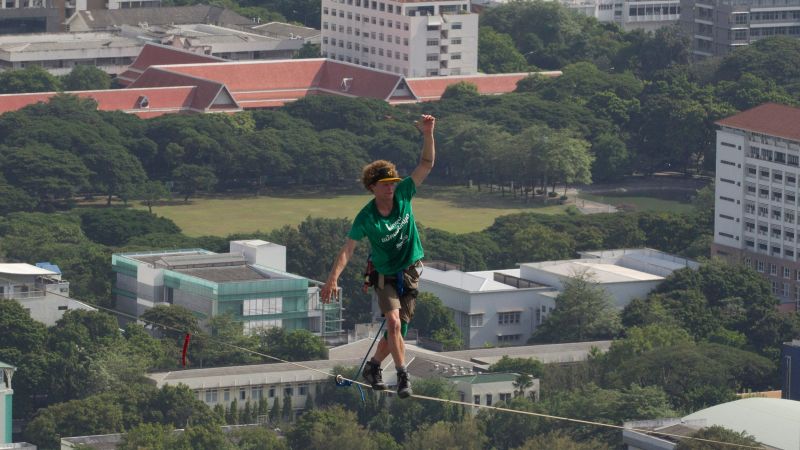
Andy Lewis was not only a professional BASE jumper but also a pioneer in slacklining and tricklining, disciplines that blend high-wire acrobatics with aerial movement. His reputation for pushing boundaries within the sport was well-known, particularly among peers who admired his willingness to take calculated risks. John McEvoy, a BASE jumping instructor from Twin Falls, Idaho, who had trained with Lewis, described the athlete as someone with “a natural affinity for danger” and an unmatched ability to perform in extreme conditions. “He was fearless in a way that others found admirable,” McEvoy said, highlighting Lewis’s years of dedication to mastering the sport.
“He had an incredible level of athleticism and skill that was developed over years of practice. But then he would take an incredible amount of risk.”
While BASE jumping is inherently perilous, Lewis’s approach was distinct. He often executed jumps in tighter spaces or delayed parachute deployment, a practice that set him apart from more conservative competitors. His business, BASE Jump Moab, catered to novices, offering tandem jumps where participants were harnessed to an experienced guide. Despite the inherent risks, McEvoy noted that these jumps are designed to be safer, though they remain a point of debate within the community.
A Life of Laughter and Magic
The second victim, Danny Joe Kregle, was a 68-year-old father and grandfather whose life was marked by creativity and humor. A family member, Sydney Laverty, shared that Kregle was “a constant source of joy,” often using his talents to entertain others. His passion for magic tricks, especially those performed with his granddaughter, was a cherished aspect of his personality. “One of his greatest joys was performing magic tricks alongside his granddaughter,” Laverty recounted, underscoring the blend of his adventurous spirit and family-oriented nature.
Kregle’s involvement in the jump, alongside Lewis, highlighted the camaraderie that defines many BASE jumping partnerships. The tandem system, which links two individuals via a shared harness, requires precise coordination and trust. However, the accident serves as a stark reminder of the sport’s unpredictability. Emergency responders were called to the scene after reports of injuries, but the outcome was fatal for both participants.
From Super Bowl Stunts to High Altitude Acts
Lewis’s career reached a global stage when he appeared in Madonna’s 2012 Super Bowl halftime show. Dressed in a Roman toga, he performed on a slackline suspended above the stage, executing flips and tricks with the grace of a seasoned acrobat. The spectacle, which showcased his unique blend of athleticism and artistry, made him an overnight sensation. Shortly after, he made a humorous appearance on Conan O’Brien’s late-night show, joking about the surge in media attention: “My phone actually rang itself to death three days in a row.”
His career was also defined by record-breaking feats. In 2011, Lewis set a Guinness World Record for slackline surfing, demonstrating his balance on a narrow line above China’s Diaoshuilou waterfall. The same year, he became a four-time world champion in competitive slacklining, solidifying his status as a trailblazer in the field. In 2014, he completed a remarkable stunt by walking a slackline between two hot air balloons soaring over the Nevada desert, an event that further cemented his reputation as a fearless performer.
The Debate Over Tandem Jumps
BASE jumping, which involves leaping from fixed objects like cliffs, bridges, or buildings, carries significant risks. A study published in 2007 in a medical journal highlighted that the sport’s injury or death rates are five to eight times higher than skydiving. Lewis, who was aware of these dangers, often spoke about the thrill of the activity. In a 2025 interview with documentary filmmaker Ella Warnick, he remarked: “It’s weird to think about how many people are dead, because it’s like a normal thing.”
Tandem jumps, like the one that killed Lewis and Kregle, are a common method for introducing beginners to the sport. While they provide a controlled experience, they also amplify risk due to the shared parachute. McEvoy emphasized the controversy surrounding this practice: “Within BASE, it’s a very controversial topic. There’s a lot of people who say it’s the stupidest thing in the world and others arguing: ‘No, we’re giving people the experience of their lives.'”
A Global Sport with Local Tragedy
Though BASE jumping has a worldwide following, the accident in Utah underscores its local impact. According to data from BASEaddict.com, the sport has claimed 540 lives globally since 1981, with 30 fatalities in 2025 alone. Notable victims include Dean Potter and his climbing partner Graham Hunt, who perished in a wingsuit flight over Yosemite National Park in 2015. Lewis’s death adds to this list, reminding enthusiasts of the dangers that accompany their passion.
The tragedy has left the community in shock, with many reflecting on Lewis’s contributions to the sport and his personal life. His business, BASE Jump Moab, remained unresponsive to calls, texts, and social media messages following the incident. The company’s promotional videos, which depict the beauty and exhilaration of BASE jumps, now serve as a poignant reminder of the risks involved. For those who knew him, Lewis’s passing is not just a loss for the extreme sports world but a personal blow to friends and family who cherished his spirit.
As the canyon winds carry the echoes of the jump, questions remain about what went wrong. The tandem system, while designed to make the sport accessible, can also be a double-edged sword. Lewis’s ability to balance skill with audacity made him a legend, but his death highlights the fine line between innovation and peril. For now, the Utah incident stands as a testament to the risks and rewards of pushing human limits in the most breathtaking of environments.
