
Tulsi Gabbard is resigning as director of national intelligence
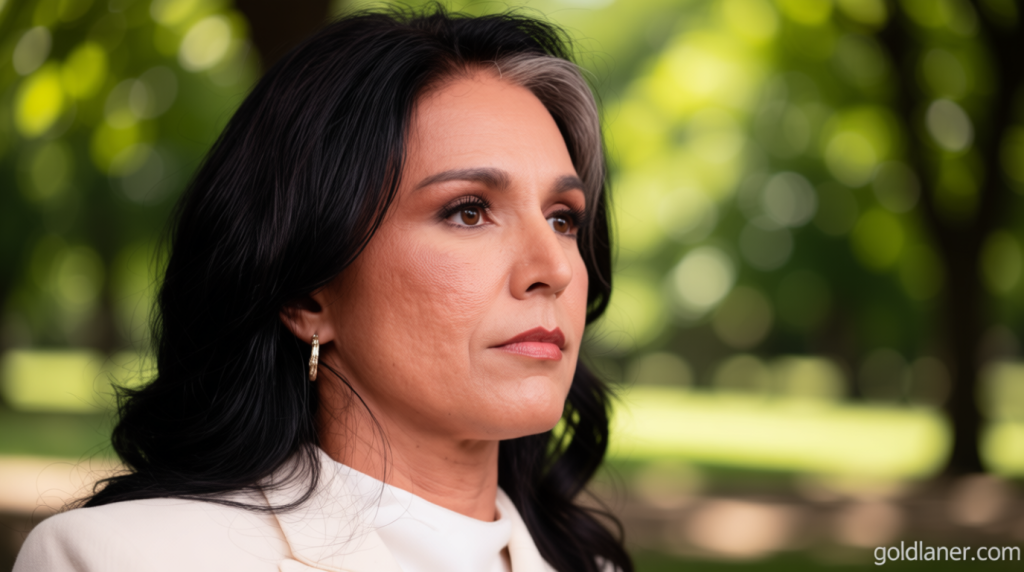
Tulsi Gabbard is resigning as director of national intelligence
Tulsi Gabbard is resigning as director – Tulsi Gabbard, the head of the U.S. Intelligence Community, has confirmed her decision to step down from the position, effective June 30, 2026. In a letter addressed to President Donald Trump, she shared the news of her impending departure, citing the recent diagnosis of her husband with a rare form of bone cancer. The announcement, made on Friday, marks the end of her tenure in the role, which has been a subject of both praise and criticism throughout her time in office.
A Personal Reason for Resignation
Gabbard’s resignation comes as a result of her husband, Abraham, being diagnosed with an uncommon type of bone cancer. In her letter to the president, she stated that the condition has placed significant demands on their family, requiring her to prioritize his care. “My husband, Abraham, has recently been diagnosed with an extremely rare form of bone cancer,” she wrote, emphasizing the challenges he faces in the coming weeks and months. “At this time, I must step away from public service to be by his side and fully support him through this battle.”
Trump swiftly responded to Gabbard’s decision, offering public acknowledgment of her contributions. In a post on Truth Social, he praised her dedication and highlighted the role of Aaron Lukas, the Principal Deputy Director of National Intelligence, who will serve as the acting director following her departure. “Her wonderful husband, Abraham, has been recently diagnosed with a rare form of bone cancer, and she, rightfully, wants to be with him, bringing him back to good health as they currently fight a tough battle together,” Trump wrote, adding that Gabbard has “done an incredible job, and we will miss her.”
Rumors and Denials
White House officials had been aware of discussions about Gabbard’s potential exit for weeks. However, two weeks prior to her formal announcement, she denied any plans to leave the administration. This denial came amid growing speculation, as some insiders suggested her departure might be imminent. The final confirmation came after a meeting between Gabbard and Trump in the Oval Office, where she delivered her resignation letter to the president.
During this meeting, Gabbard expressed her gratitude for the opportunity to serve, while underscoring the personal circumstances that necessitate her exit. She emphasized that her husband’s diagnosis had made it difficult to continue in his role, stating, “I cannot in good conscience ask him to face this fight alone while I continue in this demanding and time-consuming position.” This sentiment reflects the emotional toll of her responsibilities, which have extended beyond her professional duties to impact her family life.
Contradictory Messaging and Controversies
Throughout her tenure, Gabbard’s leadership has been characterized by mixed messages, particularly concerning the U.S. military actions in Iran. Her statements on the conflict often diverged from the White House’s narrative, leading to tensions within the administration. For instance, in early 2026, she asserted that Iran’s nuclear enrichment program had been “obliterated” by the U.S. strikes launched in June 2025 under Operation Midnight Hammer. This claim contrasted with the administration’s insistence that Iran remained a major threat, capable of resuming its nuclear ambitions after the initial attacks.
“As a result of Operation Midnight Hammer (in June), Iran’s nuclear enrichment program was obliterated. There has been no efforts since then to try to rebuild their enrichment capability.”
Her remarks to the Senate Intelligence Committee further highlighted this divergence. Despite her prepared testimony suggesting Iran’s nuclear program was in disarray, she did not read this portion during the hearing. When pressed for an explanation, she cited time constraints, stating that her “time was run” due to the demands of her position. This moment of hesitation underscored the growing rift between her views and those of the White House, which had long criticized her as being “off message.”
Indeed, Gabbard’s communication style had drawn criticism from senior White House officials, who viewed her as inconsistent with the administration’s broader strategy. In June 2025, as the U.S. prepared to strike Iranian nuclear sites, she posted a video on social media warning that the world was “closer to the brink of nuclear annihilation than ever before.” She blamed “political elite and warmongers” for stoking tensions between nuclear powers, a stance that many in the White House interpreted as a critique of Trump’s decision to support Israel’s military campaign against Iran.
“I don’t care what she said. I think they were very close to having it.”
Trump’s frustration reached a peak earlier that month when Gabbard’s testimony to Congress appeared to contradict the administration’s narrative. He publicly rebuked her, suggesting that her remarks lacked clarity and undermined the official storyline. This incident was not isolated; throughout the war, Gabbard’s statements frequently challenged the White House’s justifications for the conflict, creating an atmosphere of uncertainty within the intelligence community.
A Pattern of Departures
Gabbard’s resignation is the latest in a series of departures from the Trump administration’s Cabinet. Following the ousters of Homeland Security Secretary Kristi Noem and Attorney General Pam Bondi, her exit adds to the ongoing reshuffling of key roles. This trend has been driven by a combination of policy disagreements and internal politics, with Gabbard’s leadership being scrutinized for its alignment with the administration’s priorities.
Her tenure at the Office of the Director of National Intelligence (ODNI) has been marked by efforts to enhance transparency and reform the intelligence community. However, these efforts have been overshadowed by her contentious relationship with the White House. Despite her commitment to facilitating a smooth transition, her departure has raised questions about the stability of the intelligence leadership during a critical period of geopolitical tension.
As the U.S. continues its military campaign in Iran, Gabbard’s resignation highlights the challenges of balancing national security responsibilities with personal obligations. Her decision serves as a reminder of the human elements behind high-level political decisions, underscoring the sacrifices made by public servants in times of crisis. The intelligence community will now move forward with Lukas assuming the role, as the administration seeks to stabilize its leadership amid ongoing global conflicts.
Legacy and Impact
Gabbard’s time as director has left a complex legacy. While she has championed transparency and sought to modernize intelligence operations, her disagreements with the White House on key issues such as Iran have occasionally created friction. Her resignation, however, is seen as a necessary step to ensure her husband receives the care he needs, reflecting the personal stakes involved in her decision.
As the intelligence community navigates the aftermath of her departure, the focus will shift to the challenges of maintaining cohesion and direction. Gabbard’s exit, coupled with her earlier criticisms of the administration’s actions, has positioned her as a figure who has both supported and questioned the national strategy. Her story, therefore, encapsulates the intersection of personal sacrifice and political responsibility, offering a glimpse into the lives of those who serve in high office.
With her resignation, the ODNI will undergo a leadership change that may reshape its approach to intelligence operations. While her time in the role has been fraught with challenges, her dedication to the mission remains evident. The intelligence community, now led by Lukas, will carry forward the initiatives Gabbard initiated, even as they address the controversies that defined her tenure. This transition marks a new chapter for the agency, one that will be shaped by the evolving dynamics of the global landscape and the ongoing U.S. engagement in the Middle East.
