
Dissent grows against deal in Iran – but the regime is likely to have final say
Dissent Grows in Iran Over U.S. Agreement – Regime Likely to Assert Final Authority
Dissent grows against deal in Iran – As the United States and Iran approach a potential deal to resolve a conflict that has persisted for over three months, internal tensions within Iran are intensifying. While the agreement is seen as a critical step toward easing hostilities, certain groups within the country are pushing back against its terms. Hardline factions, including prominent figures in Iran’s political and military circles, have been using state-controlled media to voice their disapproval of the proposed agreement. Protests and public demonstrations have also emerged, with participants questioning the concessions made by Iranian negotiators. Despite these challenges, the regime remains poised to make the final decision, with President Donald Trump suggesting the deal might be finalized on Sunday—his 80th birthday. However, no formal confirmation has yet been issued by Tehran, leaving uncertainty about whether a consensus has been reached.
Hardliners Target the Memorandum of Understanding
Recent days have seen a surge in criticism from hardliners, particularly those aligned with the “Endurance Front,” a faction that views itself as a defender of the 1979 Islamic Revolution’s core principles. This group, which opposes Western influence, argues that the agreement risks undermining Iran’s sovereignty. Their concerns center on perceived losses in nuclear capabilities and the potential for U.S. dominance in key strategic areas, such as the Strait of Hormuz. While the full text of the agreement has not yet been made public, the Endurance Front has been vocal in its objections, leveraging media platforms to amplify its message.
“If Iran signs the agreement, we will effectively become a colony of the United States,” said Mahmoud Nabavian, a prominent hardliner and former member of the negotiation team. “Even the Strait of Hormuz will be open to Israel under this deal.”
Nabavian’s comments reflect a broader sentiment among opponents who believe the agreement could weaken Iran’s geopolitical standing. They claim the U.S. is pushing for Iran to accept conditions that prioritize American interests over national sovereignty. This perspective has gained traction in rallies where participants have called for the resignation of key negotiators. One such demonstration occurred outside the foreign ministry, targeting Abbas Araghchi, Iran’s top diplomat, as a symbol of the regime’s willingness to compromise.
Supreme Leader’s Call for Unity Amid Rising Criticism
In response to the growing dissent, Supreme Leader Mojtaba Khamenei has urged media outlets to avoid highlighting the agreement’s perceived weaknesses. A message he posted in March was recently reposted by social media channels under his authority, emphasizing the need for cohesion. This directive has been echoed by Iranian state media, which has sought to downplay internal disagreements. The semi-official Tasnim news agency criticized the “ugly insults” directed at officials, even though they were primarily from a small, vocal minority.
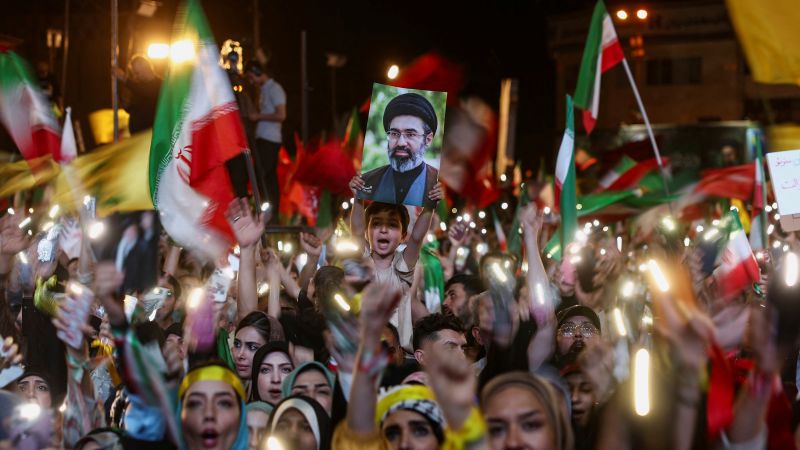
Despite these efforts to unify, some speakers at public rallies have reportedly ignored Khamenei’s instructions. The Javan newspaper, often associated with the Islamic Revolutionary Guard Corps (IRGC), accused these individuals of spreading “schism and division among the people.” The division is particularly visible in Tehran, where Saturday’s protests saw demands for the resignation of both Abbas Araghchi and Mohammad Bagher Ghalibaf, the nation’s chief negotiator. The chants at these gatherings referenced the assassination of the previous Supreme Leader, Khamenei’s father, which occurred in February and is seen as a rallying point for those opposing the deal.
Internal Dynamics and the Path to Compromise
Tehran has been navigating a complex political landscape, balancing negotiations with the U.S. while addressing the concerns of diverse factions. The inclusion of Endurance Front members in talks held in Pakistan last April suggests the regime is making a deliberate effort to present a united front. However, the group’s continued pushback indicates that internal divisions may still hinder the process. Iranian officials have stressed that dissent should not overshadow the broader goal of securing a favorable outcome, even as the agreement’s terms are debated.
Trump’s anticipation of a Sunday signing has added pressure to the situation. While the president’s confidence in the deal is clear, Tehran’s hesitance to confirm a final text highlights the challenges of internal consensus. The proposed agreement, which aims to lift sanctions and release frozen assets, is seen by some as a necessary step to stabilize the economy. Yet, others fear it could lead to long-term dependency on U.S. support. This debate underscores the tension between pragmatic concessions and ideological resistance within Iran’s leadership.
Fractured Unity and the Risk of Sabotage
Amid the growing unrest, officials close to President Masoud Pezeshkian have warned against creating “artificial narratives” that could jeopardize the deal. Ali Rabiei, one such advisor, emphasized the importance of maintaining a unified stance, even as protests and media critiques intensify. The regime’s ability to hold the final say may depend on its capacity to manage these internal pressures. While the Endurance Front and other hardliners have mobilized against the agreement, their influence remains limited to specific factions.
Still, the stakes are high. If the agreement is signed, it could mark a significant shift in Iran’s foreign policy, aligning the country more closely with U.S. interests. Conversely, failure to reach a deal might prolong the conflict, potentially leading to renewed tensions. The Endurance Front’s role in amplifying opposition raises concerns about whether their efforts could derail the process. However, the regime’s control over key institutions and decision-making processes suggests it may prevail in the end.
The situation reflects a broader struggle within Iran’s leadership. While the administration seeks to secure economic relief, the hardliners aim to preserve the country’s revolutionary identity. The balance between these competing priorities will determine the agreement’s success. As the clock ticks toward the projected signing date, the regime’s ability to unify its factions will be crucial in shaping the deal’s future.
With the agreement’s details still under scrutiny, the narrative surrounding it continues to evolve. The Endurance Front’s criticism, the Supreme Leader’s calls for unity, and the regime’s cautious approach all contribute to a complex political landscape. While dissent is growing, the ultimate authority rests with Tehran’s leadership, which has consistently asserted its control over the process. The coming days will reveal whether this internal cohesion can withstand the pressures of external diplomacy and domestic opposition.
