
McConnell hospitalized and ‘receiving excellent care,’ spokesperson says
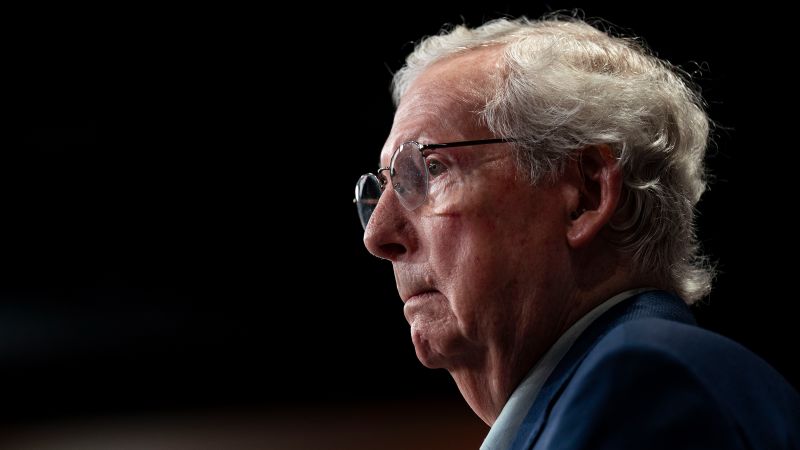
Mitch McConnell Hospitalized, Receiving ‘Excellent Care’
McConnell hospitalized and receiving excellent care – On Sunday morning, Senator Mitch McConnell, the Republican leader from Kentucky, was admitted to a hospital, as confirmed by his spokesperson. David Popp, the senator’s official representative, stated that McConnell is undergoing treatment and receiving ‘excellent care.’ The update provides no details about the specific reason for his hospitalization or the severity of his condition, focusing instead on the current situation. McConnell, who turns 84 this year, has been a prominent figure in American politics for decades, but recent health challenges have raised questions about his ability to continue his role in the Senate.
Health Issues and Medical History
McConnell’s hospitalization comes amid a series of health concerns that have marked his tenure in public service. In March 2023, he suffered a fall that resulted in a concussion and fractured ribs, requiring medical attention. Shortly after, he froze mid-sentence during a press conference, an incident that drew attention to his physical state. CNN later reported that he had experienced two additional falls earlier that year, further highlighting the pattern of health issues. These events have sparked discussions about the impact of aging on his political activities and the potential need for accommodations in his role.
“Senator McConnell was admitted to the hospital this morning. He is receiving excellent care,” spokesperson David Popp said.
McConnell’s resilience in the face of these health challenges has been a recurring theme. Despite his age and the cumulative effects of past medical episodes, he has continued to engage in Senate operations. However, the recent hospitalization has prompted speculation about his long-term capacity to lead. His spokesperson emphasized that the senator is in good hands, though the exact nature of his condition remains unclear.
A Political Legacy in the Senate
McConnell’s political career spans over four decades, beginning with his election to the Senate in 1984. He rose to prominence as a key strategist and became the Senate’s majority leader in 2015, a position he held for nearly a decade. During President Donald Trump’s first term, McConnell played a pivotal role in advancing the administration’s agenda, particularly in the confirmation of hundreds of federal judges. His ability to navigate complex legislative processes and build bipartisan alliances earned him respect, even among critics.
Yet, his relationship with Trump has evolved over time. While McConnell supported the president’s initial goals, he has since developed differences, especially during Trump’s second term. These disagreements have led to voting against several of Trump’s top Cabinet picks, including Robert F. Kennedy Jr. for the role of Health and Human Services Secretary. McConnell’s rationale for opposing Kennedy centered on the nominee’s fitness to lead the nation’s health agency.
“Kennedy failed to prove he is the best possible person to lead America’s health agency,” McConnell said last year.
McConnell’s health challenges have also influenced his political strategies. His focus on maintaining a strong US presence in international affairs, such as deterring Russian aggression in Ukraine and Chinese influence in Taiwan, has occasionally clashed with the more isolationist views of some Republican voters. This divergence has created tension within the party, as McConnell’s approach contrasts with the preferences of a growing faction that aligns more closely with Trump’s policies.
Transition and Election Outlook
With his term set to conclude in 2026, McConnell has signaled his intent to step down from the Senate. He announced his decision last year, stating that he would leave the chamber with “great hope for the endurance of the Senate as an institution.” Despite acknowledging “any number of reasons for pessimism,” he remains confident in the body’s ability to thrive.
The upcoming November election will determine his successor. Republican Rep. Andy Barr, who has been endorsed by Trump, will face Democratic former state lawmaker Charles Booker in a competitive race. Barr’s campaign has positioned him as a strong candidate to continue the party’s legislative priorities, while Booker represents a shift toward more progressive policies within Kentucky’s political landscape.
McConnell’s departure from the Senate will mark the end of an era. As the longest-serving GOP leader in the chamber’s history, he has shaped the trajectory of American politics through his leadership and strategic influence. His legacy is one of longevity and adaptability, though recent health setbacks may influence his post-Senate plans. For now, the focus remains on his current recovery and the broader implications of his absence on the Republican Party’s direction.
Throughout his career, McConnell has demonstrated a commitment to the Senate as an institution. He has often emphasized the importance of bipartisan cooperation, even as he has become a symbol of conservative governance. His approach to leadership has been characterized by calculated maneuvering and a steadfast dedication to the Senate’s traditions. However, the growing ideological divides within the Republican Party have tested his ability to maintain unity.
McConnell’s health has been a topic of interest for years, with his spokesperson noting that he has taken steps to ensure his well-being. While the exact cause of his recent hospitalization remains undisclosed, it underscores the ongoing challenges he faces as a senior politician. The Senate has become a testing ground for his stamina, and his continued presence has been a stabilizing force for the chamber’s conservative wing.
As the 2026 election approaches, the stakes for McConnell’s successor are high. The race is expected to reflect broader debates within the Republican Party about the future of its platform and leadership style. Barr’s endorsement by Trump signals a desire to preserve the party’s more traditional values, while Booker’s candidacy represents a new generation of voices within the Republican ranks.
McConnell’s influence on the Senate, particularly in shaping Trump’s first term, has left a lasting imprint. His strategic acumen and ability to secure legislative victories have defined his tenure. However, his recent hospitalization highlights the vulnerability of even seasoned leaders. The Senate, which has long been a cornerstone of American politics, will need to adapt to a new era as McConnell prepares to step aside.
The story of McConnell’s health and political career continues to evolve. His hospitalization serves as a reminder of the challenges faced by leaders in the public eye, as well as the importance of resilience in maintaining influence. With his successor set to take the helm, the Senate will look to the future while reflecting on the legacy of a man who has spent most of his life in the service of his country.
