The new power broker: How Zohran Mamdani muscled NYC’s Democratic establishment

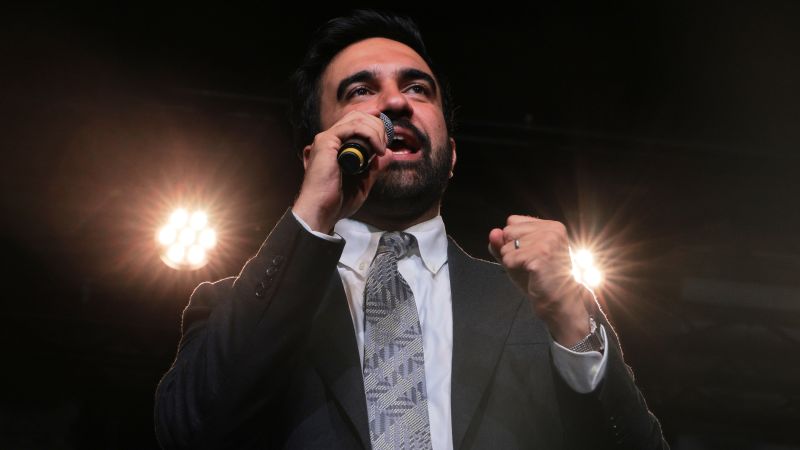
The New Power Broker: How Zohran Mamdani Redefined NYC’s Democratic Landscape
The new power broker – On a night that saw the political world shift dramatically, the aftermath of the New York City Democratic primary revealed a new player in the game. While Rep. Adriano Espaillat, a veteran of the political arena, gave his concession speech at a party filled with well-wishers, the real energy was elsewhere. Just three miles away, a group of candidates celebrated their victories, buoyed by the influence of Zohran Mamdani, whose unexpected rise in the Democratic Party has redefined the city’s power dynamics. Espaillat, who spent 20 years navigating the path to Congress and another 10 in Washington, left the event in under 10 minutes. The contrast between his experience and Mamdani’s rapid ascent underscored a broader transformation in New York politics.
From Primary Victory to Political Revolution
Three years ago, Mamdani’s win in the Democratic mayoral primary was a surprise. He had challenged the entrenched establishment, defeating Andrew Cuomo, a figure long seen as the uncontested leader of the party. Now, his influence continues to grow, as evidenced by the recent primary results. The night’s victories signaled that Mamdani’s approach—not just to politics but to the very structure of the Democratic Party—was resonating with voters. “We are showing that last June, a year ago tomorrow, was not an anomaly,” he declared, framing his success as the start of a larger movement. “It was not the end. It was the beginning.”
Mamdani’s actions have emboldened a new generation of candidates, many of whom would not have reached Congress without his support. The current wave of wins has left traditional power brokers in the city council questioning their relevance. Those who once considered themselves insurgents now find themselves sidelined, accused of being out of touch with the electorate. “They feel betrayed,” said one council member, speaking to CNN under anonymity. “Mamdani isn’t just a disruptor—he’s a redefiner of what it means to be an ally.”
Endorsements and the Battle for Influence
At the heart of Mamdani’s strategy lies a bold method of selecting candidates. His endorsement of Darializa Avila Chevalier, a former campaign volunteer known for her fiery rhetoric, demonstrated a willingness to prioritize grassroots energy over established credentials. This choice stunned many, especially when it came at the expense of the chairman of the Congressional Hispanic Caucus. Despite Espaillat’s endorsement last year, which had been a rare act of support from a veteran Democrat, Avila Chevalier’s victory marked a turning point in the party’s internal politics.
Avila Chevalier’s campaign, which included a controversial rally the day after Hamas’ October 7, 2023, attacks, highlighted Mamdani’s alignment with progressive causes. Yet, her success also sparked debates about the balance between ideology and pragmatism. Two sources close to the mayor’s inner circle explained that he initially doubted her viability. However, a quiet gathering of democratic socialists and allies at City Hall ultimately convinced him to back her. “This is what a revolution looks like,” Mamdani’s communications director, Anna Bahr, told CNN. “It’s not about who’s been in power for decades—it’s about who’s fighting for the people now.”
Reactions from the Democratic Establishment
The ripple effects of Mamdani’s influence are evident in the tensions within the Democratic Party. Hakeem Jeffries, the House Democratic leader from Brooklyn, faces a challenge as his traditional allies begin to question his leadership. While he described his relationship with Mamdani as “very good,” he acknowledged differences in their approaches. “We agreed to strongly disagree,” Jeffries said, noting that Mamdani’s endorsement choices—particularly his support for Avila Chevalier—were a point of contention. “He’s got work to do in terms of conversations with members of Congress moving forward.”
Within the city council, the mood is more divisive. Some members, who once viewed themselves as the party’s vanguard, now feel sidelined. They argue that Mamdani’s focus on populist messaging has overshadowed their efforts to maintain influence. “It’s not just about winning elections,” one council member said. “It’s about shaping the agenda.” The growing divide is reflected in subtle acts of resistance, such as withholding funding for parts of Mamdani’s proposals or publicly criticizing his methods. These gestures signal a broader pushback against the mayor’s emerging dominance.
Political Messaging and Ideological Shifts
Mamdani’s political philosophy has become a defining feature of his campaign. He emphasizes affordability and working-class needs, framing these as central to the Democratic Party’s future. This message aligns with the broader sentiment of New Yorkers, who increasingly prioritize economic justice over traditional party loyalty. The mayor’s rhetoric also ties into the city’s long-standing support for Israel, a stance that has become a focal point in recent elections. “Affordability isn’t just a policy issue—it’s a moral one,” Mamdani said during a campaign event. “When people are struggling to pay rent, they don’t care about bombs or borders.”
His connection to Palestine is a recurring theme. During a recent rally in Harlem, a voter’s comment—“she speaks about babies, not bombs”—was used to illustrate the party’s shift toward more relatable issues. This focus on everyday concerns has helped Mamdani build a coalition that challenges the old guard. Yet, it has also drawn criticism from those who see his approach as too radical or disconnected from broader Democratic priorities. The tension between these factions reflects a deeper ideological split in the party, with Mamdani positioning himself as the leader of a new movement.
The Road Ahead
As the primary results solidify Mamdani’s influence, the next step is to maintain momentum. He plans to meet with Jeffries later in the day, aiming to bridge the gap between the mayor and the congressional leadership. “I still want to work together,” Mamdani said, though he framed the recent wins as proof that the electorate is demanding a different kind of politics. “New Yorkers are hungry for a politics that puts working people first.”
For Jeffries and the establishment, the challenge is to adapt or risk being left behind. The mayor’s victories have not only reshaped the city’s political landscape but also set a precedent for future contests. “This isn’t just about one race,” Bahr noted. “It’s about reimagining how power is distributed in the Democratic Party.” As the party grapples with this new reality, the question remains: can the old guard reclaim their influence, or will Mamdani’s model of grassroots-driven politics define the next chapter of New York’s Democratic era?
Meanwhile, Mamdani’s public appearances continue to reflect his leadership style. After a win, he shared a video of Jalen Brunson, the Knicks’ star guard, speaking at the team’s championship celebration. Brunson’s words—“When you prove them wrong, you don’t have to say shit to them”—echoed Mamdani’s own confidence in his strategy. This subtle nod to sportsmanship and resilience underscores the mayor’s belief that his approach is not only effective but inevitable.
As the dust settles from the primary night, the implications of Mamdani’s rise are clear. He has not only challenged the status quo but also demonstrated how a new kind of politics can take root. Whether this shift will lead to lasting change or spark a new era of conflict remains to be seen. But one thing is certain: the power dynamics in New York’s Democratic Party have been irrevocably altered, and Mamdani is at the center of it all.