Supreme Court says Alito’s verbal reaction to Sotomayor was based on a ‘misunderstanding’

Supreme Court Clarifies Alito’s Verbal Response to Sotomayor Was a Misunderstanding
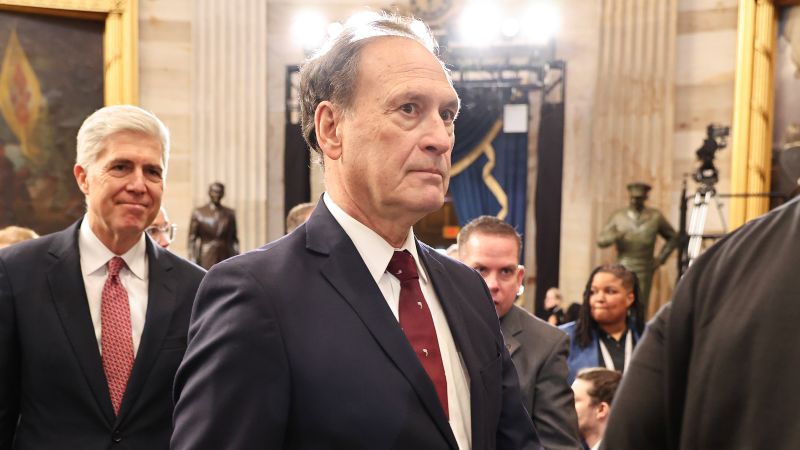
Supreme Court says Alito s verbal – During a recent hearing, the Supreme Court addressed a notable verbal exchange between Justice Samuel Alito and Justice Sonia Sotomayor, stating that Alito’s reaction stemmed from a “misunderstanding.” The court’s spokesperson explained that Alito had been informed beforehand that Sotomayor would deliver a dissent from the bench, which was part of the proceedings for a case involving asylum policies. This clarification aims to contextualize Alito’s surprise remarks, which highlighted the rare moment of tension in an otherwise methodical judicial process.
A Case of Unintended Disagreement
The verbal interaction occurred during a discussion on the “metering” policy, which permits border agents to return asylum seekers before they enter the U.S. This policy, upheld in a 6-3 decision, became the focal point of Sotomayor’s dissent. She read her comments aloud, an uncommon practice, as she drew a historical parallel to the 1930s, when Jewish refugees were denied entry by the U.S. government. Alito’s abrupt response to her remarks suggested a moment of personal frustration, though the court later clarified that his reaction was not a personal attack but a result of the situation.
“I had not anticipated a dissent from the bench in this case,” Alito remarked, his tone revealing the unexpected nature of the moment. The justice’s comments, while sharp, underscored the growing ideological divide within the court as it navigates complex legal issues during the final weeks of its current term.
Sotomayor’s Historical Analogy
Sotomayor’s dissent, which included a reference to the 1930s, was intended to emphasize the potential consequences of the metering policy. She argued that the current system could mirror past injustices, leaving vulnerable individuals without a chance to present their cases. “This policy risks repeating the mistakes of the past by denying asylum to those who truly need it,” she asserted, a statement that resonated with the court’s ongoing debates over immigration and human rights.
The Supreme Court’s decision in the case reaffirmed the legality of the metering policy, with Alito authoring three of the four opinions. His verbal reaction to Sotomayor’s dissent, however, raised questions about the justices’ willingness to engage in public dialogue about the policy’s implications. While the ruling was reached without dispute, the exchange highlighted the emotional undercurrents of the legal arguments.
Verbal Dynamics and Judicial Tone
Alito’s response to Sotomayor’s remarks was notable for its brevity and directness. He acknowledged that the policy had been implemented by both Democratic and Republican administrations, suggesting a bipartisan consensus on its approach. “The system is designed to be fair and efficient,” he stated, a contrast to Sotomayor’s critique of its humanitarian impact. Despite his verbal reaction, Alito’s comments reflected a broader trend of justices expressing their perspectives through concise, yet impactful, statements.
“The history of this policy is clear,” Alito added, while Sotomayor’s dissent served as a reminder of its moral stakes. The justices’ verbal exchanges, though brief, underscored the evolving ways in which they communicate their legal positions to the public and to one another.
Context and Consequences
The metering policy, though not in effect currently, has been a central feature of immigration law for years. Sotomayor’s dissent, which included the 1930s reference, sought to draw attention to its potential to create barriers for asylum seekers. Her remarks, while part of a larger legal argument, sparked a moment of public scrutiny, especially as Alito’s verbal reaction was captured on record. The incident has since become a talking point in discussions about the Supreme Court’s internal dynamics and its role in shaping immigration law.
Verbal Clarity and Legal Legacy
The exchange between Alito and Sotomayor illustrates the blend of formality and spontaneity in Supreme Court proceedings. While the justices typically maintain a reserved tone, the verbal reaction to Sotomayor’s dissent showcased a rare moment of personal engagement. This incident may influence how future dissents are perceived, as it underscores the importance of clear communication in high-stakes legal arguments. Alito’s comments, though brief, serve as a reminder that even in the most structured environments, moments of clarity can emerge through unexpected interactions.