
Supreme Court limits power of federal government to disarm drug users
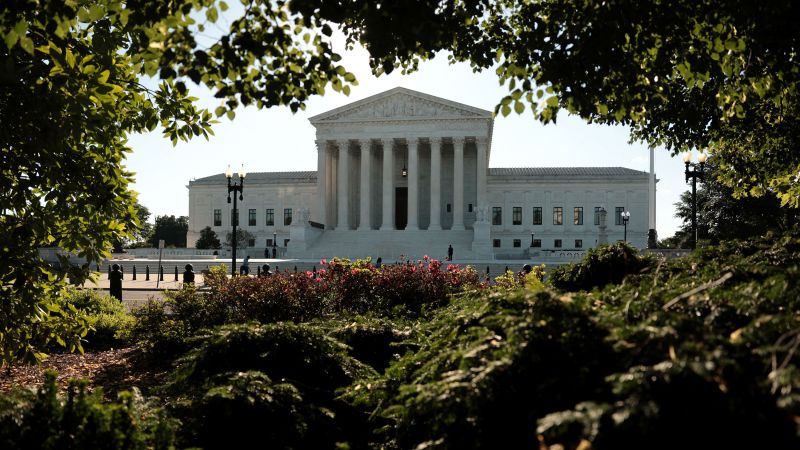
Supreme Court Limits Federal Authority to Disarm Drug Users
Supreme Court limits power of federal – The Supreme Court’s Thursday ruling marked a significant shift in the interpretation of federal gun control laws, narrowing the government’s ability to strip firearms from individuals who regularly use marijuana. The decision, authored by Justice Neil Gorsuch, focused on a 1960s-era statute that aimed to prevent weapons from falling into the hands of drug users. By ruling in favor of Ali Danial Hemani, a dual citizen of the United States and Pakistan, the court emphasized that the law’s broad application may not align with the protections guaranteed by the Second Amendment.
A Narrow Victory for Gun Rights
Hemani, who was indicted in 2023, faced charges under the federal anti-guns-and-drugs law after an FBI search of his family’s home uncovered a Glock 9mm pistol and 60 grams of marijuana. While the Justice Department had accused him of additional offenses, including cocaine use and ties to Iran, the core of the case revolved around whether regular marijuana consumption justified disarming him. The court’s unanimous opinion concluded that the government’s prosecution of Hemani was inconsistent with the Second Amendment, which protects the right to bear arms.
The ruling was narrowly tailored, addressing only the immediate issue at hand without delving into broader questions about the constitutionality of targeting drug users or those in addiction. The justices agreed that the law’s categorical approach—disarming anyone who regularly uses drugs—was overly simplistic. “We do not question that sometimes an individual’s unlawful use of marijuana may render him a danger to others,” the court wrote in a
blockquote>. “But, again, the government disclaims the need to show anything like that in this case. Instead, it asks us to conclude that anyone who regularly uses marijuana is categorically violent and dangerous without any further showing.”
Justice Gorsuch highlighted the law’s excessive reach, stating that the government’s argument was “a bridge too far.” The decision underscored the court’s growing skepticism toward laws that apply uniformly to all drug users, regardless of individual circumstances. This marks a departure from the court’s previous stance on gun control, where broader interpretations of the law had been upheld in prior rulings.
Political Context and Shifting Public Opinion
The case reached the Supreme Court amid a period of evolving attitudes toward marijuana use. With roughly half of U.S. states legalizing recreational cannabis and an even larger number allowing medical use, the debate over drug-related gun laws has gained new urgency. The court’s unanimous agreement on this issue, however, stands in contrast to its usual ideological divisions on the Second Amendment. This rare consensus suggests a significant shift in how the justices view the balance between public safety and individual freedoms.
The Trump administration, which has consistently championed the Second Amendment, found itself on the defensive in this case. Despite its support for gun rights, the administration defended the federal law, arguing that the combination of firearms and drugs poses a real threat. Officials cited statistics showing about 300 people are charged annually under the law, with potential sentences of up to 15 years. Yet, the court’s decision challenges the necessity of such sweeping measures.
Expert Reactions and Future Implications
The ruling has sparked mixed reactions among legal experts. Steve Vladeck, a CNN Supreme Court analyst and professor at Georgetown University Law Center, noted that the decision “continues to allow the government to enact and enforce reasonable categorical prohibitions on firearms ownership.” However, he also acknowledged that the court’s reluctance to address larger constitutional questions may lead to future challenges. “It’s only a matter of time before those issues resurface,” Vladeck said, adding that the justices will likely face more complex cases where their reasoning could be tested.
John Commerford, executive director of the National Rifle Association’s lobbying arm, hailed the decision as a “major victory for the Second Amendment.” He argued that the ruling reaffirms the principle that individuals should not be deprived of their right to bear arms for engaging in nonviolent activities. “There is no historical justification for criminalizing gun possession by those who use drugs without posing a clear threat,” Commerford stated in a
blockquote>. Meanwhile, Leigh Rome of the Giffords Law Center expressed more cautious optimism, saying the decision “maintains the government’s ability to impose reasonable restrictions on firearm ownership.”
The case also brought attention to the broader political landscape, particularly the role of prominent figures in the debate. President Joe Biden’s son, Hunter Biden, was convicted in 2024 under the same federal law for possessing a firearm while addicted to crack cocaine. His conviction, which was later pardoned by his father, added a personal dimension to the legal discussion. Critics argued that the case highlighted the inconsistency in applying the law to high-profile individuals versus ordinary citizens.
Historical Precedents and the Bruen Decision
The ruling aligns with the Supreme Court’s 2022 decision, NYSRPA v. Bruen, which redefined the standards for evaluating gun control laws. That landmark case required prohibitions on firearms to have a “historical and traditional connection” to the nation’s founding era, a standard that the current decision appears to uphold. By focusing on the specific application of the law in Hemani’s case, the court signaled its intent to apply the Bruen framework more rigorously in future rulings.
During oral arguments in March, the justices exhibited varied concerns about the law’s scope. Conservative Justice Amy Coney Barrett raised a hypothetical question: Would someone taking Ambien without a prescription be covered under the statute? This query illustrated the law’s potential overreach, as it could apply to individuals using drugs for nonviolent purposes. The exchange highlighted the ongoing tension between public safety and the right to self-defense, with the court seemingly favoring the latter in this instance.
While the decision limits federal prosecutors’ ability to use the law in certain cases, it leaves room for future challenges. The ruling does not eliminate the possibility of disarming individuals who are clearly dangerous, but it sets a precedent that requires evidence of such risk before disarming occurs. This nuanced approach may influence how the government prosecutes similar cases, particularly as more states move toward marijuana legalization and public support for gun rights continues to grow.
In summary, the Supreme Court’s decision represents a pivotal moment in the evolution of drug and gun laws. By curbing the federal government’s power to disarm regular marijuana users, the justices have taken a step toward recognizing the importance of individual rights in the face of broader public safety concerns. As the legal landscape continues to shift, the ruling may serve as a foundation for future debates on the balance between freedom and regulation.
