
Postal Service won’t deliver mail ballots for states that don’t hand over voter lists, under plan for Trump directive
Postal Service Faces Criticism Over New Mail Ballot Delivery Rules Under Trump Directive
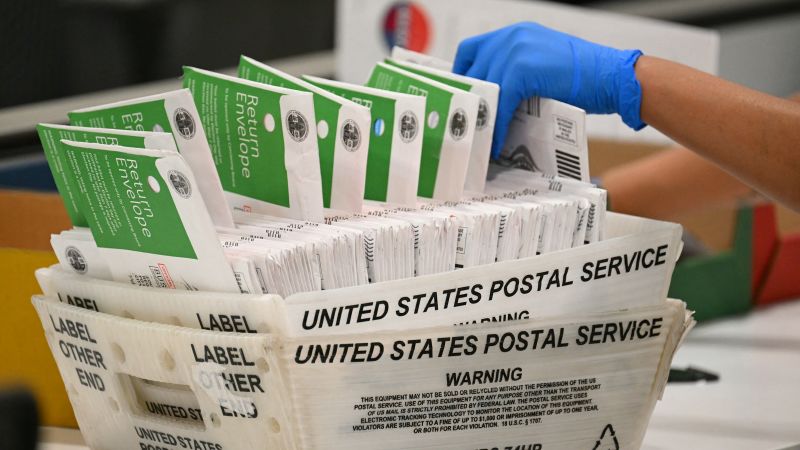
Postal Service won t deliver mail – As the midterm elections approach, state election officials are being confronted with a pivotal decision: surrender their voter lists to the Trump administration or face the potential loss of mail ballot delivery services from the U.S. Postal Service (USPS). This decision is driven by recently proposed rules that aim to align with an executive order signed by President Donald Trump earlier this year, which targets mail-in voting as a means to curb voter fraud. The rules could force states to provide detailed voter data to the federal government, thereby shifting responsibility for election oversight from state authorities to the USPS.
Legal Challenges Intensify Amid Federal Intervention
Already, 23 Democratic-led states along with the District of Columbia have filed lawsuits against the proposed regulations, joining efforts by the Democratic Party and nonpartisan voter advocacy groups. These legal actions are part of a broader strategy to challenge the Trump administration’s attempt to expand federal oversight of state election processes. If upheld, the executive order would grant the federal government an unprecedented role in managing mail ballots, potentially altering the voting landscape for millions of Americans.
“If courts rule in favor of the Trump administration, we’ll see a dramatic reduction in mail-in voting, unless states supply voter lists to the federal government,” stated Maine Secretary of State Shenna Bellows, a Democrat, during an interview with CNN. Her state is part of a coalition that has contested the rules in Boston, highlighting concerns about the implications of federal control over local election mechanisms.
The March 2026 executive order marks one of several steps Trump has taken to assert federal authority over elections. This includes the push to restrict mail-in voting, which he has frequently accused opponents of using to manipulate election outcomes. Despite no conclusive evidence of widespread fraud, Trump has framed mail ballots as a vulnerability in the voting system, prompting aggressive policy changes.
USPS’s Role Evolves From Delivery to Oversight
Under the new guidelines, the USPS is not only tasked with delivering ballots but also with determining whether to accept them. States that fail to submit voter lists to the federal agency risk having their mail ballot programs suspended. This shift transforms the Postal Service from a neutral carrier into a potential enforcer of federal election policies, raising questions about its impartiality.
While the agency’s rules currently allow states to decide which voters are included in the lists provided to USPS, the process is still seen as a significant step toward federal intervention. According to the White House, the executive order is part of Trump’s campaign to “ensure the safety and security of American elections.” A spokesperson for the administration, Abigail Jackson, emphasized that the order was intended to be implemented by November, underscoring the urgency of the policy.
“The entire Trump Administration will continue lawfully enacting the agenda President Trump was elected to carry out,” said the White House in a statement. “This includes safeguarding the integrity of our elections, which is why the executive order is essential.”
However, critics argue that the policy may undermine state autonomy in elections. Tobias Read, Oregon’s secretary of state, who is part of the 23 states challenging the order, warned that the rule could “deny eligible voters the right to cast their ballots.” He stressed that the Constitution clearly assigns election management to the states, calling the federal overreach “a direct violation of that principle.”
Unions Express Concerns About Carrier Responsibilities
The National Association of Letter Carriers (NALC), a major union representing postal workers, has raised alarms about the potential impact of the policy. Brian Renfroe, the union’s president, explained that the rules could place mail carriers in the role of gatekeepers for election mail. “If a state doesn’t comply with the requirements, the Postal Service might simply refuse to deliver those ballots,” he said, expressing apprehension about the consequences for voters.
Renfroe’s comments reflect broader fears that the USPS may become politicized in its operations. The agency’s role, traditionally focused on the physical delivery of mail, now carries the added burden of enforcing federal criteria. This could create a situation where the simple act of mailing a ballot is contingent on meeting federal standards, a shift that has sparked debates about the independence of the postal service.
Meanwhile, the SAVE Act, a Trump-backed legislative measure, is another component of the administration’s strategy to tighten election controls. The bill mandates new citizenship verification requirements for voter registration, yet it has stalled in the Senate. Despite this, the executive order and associated rules represent a more immediate challenge to state-led election systems, with the USPS at the center of the controversy.
Legal battles over the order have already seen some progress. In Washington, D.C., a federal judge overseeing one set of the cases recently declined to halt the implementation of the executive order, clearing a key hurdle for the Trump administration. Democratic groups are now pressing an appeals court to expedite its review of the decision, warning that the outcome could determine the accessibility of mail voting in this year’s midterms.
As the situation unfolds, the tension between federal authority and state autonomy is becoming more pronounced. The proposed rules not only impose new conditions on mail ballot programs but also force states to redesign their processes to meet Trump’s criteria. This could lead to logistical challenges and potentially reduce the efficiency of mail voting, especially in states that have relied on this method for decades.
Supporters of the policy argue that the USPS is merely following directives to ensure election integrity. Anton Hajjar, a former member of the USPS Board of Governors, noted that the agency’s role in delivering ballots has always been critical, but the new rules extend that responsibility to include oversight. “The USPS should deliver ballots if proper postage is paid,” he stated, though he acknowledged the rules effectively alter that principle.
With the legal fight intensifying, the stakes for voters and election officials have never been higher. The proposed changes threaten to redefine the balance of power in election management, as the federal government seeks to intervene in state processes. Whether the courts will uphold this shift or restore state control remains to be seen, but the implications for mail-in voting could shape the outcome of the midterms and beyond.
