
Judge orders Trump administration to restore signs changed at national parks
Judge Orders Trump Administration to Restore Signs Altered at National Parks
Judge orders Trump administration to restore – A federal judge in Massachusetts has issued a directive requiring the Trump administration to reinstate all signage modified or taken down at national parks nationwide, reversing changes linked to the former president’s 2025 executive order aimed at reshaping historical narratives. In a detailed 63-page ruling released on Friday, Judge Angel Kelley criticized the administration for its efforts to “present a selective version of history” by removing exhibits that did not fit its preferred perspective. The decision, which sets a July 3 deadline for the restoration of the affected signs, comes as part of a broader legal challenge against the Interior Department and the National Park Service.
Controversial Directive and Legal Backing
President Donald Trump’s executive order, titled “Restoring Truth and Sanity to American History,” tasked the Interior Department with reviewing and adjusting public content that “disparages the American people” or their heritage. The order sparked immediate controversy, with critics accusing it of promoting a narrow interpretation of history. Judge Kelley’s ruling underscores the impact of these changes, stating that the administration’s actions “seek to erase the broader context of historical events by replacing them with curated messages that align with a specific ideological framework.”
“Under the guise of promoting American dignity, this Administration seeks to share a limited history by ordering the removal of all signs, displays, and interpretive exhibits at National Parks that do not align with its preferred narrative, thereby telling half-truths,” Kelley wrote.
The judge emphasized the importance of historical accuracy, noting that the alterations undermined the educational role of national parks. She described the parks as “a cornerstone of public learning,” arguing that they should serve as “a platform for unfiltered storytelling that reflects the full complexity of America’s past.”
Interior Department Responds with Criticism
In reaction to the ruling, an Interior Department spokesperson labeled Kelley as a “liberal activist judge,” suggesting the administration might challenge the decision. The statement highlighted the department’s celebration of the nation’s 250th anniversary, stating, “The Department will look at our appeal options while we celebrate UFC Freedom 250 on the South Lawn of the White House this weekend in honor of our nation’s 250th with the greatest president in the history of our country – President Donald J. Trump.”
The spokesperson’s remarks reflect the ongoing ideological divide over the interpretation of historical narratives in public spaces. While the ruling mandates the restoration of altered signs, it also blocks further modifications to exhibits by the Trump administration, freezing its efforts to reshape the content presented to visitors. This pause in changes has been welcomed by advocates who argue the national parks serve as vital repositories of cultural and historical truth.
Conservationists File Lawsuit Against Historical Revisions
The legal action was initiated in February by a coalition of conservationists and history advocates, who accused the Interior Department of engaging in a “sustained campaign to erase history and undermine science.” The lawsuit highlighted how the administration’s directive led to the removal or alteration of at least 45 signs across parks, covering topics such as climate change, Native American contributions, and pivotal events in American history. These changes were tracked by Save Our Signs, an organization dedicated to preserving the integrity of National Park Service materials.
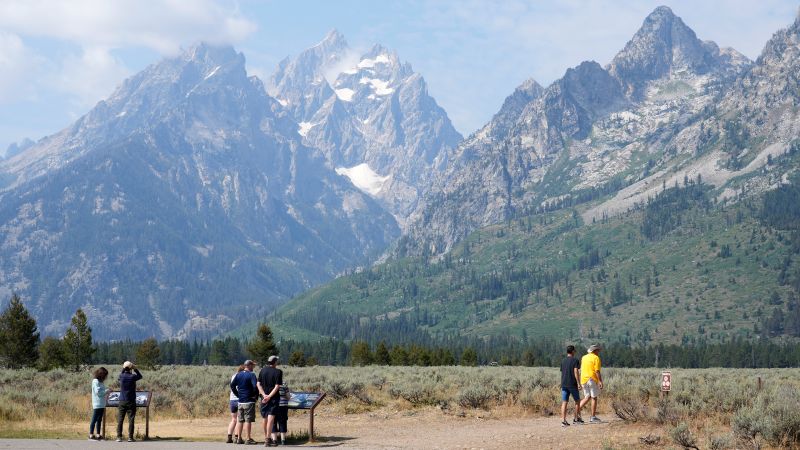
One of the most notable examples cited in the lawsuit involved a marker at Grand Teton National Park in Wyoming. The original sign detailed the role of 19th-century explorer Gustavus Cheyney Doane in the massacre of 173 Piegan Blackfeet members. This exhibit was removed, sparking outrage from historians and Indigenous advocates who see it as a critical piece of the region’s past. Similarly, a sign at Fort Sumter National Monument that explained the potential effects of climate change on the historic structure was entirely taken down, eliminating information about rising seas threatening the fort’s walls and parade ground.
“The beauty of history is the unvarnished storytelling of a time gone by and the delivery of undeniable truths,” Kelley wrote.
These instances exemplify the broader implications of the administration’s approach, which critics argue prioritizes a simplified version of American history over nuanced, comprehensive accounts. The coalition of plaintiffs, which includes environmental groups and cultural preservation organizations, contends that the changes risk “sanitizing the past” and “softening the impact of historical injustices.”
Advocates Praise the Ruling as a Victory
Alan Spears, senior director for cultural resources at the National Parks Conservation Association, hailed the ruling as a significant win for historical integrity. “This is, we think, a good, favorable, just ruling from the judge that puts a stop, at least temporarily, to the sanitization, censorship and softening of history as it’s told in our national parks,” Spears told CNN. He underscored the importance of national parks as “one of the largest stewards of American history and culture,” stressing that their role includes “telling stories that are more accurate, more just, and more inclusive.”
Spears added that the decision allows visitors to “go back to business as usual,” with access to the full scope of historical interpretation. “When you start messing around with the kind of interpretation that the park service is able to provide, that’s a problem because they’ve been working throughout their history, but specifically over the last 30 years, to tell stories that inspire more people to care about our parks and the history of this country,” he said.
History as a Shared Responsibility
Kelley’s ruling also highlights the responsibility of the government to “present history in full rather than in favored fragments.” She argued that national parks should reflect the diverse perspectives of those who shaped the nation, including voices often overlooked in mainstream narratives. By restoring the altered signs, the decision reinforces the idea that public spaces must serve as “a mirror to the past,” not just a curated exhibit of a particular viewpoint.
The judge’s emphasis on education aligns with the National Park Service’s mission to “inspire people to protect and preserve the natural and cultural resources” of the country. The ruling ensures that visitors can engage with historical content that includes both triumphs and challenges, fostering a more balanced understanding of the nation’s legacy. As the deadline for restoration approaches, the focus remains on preserving the authenticity of these spaces for future generations.
While the Trump administration faces the challenge of reversing its changes, the legal battle underscores the ongoing debate over how history should be taught and displayed. For now, the judge’s decision offers a temporary reprieve, allowing the National Parks Conservation Association and its allies to continue their efforts to protect the narrative diversity that defines these iconic sites.
