
How the Supreme Court has changed on transgender rights since 2020
Supreme Court’s Evolving Stance on Transgender Rights
How the Supreme Court has changed – In the wake of the 2020 Bostock v. Clayton County ruling, the Supreme Court reshaped the legal landscape for transgender individuals by affirming their inclusion under federal anti-discrimination protections. Justice Neil Gorsuch’s opinion, which expanded Title VII of the Civil Rights Act of 1964, was a pivotal moment. By interpreting the law’s prohibition on discrimination “because of … sex,” Gorsuch argued that transgender women, like any individual transitioning from male to female, were entitled to equal treatment in the workplace. This decision, unexpected to many, was authored by Trump’s first appointee, marking a shift in the court’s ideological alignment. The ruling garnered support from three conservative justices—Roberts, Kavanaugh, and Gorsuch—as well as the four liberal justices on the bench at the time.
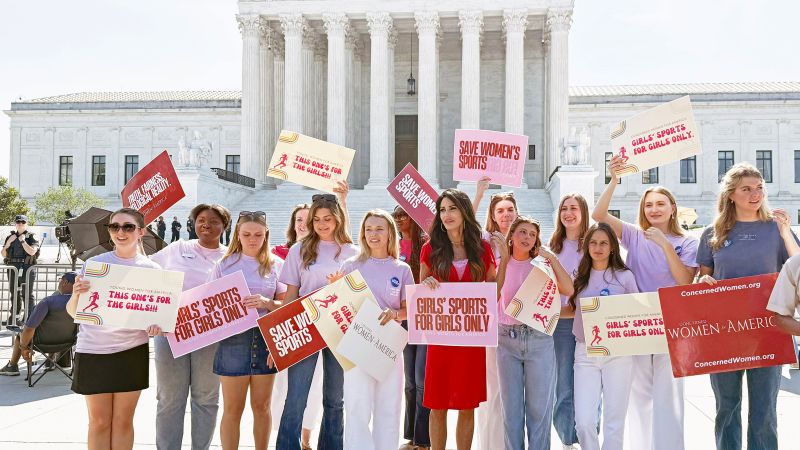
However, the court’s support for transgender rights has since been tempered by its shifting composition and broader political dynamics. Last week’s 6-3 decision upholding state laws that restrict trans women from participating in female sports teams exemplifies this trend. The ruling, which aligns with the court’s recent pattern, reflects a growing emphasis on traditional definitions of gender and its impact on public policy. In the context of the 2024 presidential campaign, Trump positioned himself as a defender of gender norms, while Kamala Harris was criticized for her progressive LGBTQ stance. This political framing has influenced the court’s approach to transgender issues, with conservative justices leveraging the issue to advance their ideological agenda.
Transgender Rights and Legal Interpretation
The Bostock case set a precedent that initially seemed to signal progress. Gorsuch, known for his textualist interpretation of the law, grounded the decision in the literal wording of Title VII. He noted that the law’s original intent was to protect employees from discrimination based on sex, and that a transgender woman who transitioned and was fired for it was, by definition, a woman. This reasoning was met with mixed reactions. While some hailed it as a landmark victory, others, including right-wing organizations, viewed it as an overreach. In fact, when Gorsuch’s opinion leaked before the final decision, conservative writers urged him to revisit his stance, highlighting the deepening ideological divide.
Yet, the court’s subsequent rulings suggest a more nuanced shift. In recent years, the justices have consistently upheld laws that limit transgender rights in various domains. Last year, the same 6-3 majority allowed states to restrict access to certain medical treatments for trans youth. This decision came after a series of cases where the court permitted the administration to require passports to reflect an individual’s biological sex and enabled Trump to remove transgender servicemembers from the military. These rulings have collectively narrowed the scope of transgender protections, emphasizing a return to more traditional gender roles.
Justice Brett Kavanaugh’s opinion in the latest sports-related decision underscored this trend. He argued that biological males inherently possess physical advantages in athletics, citing concerns about fairness and safety in female sports teams. This reasoning was echoed by some beyond the court, including First Lady Melania Trump, who praised the ruling on social media. “We must also ensure that our female athletes are protected and respected,” she wrote, framing the decision as a safeguard for traditional sports structures. Such statements have amplified the court’s influence in shaping public perception, often casting transgender individuals as disruptive forces in societal norms.
Political and Social Context
The transformation of the Supreme Court’s approach to transgender rights mirrors broader political changes. Over the past six years, 27 states have enacted laws banning transgender women from competing in women’s sports, a number that has surged alongside conservative gains in state legislatures. These laws often rely on the argument that transgender athletes compromise the integrity of competitions, a narrative reinforced by the justices’ recent rulings. The court’s decisions have also aligned with the Republican Party’s platform, which increasingly targets LGBTQ communities as a means of appealing to socially conservative voters.
Transgender individuals, though comprising only about 1% of the U.S. population, have become central figures in the political discourse. Their visibility in public life has made them both a symbol of progress and a focal point for backlash. For instance, the 2024 campaign saw trans rights emerge as a key issue, with Trump’s allies using the issue to differentiate his candidacy from Harris’s. This framing has been effective in rallying support, as seen in a viral campaign ad that depicted Harris as embracing “they/them” pronouns while Trump was portrayed as championing traditional gender identities.
The legal changes have not only affected transgender individuals but also their daily experiences. From schools to healthcare, trans people have faced increasing restrictions. For example, states have implemented laws preventing trans youth from accessing gender-affirming care, a policy that has sparked nationwide debate. Meanwhile, the military has seen transgender individuals barred from service, and the Department of Homeland Security has allowed the sex designation on passports to be based on biological sex. These policies have created a patchwork of rights, with federal protections often outweighed by state-level restrictions.
Contrasting Judicial Perspectives
Despite the majority’s alignment on limiting transgender rights, the court remains divided on constitutional questions. In the recent sports case, all nine justices agreed that Title IX of the federal education law was not violated by the state bans, but they differed on the broader issue of gender equality. Justice Kavanaugh, in his majority opinion, argued that separate sports teams for biological males and females were “reasonable” to preserve fairness and safety. His reasoning emphasized the physical differences between the sexes, a point he reiterated in the context of the funeral home case from 2020.
Contrast this with the dissenting opinion from Justice Sonia Sotomayor, who highlighted the exclusion of trans girls from competitive opportunities. She described the majority’s stance as a “disregard for the lived experiences of transgender individuals,” arguing that the decision undermined their ability to participate in sports as they had long been allowed. Such divergent views illustrate the court’s internal tensions, where judicial philosophies clash over the balance between individual rights and traditional definitions of gender.
While the Bostock decision initially appeared to broaden protections, its long-term impact has been more limited. The court’s evolving composition, with the appointment of Justice Amy Coney Barrett in 2020, has shifted the balance toward conservative interpretations. This has allowed the justices to narrow the scope of Title VII, focusing on its original intent rather than its modern implications. As a result, the legal victory in 2020 has been partially offset by recent rulings that prioritize gender as a biological category over identity-based rights.
In an interview with a university law professor, Suzanne Goldberg noted the growing use of law to marginalize transgender people. “The trend shows a pattern where trans individuals are increasingly targeted in policy decisions,” she said. “From schools to the military, the legal system is being used to enforce rigid gender norms.” This perspective underscores the broader societal implications of the court’s rulings, which have reinforced state-level legislation that often prioritizes cultural values over individual rights.
As the Supreme Court continues to shape transgender rights, the debate over gender identity remains unresolved. While some justices see it as a matter of fairness and safety, others argue that it represents a fundamental shift in understanding equality. The court’s decisions reflect a dynamic interplay between legal precedent, political strategy, and public opinion, with transgender rights serving as both a battleground and a barometer for the nation’s evolving values.
