
Graham Platner tears into Republicans after clinching Susan Collins matchup in Maine, and other primary night takeaways
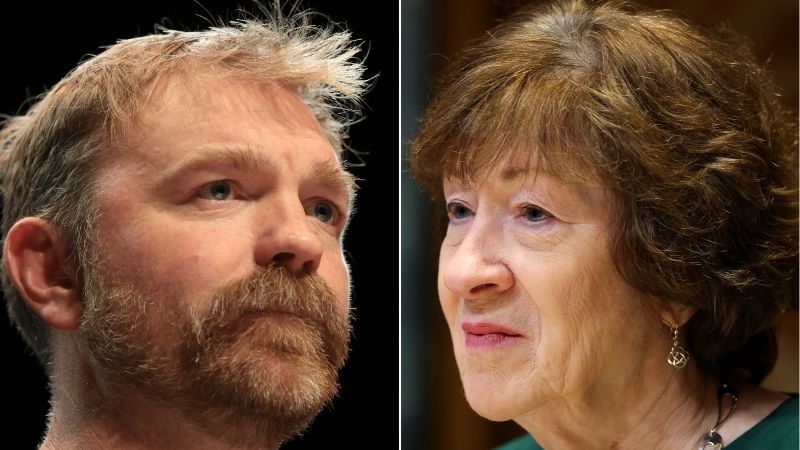
Graham Platner’s Victory in Maine Sets Stage for Key Senate Battle Against Susan Collins
Graham Platner tears into Republicans after – On Tuesday, Graham Platner secured a decisive win in Maine’s Democratic Senate primary, setting the stage for a high-stakes general election matchup against Republican Senator Susan Collins. The race, already considered a pivotal contest in the broader effort to reshape the Senate, gained new momentum as Platner’s campaign solidified its path forward. With over 75% of primary voters’ support, the progressive populist’s victory signaled a strong mandate from Maine Democrats, who now face a critical test in November against one of the nation’s most seasoned Senate incumbents.
Controversies and Campaign Strategy
Platner’s triumph was not without its challenges. Throughout the primary campaign, a series of personal controversies had cast doubt on his viability as a candidate. From his early days, critics questioned his character, citing a tattoo that mirrored Nazi imagery and a string of online posts that criticized law enforcement and rural voters. Later revelations added to the scrutiny, including allegations that he had sexted with women other than his wife during their marriage and a New York Times report suggesting his behavior toward past partners had been unsettling, even threatening in some instances.
“If you believe, as I do, that we can change our politics, and change our country, then you must also believe that people can change,” Platner stated in his victory speech, delivered at a YMCA in his hometown of Blue Hill. “And the reason I believe that is because I have lived it — and the reason I have lived it is because of my wife.”
Despite the turbulence, Platner framed his campaign as a movement to restore trust in democratic institutions. He acknowledged the doubts but emphasized his commitment to accountability, vowing to “earn your trust, your faith, and your support” in his ongoing quest to represent Maine. His speech also doubled as a platform to highlight the broader ideological divide, positioning himself as a challenger to the established political order.
Republican Response and Political Dynamics
While Platner’s victory bolstered Democratic hopes, the Republican response was swift and strategic. Senator Susan Collins, who is seeking a sixth term in the Senate, faced immediate pressure to reframe the narrative. Collins, 73, has long been a formidable figure in Maine politics, known for her ability to fend off Democratic opponents. However, her campaign was now under the spotlight, with critics questioning her alignment with former President Donald Trump and her voting record on key issues.
“The allegations against Graham Platner are extremely troubling and serious, and he owes the people of Maine a detailed answer. And I haven’t heard that,” Collins told CNN’s Manu Raju earlier Tuesday, hinting at her concerns over Platner’s past behavior.
Collins’ campaign also faced a sharp rebuke from the Senate Leadership Fund, a major Republican super PAC. The group characterized Platner as “a dangerous deviant who cannot be trusted to represent the Pine Tree State,” contrasting his image with Collins’ reputation for “strong character, steady leadership, and unmatched effectiveness.” Yet, Republican leaders remained cautiously optimistic, warning that the political landscape in Maine still posed challenges for Collins. A memo from the National Republican Senatorial Committee, obtained by CNN, underscored the need for a “total urgency” in mobilizing voters to counter Platner’s momentum.
Platner’s Attack on Collins and Democratic Priorities
In his victory speech, Platner did not shy away from directly targeting Collins, painting her as a representative of the same establishment he sought to dismantle. “She is just as spineless and corrupt as the establishment she now serves,” he declared, accusing Collins of prioritizing corporate donors and political elites over ordinary Mainers. He also criticized her support for “endless wars since I was a teenager,” linking her record to a broader Republican agenda that he claimed had rigged the economy against working families.
“The truth is, Susan Collins does not serve us. She serves Donald Trump. She serves the Epstein class. She serves her corporate donors and the corrupt political system that has rigged the economy against us. She does not serve us, and so we will defeat Susan Collins,” Platner asserted, framing his campaign as a fight for the soul of the nation.
Platner’s message resonated with voters who saw Collins as a symbol of Republican influence. His critique of her Supreme Court appointments, particularly her role in confirming Justice Brett Kavanaugh, added a layer of urgency to the race. By highlighting Collins’ betrayal of Roe v. Wade, Platner positioned himself as a defender of reproductive rights, a key issue in the upcoming election.
Implications for the Senate and the Democratic Strategy
Maine’s Democratic Senate primary was more than just a local contest — it was a critical piece of the puzzle in the party’s effort to gain control of the Senate. With four Republican-held seats up for grabs, a win in Maine could significantly bolster Democratic chances of securing a majority. Platner’s victory, therefore, was a symbolic win for the party’s progressive wing, signaling a shift toward more grassroots-driven politics.
However, the race also underscored the challenges Democrats face in appealing to a broad coalition. While Platner’s support among primary voters suggested strong backing, the question remained whether he could maintain that momentum in the general election. His ability to reconcile his past controversies with a forward-looking message would be crucial in November, as Maine’s voters prepare to decide the future of their state’s representation.
Collins, meanwhile, is expected to leverage her experience and name recognition in the general election. Her campaign will likely focus on defending her record and positioning herself as a centrist alternative to the more radical left. The National Republican Senatorial Committee’s memo, which warned of a “fatal mistake” to underestimate Platner, highlighted the need for a unified GOP strategy to counter the Democratic challenger.
As the race moves into the general election phase, both candidates are poised to refine their messages. For Platner, the challenge will be to transform his image from a controversial figure into a reliable leader. For Collins, the task is to navigate the fallout from her association with Trump while reassuring voters of her commitment to Maine’s interests. The outcome of this race will not only determine the Senate’s balance of power but also shape the national political landscape in the months to come.
