Graham and Trump’s unlikely alliance: From opponents to key allies — and golf buddies

A Remarkable Political Transformation: How Graham and Trump Became Allies
From Fierce Opponents to Trusted Partners
Graham and Trump s unlikely alliance – Only months after Donald Trump secured the Republican presidential nomination in 2016, Senator Lindsey Graham underwent a dramatic metamorphosis. Once among the most vocal critics of the real estate mogul, Graham emerged as one of the president’s most steadfast supporters in Congress. This remarkable shift surprised many observers who had witnessed Graham’s initial hostility toward the political outsider. The South Carolina senator, known for his independent streak and willingness to work across the aisle, had spent decades building relationships with Democrats, including serving alongside President Barack Obama during his tenure.
Looking back at the beginning of this unlikely partnership, Graham’s December 2015 comments stand as a stark contrast to his later loyalty. At that time, Trump remained a long-shot contender in what proved to be a crowded Republican primary field. Graham, himself one of twelve Republicans seeking the 2016 nomination, delivered a blistering assessment of the businessman on CNN. He suggested that Americans wanting to restore national greatness should essentially dismiss Trump entirely.
“You know how you make America great again? Tell Donald Trump to go to hell,” Graham declared during his CNN appearance.
Not content with merely criticizing Trump’s candidacy, Graham also attacked the candidate’s proposed policy regarding Muslim immigration. He characterized the businessman as someone who exploited racial tensions and held prejudiced views about religion. These early remarks seemed to foretell a permanent antagonism between the two men, yet history would prove otherwise.
The Evolution of a Political Relationship
Following Trump’s stunning victory in 2016, Graham gradually positioned himself within the president’s inner circle. A pivotal moment occurred during a March 2017 lunch meeting that helped heal tensions between the former rivals. Through persistent efforts—including regular telephone conversations and numerous golf outings—Graham secured his place as a trusted confidant. The senator even joked that their relationship improved so significantly that he provided Trump with his updated contact information after the president shared Graham’s number at a campaign event.
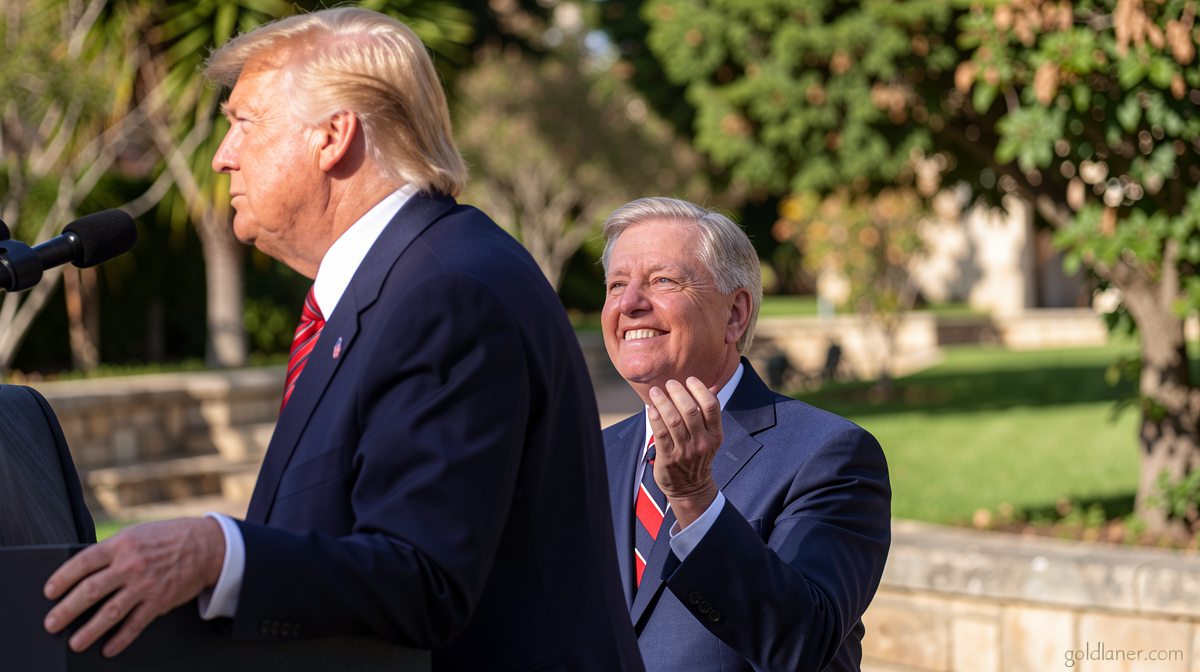
By 2018, Trump openly acknowledged the transformation in their relationship during a gathering with Senate Republicans. He expressed genuine surprise at their newfound friendship, noting how much he valued Graham’s companionship and counsel.
“Lindsey used to be a great enemy of mine, and now he’s a great friend of mine,” Trump marveled. “I really like Lindsey. Can you believe that?”
Graham’s death over the weekend prompted an emotional response from the former president, who described him as one of the most distinguished individuals and senators he had ever encountered. For Trump’s second term, Graham placed himself at the forefront of several major initiatives, including military engagement in Iran and comprehensive upgrades to the Pentagon’s capabilities.
A Pragmatic Approach to Politics
What made Graham’s alliance with Trump particularly noteworthy was his ability to maintain his own convictions while supporting the president. Unlike certain MAGA-aligned lawmakers who completely abandoned their principles, Graham selectively endorsed Trump’s positions while occasionally voicing disagreement. He resisted efforts to eliminate the filibuster, remained devoted to the memory of Senator John McCain, and avoided public confrontations with Trump on contentious issues such as pardons for Capitol riot participants and criticism of traditional allies.
“He looked at Lindsey as one of his foreign policy experts,” a longtime adviser explained. “He didn’t always agree with him, but I think he respected him.”
At the time of his passing, Graham was involved in several critical legislative matters, including bipartisan Russian sanctions legislation and the confirmation process for Trump’s attorney general nominee. His death left a significant void in Washington’s political landscape, particularly regarding foreign policy guidance and congressional negotiations.