
FEMA official who claimed he teleported to Waffle House ousted from agency, sources say
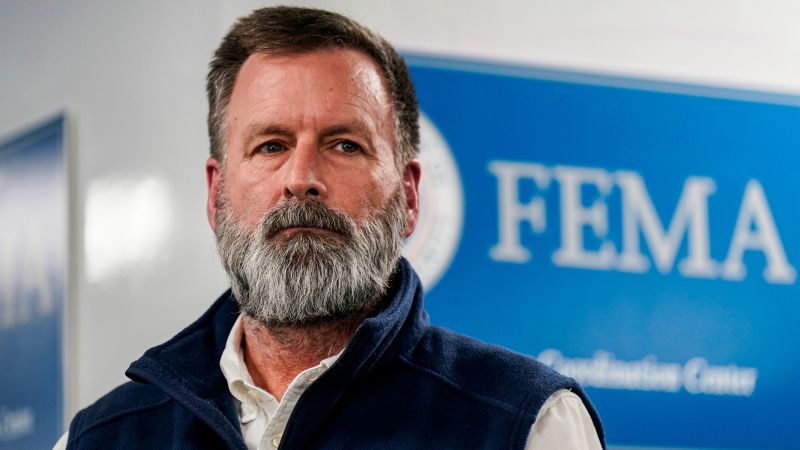
FEMA Leader Gregg Phillips Resigned Amid Public Backlash Over Unusual Remarks
FEMA official who claimed he teleported – Gregg Phillips, a prominent FEMA official known for his controversial statements, has been removed from his position within the agency, according to multiple sources. The decision comes after months of scrutiny over his outlandish comments, including a claim that he had teleported to a Waffle House. This unusual incident, along with other remarks, has fueled growing doubts about his credibility and suitability for the role. The Department of Homeland Security, which oversees FEMA, confirmed his departure on Thursday, stating that Phillips is leaving for personal reasons. However, insiders suggest that his exit was prompted by mounting pressure from new leadership who sought to distance the agency from his public image and recurring conflicts with senior officials.
Phillips’ Appointment and Controversial Background
Phillips was appointed in December 2020 to lead FEMA’s Office of Response and Recovery, a critical leadership role within the agency. His selection was made by White House officials despite a history of promoting election conspiracy theories, particularly following the 2020 presidential election. These theories included claims of widespread voter fraud and a narrative that the election had been stolen. While some within the administration supported his appointment for his assertiveness, others raised concerns about his tendency to make statements that bordered on the absurd.
The controversy surrounding Phillips intensified in March when CNN published a report detailing a collection of bizarre comments he had made during appearances on right-wing podcasts. Among the most memorable was his assertion that he had physically teleported to a Waffle House approximately 50 miles away from his previous location. This claim, which he made in a recorded conversation, sparked widespread ridicule and questions about his judgment. The incident marked a turning point, as it brought national attention to his unconventional approach to public communication.
DHS Leadership’s Role in His Ouster
The Department of Homeland Security confirmed Phillips’ departure, but the official reason — “personal reasons” — has been met with skepticism. Sources close to the agency suggest that the new leadership, including Secretary Alejandro Mayorkas and his team, grew frustrated with the public embarrassment caused by Phillips’ remarks. His frequent clashes with other officials within the department further accelerated his removal. These conflicts reportedly centered on his resistance to budget cuts and operational changes aimed at streamlining FEMA’s response efforts.
While Phillips’ departure may seem sudden, it aligns with broader efforts by the DHS to reshape FEMA’s direction. The agency has faced criticism for its size and efficiency, prompting a push to reduce costs and centralize decision-making. Phillips, however, was seen as a defender of FEMA’s independence. Career officials within the agency noted that his willingness to challenge leadership decisions set him apart from others in the administration. This support, though, could not shield him from the fallout of his most recent remarks.
Teleportation Claim and Public Defenses
The Washington Post first reported on Phillips’ resignation, citing internal discussions about his impact on the agency’s reputation. CNN had previously highlighted his claim of teleportation, including an incident where he said he appeared at a Waffle House without any prior movement. In a later statement, Phillips defended these claims, describing them as evidence of “genuine spiritual experiences” and drawing parallels to biblical accounts of supernatural transportation. He added, “haters gonna hate,” a phrase that became emblematic of his defiant attitude toward critics.
Phillips’ statements have been interpreted in various ways. Some viewed his teleportation claim as a sign of his eccentricity, while others speculated it could be a metaphor for his perceived ability to move quickly between key decision-making roles. His remarks were often accompanied by a mix of humor and seriousness, which left some listeners confused but others entertained. This blend of the bizarre and the authoritative has defined his public persona, making his ouster a symbolic moment for the agency.
Long-Standing Inflammatory Statements
Before joining FEMA, Phillips had a long history of making inflammatory public statements. CNN previously reported that his rhetoric included violent language directed at political opponents, which some critics argued was designed to provoke and polarize. He also repeatedly promoted false claims about election fraud, a stance that aligned with the Trump administration’s narrative. Additionally, Phillips warned listeners on podcasts that migrants were coming to kill Americans, urging them to arm themselves in response. These statements, while controversial, were consistent with his pattern of blending conspiracy theories with personal anecdotes.
His appointment to FEMA was seen by some as a strategic move to infuse the agency with a more assertive and politically charged leadership style. However, this approach has also raised questions about the balance between ideological messaging and operational effectiveness. Phillips’ comments, whether about teleportation or migration threats, have been scrutinized for their potential to undermine public trust in FEMA’s ability to manage crises with neutrality and expertise.
Impact on FEMA’s Reputation and Operations
Phillips’ tenure has left a mixed legacy within FEMA. While he earned the admiration of some career officials for his steadfast defense of the agency’s work, his public behavior has also caused friction. His outlandish claims have been used by opponents to question FEMA’s credibility, particularly during a time when the agency is tasked with managing high-stakes emergencies. The decision to remove him reflects a broader effort by the DHS to align FEMA’s messaging with a more conventional and less provocative tone.
Despite his ouster, Phillips’ influence on the agency’s culture remains notable. His arrival coincided with a period of significant change under then-Homeland Security Secretary Kristi Noem and her chief of staff, Corey Lewandowski. They had been actively working to reduce FEMA’s size and streamline its operations, often emphasizing efficiency over extensive programs. Phillips, however, became a key figure in resisting these changes, which earned him support from those who valued his commitment to maintaining FEMA’s autonomy.
Trump’s Reaction and Legacy of the Ouster
President Donald Trump, who had previously endorsed Phillips, weighed in on the situation. In a conversation with CNN, he acknowledged the unusual nature of Phillips’ claims but expressed openness to exploring them further. “I know nothing about teleporting or him, but I’ll find out about it right now,” Trump said, highlighting the extent to which his administration had embraced Phillips’ more outlandish ideas.
The ouster of Phillips has been framed as both a political and reputational decision. For the DHS, it represents a move to distance itself from the controversies that followed the 2020 election. For FEMA, it signals a shift toward more measured leadership. Nonetheless, Phillips’ legacy endures as a case study in the challenges of blending political messaging with crisis management. His story underscores the delicate balance between charisma and clarity, as well as the role of public perception in shaping an agency’s effectiveness.
Conclusion and Future Implications
As the details of Phillips’ departure continue to emerge, the focus remains on how his remarks impacted FEMA’s public image. The agency now faces the task of rebuilding trust, particularly in light of his association with election conspiracies. While some of his supporters argue that his presence was a necessary counterbalance to bureaucratic inertia, others believe his removal was overdue. The Washington Post and CNN’s coverage of his exit has amplified the debate, with questions about whether his unconventional approach was a strength or a liability.
Phillips’ ousting is a reminder of the scrutiny that leaders in public service face, especially during politically charged times. His teleportation claim, though seemingly trivial, became a symbol of the broader skepticism directed at his credibility. As FEMA moves forward, the agency will need to navigate the legacy of such statements while ensuring its focus remains on the practical challenges of disaster response. Phillips’ story, however, will remain a unique chapter in the history of the Federal Emergency Management Agency.
