
America held a big birthday party — and a soccer extravaganza broke out
America held a big birthday party — and a soccer extravaganza broke out
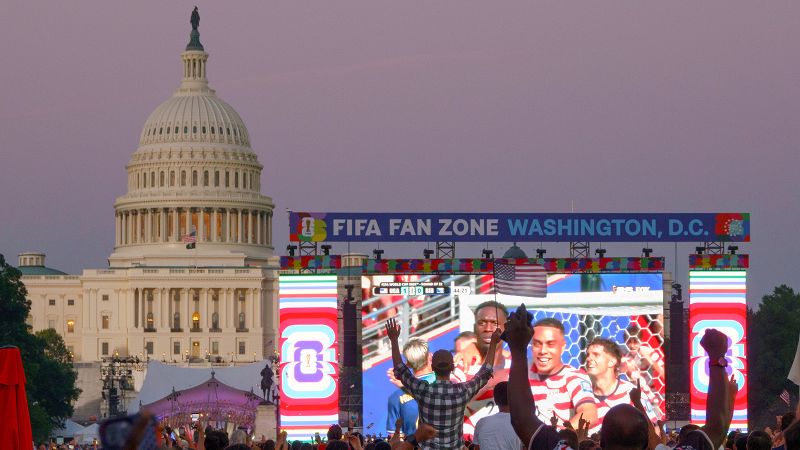
America held a big birthday party – As the United States celebrated its 250th anniversary, soccer—recognized worldwide as football—became an unexpected lens through which the nation reflected on its identity. The sport, often seen as a global unifier, illuminated the country’s complexity and warmth, offering a reprieve from political strife and economic uncertainty. The World Cup, with its blend of international talent and cultural diversity, sparked a nationwide celebration that transcended borders, uniting fans in a shared joy that felt like a stark contrast to the polarization dominating headlines.
A Unifying Spectacle
Despite years of ideological division and the lingering economic effects of the pandemic, the World Cup’s arrival provided a moment of collective euphoria. The tournament’s ability to bring people together was evident in the spontaneous gatherings outside stadiums, where fans from all walks of life reveled in the excitement. This phenomenon was not just about the game itself, but about the broader sense of community it fostered, offering a glimpse into a nation that, while often portrayed in stark political terms, remains deeply inclusive and adaptable.
On the pitch, the competition showcased a mosaic of talent. European and South American stars, alongside emerging teams from Africa and Asia, highlighted the U.S.’s role as a melting pot. This diversity extended beyond the field, with players representing a patchwork of heritage and background. For instance, Antonee Robinson, whose father was a notable college soccer player, grew up in the northern English countryside, a testament to the immigrant influence that has shaped American culture. Similarly, midfielder Malik Tillman, the child of an American serviceman and a German mother, developed his skills in Germany’s competitive youth soccer system, illustrating how global connections have enriched the nation’s sporting landscape.
The Multicultural Fabric
As the tournament unfolded, cities that had once felt quiet due to economic shifts and remote work policies experienced a revival. Bars and restaurants were packed nightly, transforming into hubs of international camaraderie. Fans in jerseys from Mexico, Brazil, Colombia, and beyond filled streets, creating a vibrant tapestry of cultures. This spectacle underscored the United States’ enduring strength as a nation of immigrants, where diverse backgrounds are not just accepted but celebrated.
Meanwhile, the nation’s political landscape continued to evolve. The Supreme Court’s recent affirmation of birthright citizenship, a constitutional cornerstone, coincided with a pivotal moment for the U.S. men’s team. Just days before a key match, the court’s decision reinforced the idea that identity is fluid and deeply rooted in opportunity. Folarin Balogun, a Brooklyn-born player of Nigerian descent, exemplified this principle. His journey from the U.S. to playing for Monaco was made possible by the country’s heritage laws, a reminder that the American experiment thrives on inclusion.
A Cultural Crossroads
The World Cup also highlighted the broader cultural tensions shaping American society. While the sport itself was a beacon of unity, it was not immune to the national discourse. Debates over players taking a knee, using their platforms to critique leaders, and the influence of political ideologies on the game mirrored the country’s ongoing culture wars. Yet, the U.S. team’s success offered a rare moment of bipartisan joy, uniting fans across political lines in a shared celebration of achievement.
Contrastingly, the tournament’s global appeal was tempered by critiques of FIFA’s political maneuvering. The organization’s decision to award a peace prize to Donald Trump drew criticism from fans who felt it aligned with hardline policies. However, FIFA boss Gianni Infantino’s remarks in Los Angeles last year suggested a deeper understanding of soccer’s power. “We can see, well, actually this other person from this other part of the world, he’s not so bad or she’s not so bad as described, right?” he remarked, emphasizing the sport’s ability to humanize even the most polarizing figures.
Infantino’s vision for the 2026 World Cup extended beyond the field. He saw the event as an opportunity to amplify the U.S.’s revolutionary legacy, stating, “When we learned that in 2026, there is the 250th anniversary of the United States, we thought, well, you know, you have a celebration—we organize a party.” His words captured the synergy between the nation’s historical milestones and the modern, globalized celebration of soccer. The tournament, in this sense, became a bridge between past and present, linking the revolutionary ideals of 1776 with the cultural richness of today.
Legacy and Resilience
The U.S. men’s team, managed by an Argentinian coach, embodied this legacy. With homegrown players and international recruits, it reflected the nation’s ability to integrate and thrive. The team’s success was not just a sports achievement but a symbol of resilience, showing how the American spirit endures even amid political challenges. This was particularly poignant as the country grappled with rising anti-immigrant sentiment and the erosion of civil liberties in some regions.
While sports have become a battleground for ideological debates, the World Cup offered a rare reprieve. The simple act of gathering for a shared event—something that feels almost archaic in the age of constant digital engagement—was the heart of the summer’s craze. For many, it was a reminder that joy, when unburdened by politics, can transcend borders and unite people in a way that feels authentic and genuine.
Yet, the U.S. team’s triumphs were not without challenges. Like its ice hockey counterparts, who once captured Olympic glory only to see it overshadowed by political controversy, soccer’s popularity could face similar hurdles. However, the World Cup’s timing seemed to align with the nation’s need for respite. As the tournament progressed, it became clear that soccer was not just a game but a reflection of America’s enduring capacity to adapt, welcome, and innovate. The 250th anniversary provided the perfect backdrop, transforming the sport into a celebration of the nation’s founding principles and its ongoing evolution.
In this way, the World Cup and the July 4 festivities became intertwined. The former offered a window into the latter, showcasing how a nation’s past and present can coexist in the shared space of sports. For those who had grown weary of political divisions, the event was a reminder that the United States is not just a collection of ideological camps but a living, breathing entity shaped by the contributions of countless individuals and cultures.
