After ousting Bill Cassidy, Donald Trump faces fresh test of his sway with GOP voters in Louisiana’s Senate runoff

Trump’s Influence Tested in Louisiana Senate Runoff
After ousting Bill Cassidy Donald Trump – After ousting Bill Cassidy, Donald Trump faces a critical test of his influence with GOP voters in Louisiana’s Senate runoff. The contest, which took place on Saturday, has become a battleground for the president’s political allies and opponents, with the result poised to reflect broader tensions within the Republican Party. Trump’s endorsement of Rep. Julia Letlow, a first-term congresswoman, has drawn attention to the race, as it challenges the loyalty of Louisiana’s electorate toward the former president’s agenda. This runoff underscores the shifting dynamics of the GOP, particularly following Cassidy’s 2021 conviction vote during Trump’s second impeachment trial, which catalyzed his exit from the Senate.
Trump’s Strategy and the Ousting of Cassidy
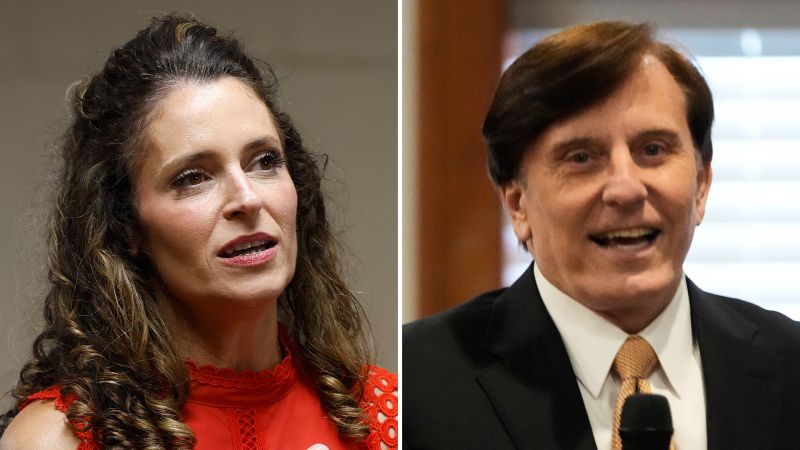
Trump’s strategy in the Louisiana race has been centered on dismantling Senate leaders who diverged from his policies. His support for Julia Letlow signals a deliberate effort to replace Bill Cassidy, a two-term senator who had grown increasingly critical of Trump’s leadership. Letlow, who ran as a Trump-aligned candidate, faces John Fleming, the state treasurer, in a runoff that could redefine the political landscape of a traditionally conservative state. This contest is part of a larger pattern where Trump has sought to reassert control over the Republican establishment, targeting figures like Texas Senator John Cornyn and Kentucky Representative Thomas Massie.
Letlow’s campaign has relied heavily on Trump’s endorsement, which has bolstered her standing among party loyalists. The president’s involvement, including a telephone rally where he praised her as a “fearless champion for the people,” has framed the race as a referendum on his political influence. Meanwhile, Fleming has positioned himself as a loyalist to Trump’s agenda, emphasizing his experience in the Trump administration and his commitment to conservative principles. The runoff, therefore, is not only about replacing a senator but also about determining whether Trump’s base remains cohesive in the face of internal party challenges.
Primary Results and the Runoff Structure
The May 16 primary saw Letlow emerge as the top vote-getter with nearly 45% of the electorate’s support, while Fleming secured 28% and Cassidy received almost 25%. With no candidate reaching the 50% threshold, the runoff has been set, highlighting the deep divide in Louisiana’s Republican primary electorate. This structure has amplified the stakes, as the preferences of voters who previously supported Cassidy now play a pivotal role in deciding his replacement. The contest also reflects the growing uncertainty about Trump’s ability to maintain control over the party’s message and direction.
Trump’s presence in the runoff has been a defining factor, as his backing has given Letlow a significant edge in fundraising and media exposure. His rallying speeches and public endorsements have helped reinforce the narrative that the race is about upholding his vision for the Republican Party. However, Fleming has leveraged his own credibility, emphasizing his experience in state politics and his alignment with Trump’s policies. The outcome of the runoff may serve as a barometer for how effectively Trump’s influence can sway Louisiana’s voters in the upcoming midterms.
Candidates’ Backgrounds and Ideological Alignment
Julia Letlow, a 45-year-old former university administrator, entered the Senate race after her husband’s death from Covid-19 in 2020. Her brief tenure in Congress has been marked by a focus on Trump’s economic and social policies, positioning her as a fresh face for the party’s base. In contrast, John Fleming, a 74-year-old veteran, brings decades of political experience to the race. His time in the Trump administration, where he served as an assistant to the president, has been a key asset in his campaign, reinforcing his image as a steadfast supporter of the former leader’s agenda.
Fleming’s campaign has highlighted his loyalty to Trump’s policies, particularly in his role as a critic of liberal initiatives. One ad even labels him a “MAGA conservative,” tying his political identity to the movement that has been central to Trump’s base. Letlow, while less experienced, has benefited from Trump’s strategic support, which has helped her gain momentum. The runoff, therefore, pits a seasoned insider with a long history in Louisiana politics against a more ideologically aligned but less experienced newcomer, reflecting the broader ideological battle within the GOP.
Democratic Contest and Political Realities
While the GOP runoff dominates headlines, Democrats are also choosing their Senate nominee in a separate contest on Saturday. The two finalists are Jamie Davis, a farmer and former state House candidate, and Gary Crockett, a Navy veteran and defense contractor. Davis nearly won the primary outright, securing over 47% of the vote, while Crockett edged out a third candidate by a narrow margin. The Democratic race adds another layer of complexity, as the outcome may influence the overall balance of power in the Senate.
The Louisiana Senate runoff is a microcosm of the national political landscape, where Trump’s influence is both a strength and a point of contention. His ability to sway GOP voters in this deep-red state has raised questions about the broader reach of his political strategy. As the runoff results are tallied, they will not only determine the next senator but also signal whether Trump’s base remains united or if the party is beginning to fracture under the weight of internal disagreements. The election is a pivotal moment for the Republican Party and a key indicator of the direction of the 2026 midterms.