
Smartphones arrived just before the US fertility rate plunged. One study says it’s a direct cause
Smartphones and the US Fertility Rate Decline: A Study Suggests a Link
Smartphones arrived just before the US fertility rate plummeted, and a new study proposes a surprising connection between the two. Over the past few decades, the U.S. has seen a consistent drop in birth rates, with researchers exploring various factors such as economic pressures, evolving family norms, and access to contraception. However, Caitlin Myers, an economist at Middlebury College, and her stepson Ezekiel Hooper, a Middlebury student, argue that the rise of smartphones may have played a pivotal role. Their research suggests that the technology’s integration into daily life could have reshaped social interactions, influencing decisions about family planning in unexpected ways.
The 2007 Inflection Point
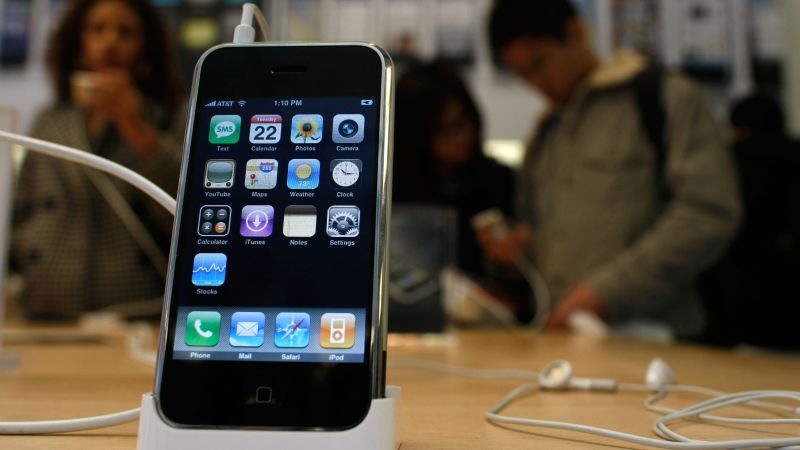
Myers points to 2007 as a critical year, when the iPhone debuted and smartphones began to dominate everyday life. This timing coincided with the Great Recession, which initially prompted theories about economic downturns affecting fertility. Yet, the recovery period saw a sharp decline in births, a trend labeled a “baby-less recovery” by the researchers. The study notes that while economic factors remain important, the widespread adoption of smartphones may have introduced new social dynamics that accelerated this decline.
“The emergence of smartphones coincided with a period of fertility decline that defied conventional economic explanations.” – Caitlin Myers
The research team examined how smartphones altered human behavior, particularly in relationships and communication. They hypothesize that the constant connectivity and digital engagement provided by these devices may have reduced the spontaneity of in-person interactions, which are often linked to casual sexual activity and unplanned pregnancies. As smartphones became more integrated into social life, people may have shifted toward more controlled, screen-mediated interactions, impacting long-term fertility trends.
Shifts in Social Behavior
Myers and Hooper’s analysis focused on how smartphone adoption correlated with changes in birth rates across different demographics. They found that areas with higher smartphone penetration experienced more pronounced declines in fertility, especially among teenagers. In counties where over 90% of residents had access to smartphones, the teenage birth rate dropped by about 26%, compared to a 14% decline in less connected regions. This suggests that smartphones may have influenced behaviors like dating and sexual activity, leading to fewer unintended pregnancies.
“Smartphones may have created a cultural shift toward more deliberate family planning decisions.” – Ezekiel Hooper
Additionally, the study observed a 15% decline in births among women in their 20s in highly connected areas, versus a 10% drop elsewhere. While the impact on older women was less significant, the researchers note that smartphones could still play a subtle role in shaping broader social habits. For instance, the ease of digital communication may have encouraged individuals to delay parenthood, prioritizing career goals or personal development over immediate family expansion.
Broader Implications and Expert Views
Though the study doesn’t fully explain the mechanism, its findings have sparked debate among scholars. Some experts acknowledge the possibility of smartphones influencing fertility decisions, while others question whether the decline can be directly attributed to technology. “It’s a compelling theory, but more data is needed to confirm causation,” said Dr. Laura Thompson, a sociologist at the University of California, Berkeley. Still, the correlation between smartphone adoption and fertility trends remains a provocative point of discussion in contemporary research.
Myers and Hooper emphasize that smartphones are not the sole driver of this decline but rather one of several contributing factors. The technology’s role in reshaping how people connect, communicate, and spend time with others could have amplified existing trends, such as delayed marriage or career prioritization. As smartphones continue to evolve, their impact on social behavior and fertility rates may warrant further study in the years to come.
