
‘Their new nuclear option’: Why Iran’s influence over the Strait of Hormuz is here to stay
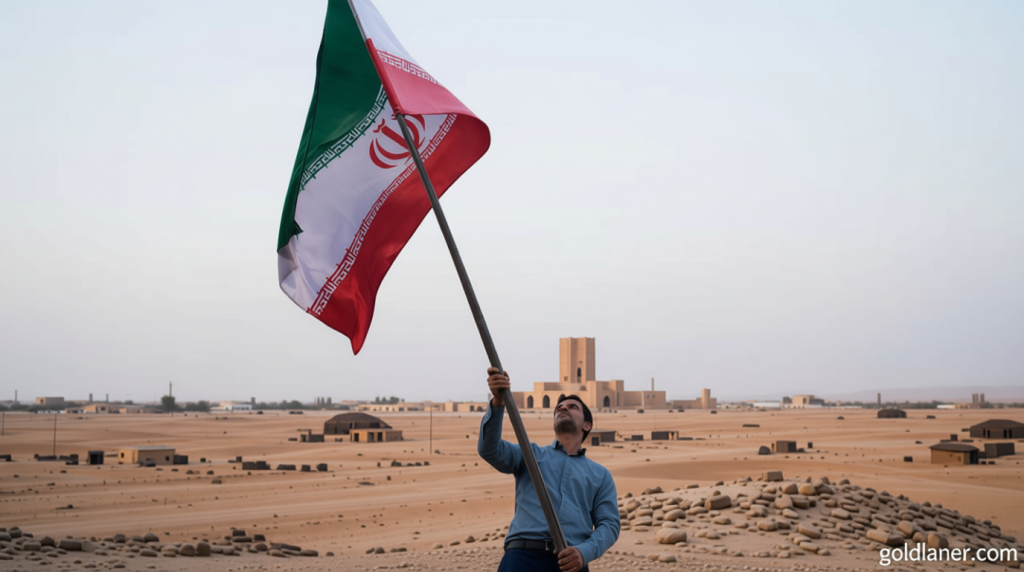
‘Their new nuclear option’: Why Iran’s influence over the Strait of Hormuz is here to stay
The Strait of Hormuz as a geopolitical weapon
Their new nuclear option – The recent conflict has solidified Iran’s grip on the Strait of Hormuz, giving it a powerful tool to influence global markets. This vital waterway, which connects the Persian Gulf to the Arabian Sea, remains a critical artery for oil and liquefied natural gas (LNG) exports. Analysts suggest that Tehran’s ability to disrupt this flow, even in the aftermath of hostilities, has transformed the strait into a strategic asset. Despite ongoing negotiations with the White House, the threat of Iranian control over the strait is expected to linger, according to experts.
Gregory Brew, a senior analyst at Eurasia Group, emphasized that Iran’s demonstration of its capacity to close the strait has marked a turning point. “What Iran has demonstrated is that it has the power to close the strait and to keep it closed, even in the face of immense US and Israeli bombardment,” Brew stated in a recent interview with CNN. “And that is something that no one will ever be able to take away from them.” This assertion underscores the shift in dynamics, where Iran now holds a “nuclear option” in energy geopolitics.
Iran’s institutionalization of control
Following the conflict, Iran has taken steps to formalize its authority over the strait. Last month, the country established the Persian Gulf Strait Authority (PGSA), a new body tasked with overseeing transit protocols. The PGSA’s measures include Iranian-led vetting of ships and the imposition of fees, which have drawn criticism from the United States. Despite these actions, the US has imposed sanctions on the PGSA, attempting to limit Tehran’s influence over shipping routes.
However, some oil traders and shipping companies have already begun negotiating with Iran to ensure continued oil exports. This move reflects the urgency of maintaining supply chains as global stockpiles dwindle. “The important thing is that flows through the Strait resume in significant volumes,” said Alan Gelder, senior vice president for refining, chemicals, and oil markets at Wood Mackenzie. “That would start to eliminate the energy shock.” Gelder’s comments highlight the immediate economic stakes, but they also raise questions about the long-term viability of such arrangements.
Global economic implications
The potential closure of the Strait of Hormuz could have far-reaching consequences for the global economy. If the strait remains blocked through the end of 2027, Brent crude prices might surge beyond $200 a barrel, turning the current energy crisis into a full-scale economic downturn. Wood Mackenzie’s head of economics, Peter Martin, warned that prolonged disruption could reshape global markets, with oil prices climbing to levels not seen since the early 2000s.
Yet, some analysts argue that even partial Iranian control of the strait could be less disruptive than a complete blockade. A recent paper by Kpler, a trade intelligence firm, explored how a collaboration between Iran and Oman might stabilize the region. UK-based academics echoed similar sentiments, noting that the idea of Iran as a key player in strait management has gained traction. “The concept of Iran wielding influence over the strait is no longer seen as a far-fetched scenario,” one scholar remarked.
The cost of diversification
While efforts to reduce dependence on the Strait of Hormuz are underway, experts caution that these measures may come at a financial cost. Currently, about a fifth of the world’s oil and LNG supply passes through the waterway, making it a linchpin of global energy infrastructure. Diversifying trade routes to other regions, such as the Mediterranean or the Atlantic, could mitigate the risk of disruption, but it would require significant investment and time.
Alan Gelder noted that a return to pre-war transit levels—around 140 vessels per day—would ease the strain on oil prices. He estimated that a $2 million fee per tanker, as charged by Iran, would increase the price of a barrel of crude by just $1. However, this projection assumes smooth logistics and minimal delays, which may not be guaranteed. “The concern with any management of the strait is the degree to which it restricts flows,” Gelder added, questioning Tehran’s ability to handle such a high volume efficiently.
Energy consultancy Rystad offers a more pessimistic outlook, suggesting the price premium could be as high as $10 to $20 per barrel. Jorge Leon, head of geopolitical analysis at Rystad, stated, “We are convinced that Iran will maintain some sort of leverage over the Strait of Hormuz going forward.” This control, he argued, introduces a persistent risk of further disruptions, with oil prices unlikely to revert to pre-war levels even by 2027.
Broader impacts beyond oil
While the focus has largely been on energy, the security of the Strait of Hormuz also affects the global supply of other goods. Fertilizer, jet fuel, helium, and aluminum are among the commodities that rely on the region’s shipping routes. Any prolonged instability could ripple through industries dependent on these materials, from agriculture to aerospace.
Analysts warn that the lingering uncertainty surrounding the strait’s security may deter international trade. “The idea of Iran as a dominant force in the region is now part of the mainstream conversation,” said one expert, adding that the country’s ability to impose tolls or restrictions has altered the geopolitical landscape. This shift has forced businesses to rethink supply chain strategies, with many now prioritizing contingency plans over reliance on the strait.
Despite US efforts to counter Iranian influence, the situation shows no signs of abating. The PGSA’s establishment and the ongoing negotiations for transit fees illustrate Iran’s determination to assert control. Meanwhile, the White House’s threats of secondary sanctions have failed to deter major players, suggesting that the strait’s strategic importance will outweigh any short-term penalties.
Looking ahead: A new era of energy geopolitics
The long-term implications of Iran’s dominance over the Strait of Hormuz are profound. With oil prices already fluctuating due to the war, the prospect of continued Iranian leverage has added another layer of volatility. “We’re not going back to oil prices at $60 a barrel,” Martin said, emphasizing that the energy shock is now a defining feature of the global market.
As the conflict evolves, the balance of power in the region is shifting. Iran’s ability to manage the strait, even partially, has proven that it can exert influence on a global scale. The challenge for international stakeholders is to navigate this new reality while ensuring energy security and economic stability. Whether through diplomatic efforts, financial incentives, or alternative trade routes, the world will need to adapt to the fact that the Strait of Hormuz is no longer just a chokepoint—it’s a geopolitical battleground where Iran’s presence is likely to remain indelible.
