
Secrets of the sultan’s palace where concubines and eunuchs lived
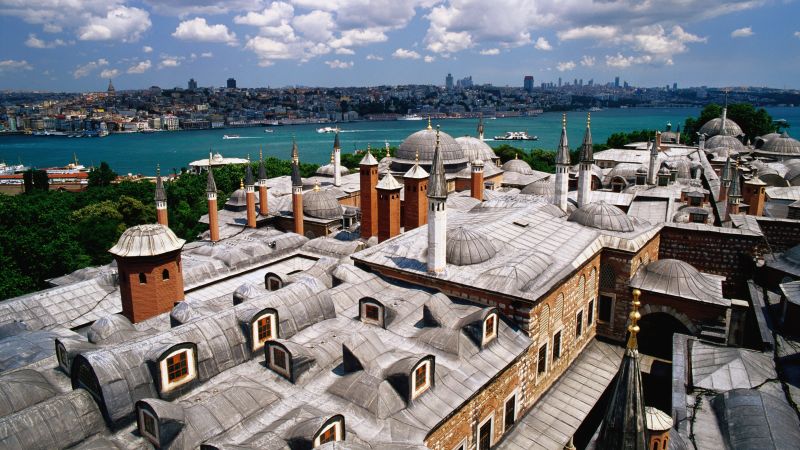
Hidden Majesty of the Ottoman Capital’s Imperial Seat
Secrets of the sultan s palace – Istanbul’s Topkapi Palace, once the heart of the Ottoman Empire for nearly four centuries, stands as a testament to the empire’s grandeur and complexity. Unlike the towering monuments that often signal a nation’s power, this palace operates in a subtler manner, blending architectural sophistication with an air of secrecy. While the 15th-century Imperial Gate, with its gilded arches and imposing presence, marks the entrance, the palace itself is concealed from view by a labyrinth of historical sites and urban sprawl. Nestled within the bustling district of Sultanahmet, a power center since the Byzantine era, Topkapi’s location is both strategic and elusive, surrounded by a five-kilometer wall that rises to 12 meters. This fortification not only protected the empire’s seat but also symbolized its hierarchy and exclusivity.
A Miniature City Within a City
At its height, Topkapi was more than a royal residence—it functioned as a self-contained world, housing an estimated 4,000 residents who lived, worked, and interacted within its vast grounds. The palace complex, spanning 700,000 square meters, is a sprawling maze of interconnected buildings, gardens, and courtyards. Its sheer scale dwarfs the surrounding landmarks, including the Hagia Sophia and the Blue Mosque, which share the same historical neighborhood. Yet, despite its prominence, the palace remains a quiet enigma, its significance often overshadowed by the more visible monuments of Istanbul.
“Topkapi was the beating heart of the empire,” reflects Caroline Finkel, author of *Osman’s Dream: The History of the Ottoman Empire 1300–1923*. “Every intrigue, every decision of consequence, unfolded within these walls.”
The palace’s layout evolved over centuries, but its core structure has endured remarkably. Gülru Necipoglu, in her work *Architecture, Ceremonial, and Power: The Topkapi Palace in the Fifteenth and Sixteenth Centuries*, highlights that the original configuration remains intact, even after countless restorations and rebuildings. “For hundreds of years, its essential form was preserved,” she writes, “as though the empire itself feared altering its sacred blueprint.” This persistence speaks to the palace’s dual role as a political stronghold and a cultural hub, where imperial authority and daily life coexisted in delicate balance.
The Harem: A World of Secrets and Splendor
At the center of Topkapi’s complex lies the harem, a 400-room sanctuary where the Sultan’s family resided. Access to this private domain was strictly regulated, with only eunuchs permitted to enter unless they were personally trusted. The harem’s design emphasized seclusion, its corridors and chambers reflecting the layered roles of women in Ottoman society. From concubines to mothers of the sultan, the space was a microcosm of power, where personal and political lives intertwined.
The journey to the harem begins at Seraglio Point, a prominent promontory overlooking the confluence of the Bosphorus Strait, the Golden Horn, and the Sea of Marmara. This location, historically significant as the site of the ancient Byzantine acropolis, was chosen for its symbolic and strategic value. The transition from the public to the private is marked by the Gate of Salutation, a structure reminiscent of European medieval castles. This threshold signals the shift from the empire’s grand displays to the intimate world of the sultan’s household.
The Rhythm of Empire: From Construction to Daily Life
Sultan Mehmed II, the conqueror of Constantinople, initiated the palace’s construction in 1459, incorporating remnants of the city’s ancient fortifications. The resulting complex was a marvel of engineering, blending Islamic, Byzantine, and Persian architectural styles. Over time, the palace expanded, reaching its zenith during the 16th century under Süleyman the Magnificent, whose reign defined the empire’s Golden Age. This era saw the addition of grand halls, intricate gardens, and ceremonial spaces that reflected the empire’s reach, from Vienna to Algiers to Mecca.
Beyond its architectural grandeur, Topkapi was a living entity, shaped by the rhythms of imperial life. The forecourt, a lush expanse of plane and cypress trees, served as a public space where citizens could gather. These trees, some of which are now hollowed out by a persistent fungus, have withstood centuries of wear and tear, their gnarled trunks standing as silent witnesses to history. The area also houses the Imperial Mint, the sixth-century Hagia Irene Church, and the palace bakeries, revealing the blend of utility and aesthetics that defined Ottoman design.
“The first courtyard was the largest and most accessible, open to any unarmed member of the public,” notes a historian in *Architecture, Ceremonial, and Power*. “Yet, as the empire grew in ambition, so too did its layers of control.”
The palace’s legacy extends beyond its physical walls, influencing palaces across the world. Alongside France’s Palace of Versailles and China’s Forbidden City, Topkapi is celebrated as one of the greatest surviving imperial residences. Its design, rooted in both practicality and symbolism, continues to captivate visitors who marvel at its intricate details and historical depth. While the empire itself has long since dissolved, the palace endures as a tangible link to its past, preserving the stories of those who once walked its halls.
Legends and Lore: The Living History of Topkapi
Even the palace’s lesser-known features carry whispers of its storied past. One such element is the Fountain of the Executioner, a striking feature in the first courtyard. According to legend, this fountain was where the chief swordsman would wash the bloodstained blades after royal executions. The imagery of such a place, nestled amid ornate fountains and shaded gardens, adds a layer of intrigue to the palace’s already rich history.
The structure of Topkapi is a reflection of its function as both a residence and a center of governance. The four courtyards, each progressively more restricted, mirror the empire’s social stratification. From the open spaces of the first courtyard to the secluded quarters of the harem, the palace’s design ensured that access was as much a symbol of power as the architecture itself. The eunuchs, who served as intermediaries between the sultan and his court, navigated these layers with precision, their roles critical in maintaining the palace’s delicate balance of authority.
As the empire expanded, so did Topkapi, but its essence remained unchanged. The palace’s enduring presence is a reminder of the Ottoman legacy, a legacy that continues to shape Istanbul’s identity. For visitors, it is more than a historical site—it is a gateway to the past, where the echoes of imperial ambition and personal lives still linger. The secrets of the sultan’s palace, once hidden behind its towering walls, now invite exploration, offering a glimpse into the heart of an empire that once spanned continents.
From its strategic location to its intricate design, Topkapi Palace is a masterpiece that defies time. Its stories, from the sorrow of a sultan’s grief to the bloodstained fountains of the executioner, are etched into every stone and corridor. As the city of Istanbul continues to evolve, the palace remains a steadfast symbol of its imperial history, a place where the past and present converge in a timeless dance of power and beauty.
