
Utah revokes license for boarding school where Paris Hilton says she was abused as a teen
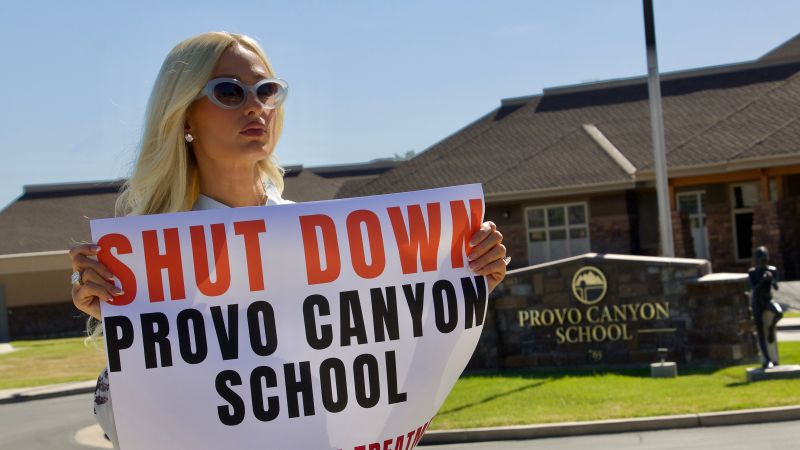
Utah Revokes License for Boarding School Where Paris Hilton Says She Was Abused as a Teen
Utah revokes license for boarding school – The state of Utah has taken action to revoke the license of Provo Canyon School, a facility where socialite Paris Hilton alleged she faced abuse during her teenage years. The decision, which became effective on Monday, was based on the school’s failure to meet essential health and safety standards for its students. State officials cited a range of noncompliance issues, including inadequate staffing, improper use of restraints, and insufficient care protocols, all of which have prompted the school to face scrutiny from the Department of Health & Human Services.
History of Noncompliance and Regulatory Actions
The Provo Canyon School’s campus in Springville has been under investigation for years, with documentation tracing back to 2025. Officials identified multiple lapses in the school’s operations, such as not maintaining adequate staff-to-student ratios, subjecting students to unnecessary physical restraints, and engaging in aggressive contact without justification. These violations were compounded by staff neglect and the school’s failure to verify employee credentials or submit timely background checks for new hires. In May, state health officials imposed temporary restrictions, citing a critical incident where a student with severe injuries received delayed medical care. This led to immediate concerns about the school’s ability to safeguard its students.
Paris Hilton’s Testimony and Advocacy
Paris Hilton, 45, has been a vocal advocate for reform in the troubled teen industry since her time at the school in the late 1990s. She spent nearly a year there, claiming that staff members subjected her to physical abuse, monitored her during private moments, administered pills without her knowledge, and confined her to solitary rooms without clothing. “For over five decades, children have come forward with stories of abuse, neglect, and trauma,” Hilton stated in a Tuesday press release.
“Today, the state confirmed what survivors have known all along: Provo Canyon School failed the children in its care. I was one of those children. I know what it feels like to cry for help and believe no one is coming. Today, children still inside that facility know someone is finally coming to protect them.”
Her testimony has been instrumental in shaping policies across Utah and 15 other states, as she has spoken before congressional committees and state legislatures to push for stronger protections for adolescents.
The Troubled Teen Industry in Utah
Utah has long been a central player in the troubled teen industry, which consists of private, for-profit residential centers designed to address behavioral issues in youth. These institutions, often referred to as “boarding schools,” have drawn both praise and criticism for their approach to discipline and care. Provo Canyon School, which has operated for over 50 years, is now under new ownership, and its administration has stated it cannot comment on past incidents, including Hilton’s allegations. Despite this, the state’s recent decision underscores a growing trend of accountability within the sector.
Impact of the License Revocation
The revocation of the school’s license has immediate implications for its operations. According to the state’s directive, all services at the Springville campus must be suspended by August 6. This deadline forces the school to either rectify its shortcomings or face full closure. The Department of Health & Human Services has given the institution 15 days to request a hearing, providing a window for the school to defend its practices. However, the burden of proof now rests on the administration to demonstrate that its operations have met the required standards.
Recent Support and Legal Challenges
Just weeks before the license revocation, Hilton returned to the facility to support two families who had filed lawsuits alleging their children were mistreated there. Her presence highlighted the ongoing controversy surrounding the school and its role in the broader network of residential treatment centers. While the school’s current leadership has not addressed past incidents, the state’s decision has reignited discussions about the safety and transparency of these institutions. The lawsuits, which are still pending, include claims of physical and emotional harm, further emphasizing the need for regulatory oversight.
Public Reaction and Industry Accountability
The announcement of the license revocation has sparked mixed reactions from the public and stakeholders. Advocacy groups have praised the move as a necessary step toward holding the troubled teen industry accountable, while some parents have defended the school’s methods, citing its effectiveness in addressing behavioral challenges. The incident has also raised questions about the role of state licensing authorities in ensuring that these centers prioritize student well-being over profit. For decades, Utah has been a hub for such institutions, and this revocation marks a pivotal moment in the state’s regulatory history.
Legacy of the Provo Canyon School
Provo Canyon School’s long-standing reputation as a premier facility for troubled teens has been shaken by the recent license revocation. Founded in the 1970s, the school has been a fixture in Utah’s educational landscape, offering programs for children with behavioral and emotional issues. However, the accumulating evidence of its shortcomings has led to a reevaluation of its practices. The school’s new owners, who have taken over since late 2025, have yet to address the past controversies, leaving many to wonder about the future of the institution and its commitment to change.
Broader Implications for Youth Welfare
Hilton’s allegations have not only impacted Provo Canyon School but also sparked a national conversation about the treatment of teenagers in similar facilities. Her advocacy has been a catalyst for legislative reforms, with several states enacting laws to enhance accountability and safety measures. The incident in Utah serves as a case study for the importance of rigorous oversight in the residential treatment sector. As the school faces closure or reorganization, the focus remains on ensuring that the children currently in its care receive the support and protection they deserve.
Next Steps and Ongoing Investigations
With the license revoked, the school must now navigate the next phase of its operations. The Department of Health & Human Services will review the school’s response to the citations, which include a detailed list of violations dating back to 2025. This review will determine whether the facility can regain its license or be permanently shut down. Meanwhile, the families who have filed lawsuits continue to seek justice, and the state’s decision has provided them with renewed momentum. As the school prepares for its upcoming hearing, the spotlight remains on its ability to address the concerns that have led to its current predicament.
The incident at Provo Canyon School highlights the complexities of balancing discipline with care in the troubled teen industry. While the school has been a cornerstone of Utah’s approach to youth rehabilitation, the recent revocation signals a shift toward stricter standards and greater transparency. For Paris Hilton, the decision represents a long-awaited validation of her experiences and a step toward justice for the children who have endured similar struggles. As the school’s future unfolds, the broader implications for the industry and the lives of its students will continue to be scrutinized.
