
China conducts rare submarine-launched ballistic missile test, angering Pacific neighbors
China Conducts Rare Submarine-Launched Ballistic Missile Test, Angering Pacific Neighbors
China conducts rare submarine launched ballistic – On Monday, China carried out a rare test of a submarine-launched ballistic missile in the Pacific Ocean, drawing concern from New Zealand and Australia. The test, which involved firing a strategic missile equipped with a dummy warhead into the open sea, landed precisely within designated waters, according to a statement issued by the People’s Liberation Army Navy. This move has raised questions about China’s growing military presence and its impact on regional stability.
PLA Navy Spokesperson Details the Test
Senior Captain Wang Xuemeng, a representative of the PLA Navy, confirmed that the operation was conducted in accordance with international law and targeted no specific nation or objective. “The test launch was a routine part of China’s annual military training schedule,” he said, emphasizing that relevant countries had been informed of the plan beforehand. However, the timing and location of the test have sparked debate, particularly among Pacific Island nations.
“Earlier today, China informed us of its plans to launch a long-range ballistic missile into the South Pacific,” said Winston Peters, New Zealand’s Minister of Foreign Affairs. “This is an unwelcome and concerning development.”
Peters pointed out that the missile was fired into the South Pacific Nuclear Free Zone, a region established in 1986 under the Treaty of Rarotonga. China, which joined the nuclear-free agreement in 1987, signed protocols II and III, which prohibit the use of nuclear weapons and nuclear testing within the zone. “We, like our Pacific neighbors, have no interest in China using this area as a testing ground,” he added, highlighting the potential breach of commitments.
Missile Capabilities and Strategic Implications
China operates two types of submarine-launched ballistic missiles: the JL-2 and the JL-3. While the JL-2 is primarily used for regional targets, the JL-3 has a range sufficient to strike the continental United States from waters near the South China Sea. Missile experts note that the JL-3’s deployment represents a significant leap in China’s strategic deterrence capabilities.
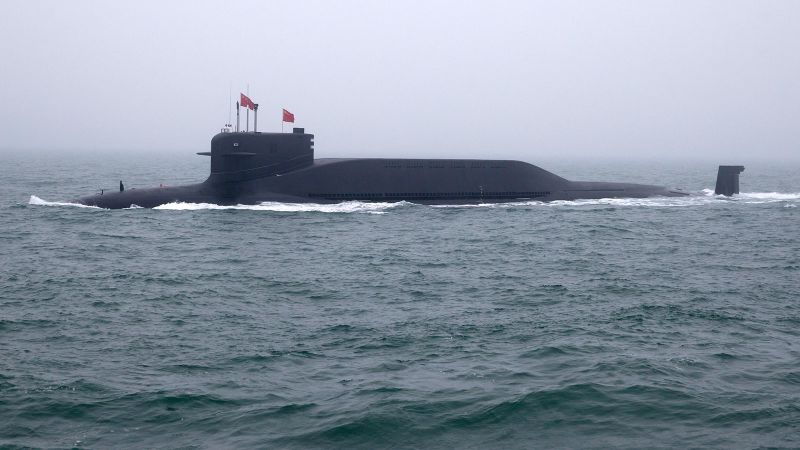
China’s main ballistic-missile submarine fleet includes six Type 094 vessels, also known as the Jin class. These subs are critical to Beijing’s nuclear force modernization, which has accelerated in recent years. Despite the frequency of such tests, China has been less transparent about its missile programs compared to other nuclear powers. The Missile Defense Project at the Center for Strategic and International Studies (CSIS) reported that the JL-3 was first tested in 2018, with a follow-up in 2019, suggesting a deliberate expansion of its capabilities.
“The test must be viewed in the context of China’s rapid military build-up,” said Australian Foreign Minister Penny Wong. “The region expects greater transparency and reassurance regarding Beijing’s intentions.”
The Pacific nations are particularly worried about the normalization of such tests. New Zealand’s Peters recalled the 2024 incident, when the PLA test-launched an intercontinental ballistic missile (ICBM) in the same region. “We should not allow these tests to become routine,” he said, stressing the importance of maintaining a balance between military activity and diplomatic engagement.
Regional Concerns and Global Comparisons
Australian Foreign Minister Penny Wong described the test as “destabilizing to the region,” linking it to broader trends of China’s military expansion. She noted that the operation reflects China’s increasing assertiveness and the lack of clear communication about its strategic goals. “China needs to speak to its intent,” Wong emphasized, underscoring the need for reassurance in a region already wary of Beijing’s growing influence.
Japan also expressed serious concerns, with officials highlighting China’s “increasingly active military activities.” The Japanese government called on Beijing to reconsider its approach to ballistic missile testing, citing the potential for escalation. Meanwhile, the US has not been immune to similar exercises. In September 2024, the US Navy conducted four tests of its Trident submarine-launched ballistic missiles off the coast of Florida, according to a press release. This demonstrates that nuclear powers often engage in routine missile testing as part of their operational readiness.
Historical Context and Diplomatic Tensions
China’s decision to test in the Pacific aligns with its broader strategy of expanding its nuclear capabilities. The country’s military modernization has included a focus on nuclear-powered submarines, with the Type 094 fleet serving as a cornerstone of its sea-based deterrent. Analysts suggest that the recent test is part of a larger effort to project power and assert dominance in the Indo-Pacific region.
Notably, China’s last ICBM test in the Pacific occurred in September 2024, when it launched a DF-31B nuclear-capable missile from Hainan Island in the South China Sea. The missile’s trajectory took it toward the open ocean near French Polynesia, marking China’s first such test in 44 years. The US Defense Department noted that China typically conducts missile tests within its borders, such as the rapid succession of ICBM launches in December 2024 from a training base in the west. However, the recent test in the Pacific represents a shift toward more strategic, long-range operations.
The December 2025 US Defense Department report on China’s military power states that the PLA views these tests as essential for medium-to-high intensity nuclear deterrence. This perspective underscores the growing importance of ballistic missile capabilities in China’s defense strategy. While the test was framed as a routine exercise, its location and scale have fueled speculation about Beijing’s long-term ambitions.
Transparency and Regional Dynamics
Despite its claims of adherence to international norms, China’s limited transparency in reporting missile tests has sparked skepticism. The absence of detailed information about the specific type of missile used in the recent test, for example, has left Pacific neighbors questioning Beijing’s preparedness and willingness to share data. This opacity contrasts with the practices of other nuclear states, which often provide more context about their military activities.
Yet, missile testing remains a standard practice among global nuclear powers. The US, India, and Russia have all conducted similar operations in recent years. The US Trident tests in 2024, India’s submarine-launched ballistic missile trials in December 2025, and Russia’s SLBM test in October 2025 illustrate that such exercises are common. However, China’s focus on the Pacific adds a new layer of complexity, particularly given the region’s commitment to nuclear-free status.
As tensions in the Indo-Pacific continue to rise, the test has intensified discussions about the role of military transparency in maintaining trust. While China asserts its actions are lawful and routine, the Pacific nations remain vigilant, aware of the potential for these tests to disrupt the delicate balance of power in the region. The incident highlights the challenges of navigating nuclear deterrence in an era of rapid technological advancement and geopolitical competition.
China’s military buildup, including its
