
ICE officers warned a New York man after he sent a critical email to the agency’s chief. Now he’s suing
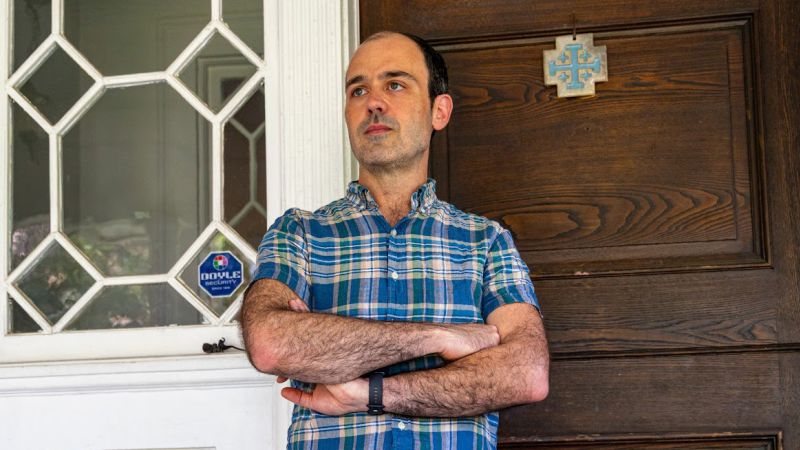
ICE Officers Warned New York Man After Critical Email to Agency Chief, Suing Now
ICE officers warned a New York man following a sharply worded email he sent to the agency’s chief, prompting him to file a lawsuit. David Streever, a New York resident, alleges that federal agents targeted him after he criticized the actions of Immigration and Customs Enforcement (ICE) during a high-profile operation in Minneapolis. The incident, which occurred five months after the deaths of two American citizens, has sparked a legal challenge over whether his free-speech rights were violated. Streever claims that the warning from ICE officers escalated into a pattern of intimidation, leading to a formal complaint against the agency.
The Controversial Email and Immediate Consequences
The email, sent on January 26, was a direct critique of then-acting director Todd Lyons, who Streever accused of aligning with policies that resulted in the deaths of Alex Pretti and Renee Good. He likened Lyons to a Nazi official, expressing concerns about the moral implications of the agency’s actions. The subject line, “What’s Next,” reflected his growing unease about the enforcement tactics. Just days later, two federal officers arrived at his home, warning him that his words could be seen as a threat to the agency’s leadership.
“Streever’s email was a clear exercise of free speech, and the First Amendment protects that,” said attorneys from the Foundation for Individual Rights and Expression, a nonprofit organization representing him.
Streever’s case highlights the tension between critical commentary and perceived threats. The lawsuit argues that ICE officers went beyond routine warnings, using the email as a justification for confronting him at his residence. This action, he claims, created an environment of fear, with repeated phone calls and surveillance of his activities at a New York City hotel. The legal filing details how these measures were not just precautionary but part of a broader effort to silence critics.
DHS’s Defense and Policy Context
A DHS spokesperson defended the agency’s response, stating that ICE investigates all credible threats to its personnel. “We do not comment on ongoing investigations,” the statement added, while emphasizing the importance of protecting officers from potential harm. Todd Lyons, who was acting director at the time, has not publicly addressed the situation, though his tenure ended in late May. The agency’s actions have been scrutinized in the context of Trump-era immigration policies, which critics argue fostered a climate of repression.
Streever’s case is part of a larger pattern where critics of ICE face heightened scrutiny. Earlier in the year, he had also condemned the Minneapolis operation on social media, drawing attention to the killing of Renee Good. This led to a similar warning for Paigelynn Gonyea, a Syracuse resident, who was targeted by officers for sharing Jonathan Ross’s address. These incidents suggest a growing trend of using threats to suppress dissent, with the focus keyword “ICE officers warned a New York” appearing in both cases.
Streever’s legal battle has drawn comparisons to other cases where ICE officers have confronted individuals for expressing opposition. The lawsuit argues that the agency’s tactics, including home visits and monitoring of personal movements, constitute a form of intimidation. This has raised questions about the balance between security and civil liberties, with advocates warning that such actions could deter public discourse on immigration policies.
Broader Impact on Free Speech and Public Discourse
Streever’s experience reflects concerns about how government agencies use threats to control narratives. The Minneapolis operation, which claimed the lives of Pretti and Good, became a symbol of ICE’s aggressive approach. Critics argue that the agency’s focus on enforcement has led to a culture where dissenting voices are labeled as threats, even when no actual danger is present. This dynamic has intensified in recent years, with the focus keyword “ICE officers warned a New York” serving as a case study in the evolving relationship between law enforcement and public opinion.
The lawsuit underscores the importance of free speech in political discourse. Streever’s critics, including those within the DHS, maintain that his words justified the agency’s response. However, the legal filing emphasizes that the email contained no explicit threats, making the confrontation seem disproportionate. As the case unfolds, it could set a precedent for how critics of ICE are treated in the future, influencing both policy and public perception.
