
Female American rower completes record-breaking solo journey from California to Hawaii
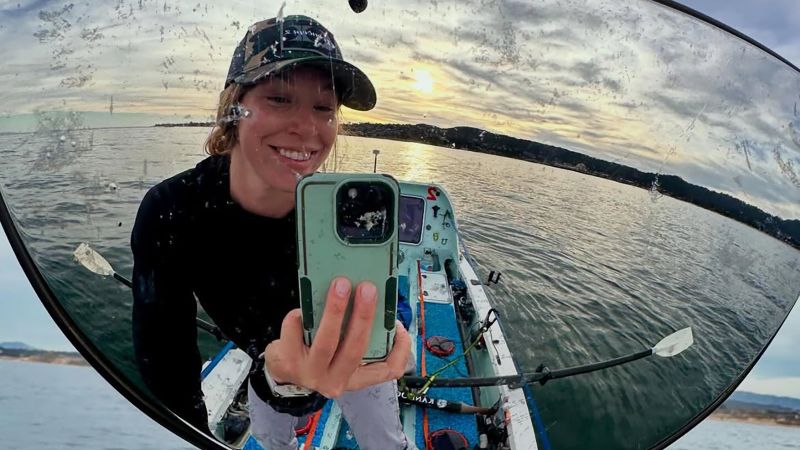
Female American rower completes record-breaking solo journey from California to Hawaii
A Solo Journey Across the Pacific
Female American rower completes record breaking – Kelsey Pfendler, a Grand Canyon river rafting guide, has achieved a groundbreaking solo crossing of the mid-Pacific, becoming the first American woman to accomplish the feat. Her 21-foot row boat, named Lily, arrived in Honolulu’s harbor on Friday night, marking the culmination of a nearly two-month voyage that captivated thousands of spectators and followers. Local media outlets highlighted the moment as a milestone in maritime endurance, with the event drawing widespread attention for its unprecedented scale and Pfendler’s determination.
The journey began in early May when Pfendler set off from Monterey, California, with a clear objective: to become the youngest and fastest American woman to row solo across the 2,400-mile expanse of the Pacific Ocean. The route, which stretches from the California coast to the Hawaiian Islands, is renowned for its unpredictable weather, relentless waves, and the physical and mental toll of isolation. Pfendler’s success not only shattered the previous women’s record but also eclipsed the men’s record, as confirmed by the Ocean Rowing Society International, the governing body for ocean-rowing achievements.
The Journey’s Challenges
Throughout her voyage, Pfendler documented her experience in video diaries that provided a raw glimpse into the harsh realities of solo rowing. These clips, shared on social media, showcased her resilience as she navigated challenges such as blistered hands, sleepless nights amid fierce winds, and the emotional strain of battling unfavorable currents. Her videos also revealed the practical aspects of survival at sea, from sourcing fresh water to maintaining hygiene and managing food supplies.
“If any part of this made at least one person feel a little bit more powerful in their own skin, I couldn’t ask for anything else and I’m happy,” Pfendler said in one of her final recordings. This sentiment underscores the broader message she hoped to convey through her journey. The video diaries, which were widely viewed online, not only chronicled her physical struggles but also highlighted her personal growth and the significance of pushing beyond perceived limits.
According to records maintained by the Ocean Rowing Society International, Pfendler’s time of just under 44 days surpasses the previous women’s record of 86 days and the men’s record of 52 days. The society’s online database, which verifies all ocean-rowing milestones, confirmed her achievement as a dual record-breaker. While the organization did not immediately respond to The Associated Press’ inquiries, the data was publicly accessible, allowing fans and experts to track her progress in real time.
Preparing for the Challenge
Pfendler’s background as a river rafting guide played a crucial role in her preparation for this extraordinary undertaking. She has spent eight years leading expeditions along the Colorado River in the Grand Canyon, honing her skills in navigating turbulent waters and enduring long stretches of physical exertion. “I just love boats in the middle of nowhere,” she remarked in a video, reflecting on her passion for adventure and the unique appeal of rowing alone across the open ocean.
Before setting sail, Pfendler meticulously planned every aspect of the journey, including training regimens, equipment selection, and mental preparation. Her rowing boat, Lily, was equipped with solar panels for power, a compact kitchen for meal preparation, and a system for filtering seawater into potable drinkable water. The design of her vessel and the tools she utilized were critical to sustaining her energy and health over the extended duration of the trip.
Her regimen included regular exercise to strengthen her core and upper body, as well as a strict diet to maintain stamina. Pfendler also emphasized the importance of mental discipline, describing how she coped with loneliness and the constant demands of the sea. “You might not think that you are strong enough to finish it right now, but you’re definitely strong enough to start it,” she said in a reflective video. This advice resonated with many who followed her journey, offering inspiration for those facing their own challenges.
Public Response and Media Coverage
As Pfendler neared the finish line, the public’s anticipation reached a fever pitch. Hundreds of people gathered at the harbor to witness her triumphant return, waving flags and chanting her name. The event symbolized a collective celebration of human perseverance and the power of individual ambition. Local news outlets anticipated that Pfendler would soon address the media, but an interview request sent to her team remained unanswered at the time.
Her journey sparked conversations about the intersection of sport, exploration, and personal transformation. Social media platforms saw a surge in engagement as fans shared her videos, which captured both the technical precision of her rowing and the emotional highs and lows of the experience. In some clips, her voice cracked with emotion, while in others, she humorously mocked her own sunburned forehead tan line or joked about relying on caffeine pills to stay alert.
Pfendler’s determination was evident from the outset, as she braved the open ocean without the support of a crew. The lack of assistance required her to handle every aspect of the voyage, from adjusting her course to repairing equipment and managing fatigue. Her ability to adapt to the ever-changing conditions of the Pacific underscored her expertise and the rigor of her training. “You’ll find everything else along the way,” she said, emphasizing the importance of taking the first step toward any daunting goal.
A Legacy of Courage
After her arrival in Hawaii, Pfendler’s accomplishments were celebrated as a testament to her courage and innovation. The records she set are now part of a growing legacy of female pioneers in ocean rowing, a field historically dominated by men. Her success challenges traditional notions of strength and capability, proving that solo endurance feats are not only possible but achievable through perseverance and preparation.
While Pfendler’s journey ended with her arrival in Honolulu, the impact of her achievement extends far beyond the shores of Hawaii. Her story has inspired a new generation of adventurers to pursue their own ambitious goals, regardless of the obstacles they may face. As she prepares to reflect on her experiences in future interviews, Pfendler’s legacy is already shaping the narrative of solo rowing in the United States. “I’m going to go finish my big, hard, scary thing,” she declared, a promise that resonates with anyone who dares to dream beyond the horizon.
For now, the world celebrates Pfendler’s record-breaking voyage, a remarkable blend of physical endurance, technical skill, and emotional resilience. Her journey from California to Hawaii is more than a personal triumph—it represents a breakthrough in the world of ocean exploration, inviting others to take on their own challenges with the same fearless spirit. As the sun set over the Pacific, the applause for Pfendler echoed across the waves, a fitting tribute to a woman who turned the tides of possibility in her favor.
