
Brexit architect Farage under pressure as questions over funding mount
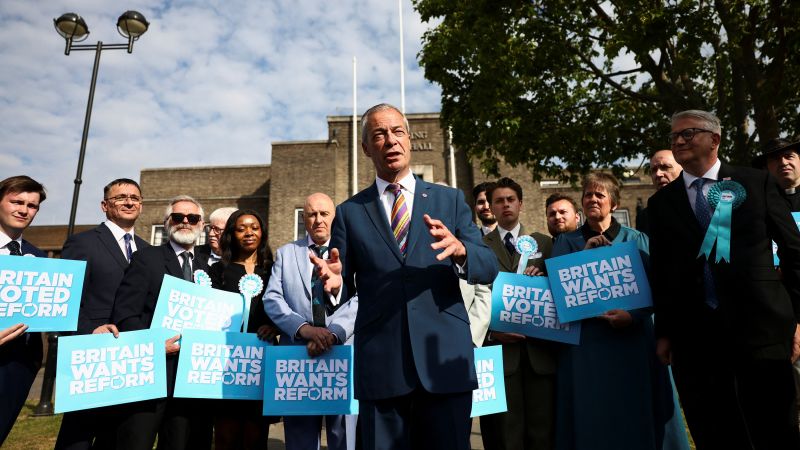
Brexit Architect Nigel Farage Faces Growing Financial Scrutiny
A Leader Unscathed by Scandals, Now Under Fire
Brexit architect Farage under pressure as questions – Nigel Farage, the driving force behind Brexit and a prominent figure in British politics, has long been associated with a reputation for resilience against criticism. His blunt, confrontational style has historically allowed him to deflect scandals, much like his U.S. counterpart, Donald Trump. Yet, this time, the tide seems to be shifting. Recent revelations about his financial dealings have sparked fresh questions about his integrity, threatening to undermine the political momentum he has spent years cultivating.
Reform UK’s Poll Lead and Shifting Political Dynamics
Despite the rising scrutiny, Farage’s Reform UK party remains a dominant force in national opinion polls. With only eight lawmakers in Parliament, the party wields disproportionate influence, reflecting its role as a key player in the UK’s political landscape. However, recent setbacks have cast doubt on this dominance. While Reform gained traction in May’s local elections—a significant indicator of public sentiment—translating these gains into parliamentary representation has proven challenging. The party has lost two by-elections this year, to the Green Party and Labour, respectively, and now contends with internal competition from the Restore Britain movement, led by former Reform MP Rupert Lowe.
The financial allegations, however, carry more weight than internal challenges. A recent report by *The Sunday Times* revealed that Farage failed to disclose payments from George Cottrell, a crypto-financier and gambler. Cottrell, who was indicted in 2016 for conspiracy to commit money-laundering, wire fraud, blackmail, and extortion, served eight months in prison before reaching a plea deal with U.S. prosecutors. These payments, which reportedly covered staff expenses, security costs, and personal accommodations, have drawn sharp criticism from opponents.
A £5 Million Gift and the Guardian’s Spotlight
Three months prior, *The Guardian* had already raised eyebrows by reporting that Farage received a £5 million gift from Christopher Harborne, a crypto-billionaire, shortly before announcing his candidacy in the 2024 general election. Unlike previous scandals, such as claims of racism from his school days, this financial controversy has proven more persistent. Farage’s attempts to counter the allegations during interviews have been widely shared online, with his dismissive tone—“no one cares”—amplifying the perception of insincerity.
The ongoing investigation by Parliament’s standards watchdog has intensified. Farage’s allies, including Treasury spokesman Robert Jenrick, have defended the payments, arguing they fall under the category of “personal” gifts. Jenrick told the BBC that these were “purely personal,” a classification typically reserved for presents from family members. This defense suggests the gifts would not require disclosure under parliamentary rules, even if they occurred before Farage entered Parliament. However, critics argue that the scale of the transactions warrants closer examination.
“No rules have been broken,” Jenrick stated, emphasizing that Cottrell’s support was “purely personal” and thus not subject to transparency requirements.
Unusual Earnings and Parliamentary Ethics
Beyond the specific allegations, Farage’s overall financial disclosures have drawn attention. According to public records, he has declared over £2 million in additional income since becoming an MP in 2024. This figure exceeds 20 times the basic salary of a member of Parliament and ranks second only to former Prime Minister Rishi Sunak in this parliament. While MPs are permitted to hold secondary jobs, the sheer magnitude of Farage’s earnings raises concerns about potential conflicts of interest.
The allegations have also highlighted the lack of clarity surrounding parliamentary financial rules. Critics argue that payments from external sources, especially those tied to high-profile individuals or industries, should be more transparent. Farage’s situation exemplifies the tension between a leader’s personal brand and the expectations of public accountability. His ability to maintain influence, despite these controversies, underscores the complex relationship between political power and financial disclosure in the UK.
A Leader’s Struggles and the Road Ahead
The scrutiny has not only targeted Farage personally but also his party’s credibility. Reform UK’s recent by-election losses and the emergence of Restore Britain have forced a reevaluation of its strategy. While the party’s poll lead persists, the financial controversy could alter the trajectory of its growth. A suspension of more than 10 days for Farage could trigger a by-election, further testing the party’s resilience.
Nonetheless, Farage’s career has weathered past challenges. From allegations of racism to criticism over his Brexit rhetoric, he has maintained a foothold in politics. This latest scandal, however, feels more critical. It arrives at a pivotal moment for Farage, who is at the height of his influence, and could serve as a turning point. The outcome of the parliamentary watchdog’s investigation will determine whether his financial practices are seen as a minor misstep or a major breach.
“This story is baseless and contrived,” a Farage spokesperson told CNN, defending the party’s financial arrangements.
The public reaction to the allegations has been mixed. While some view the payments as a natural part of political networking, others see them as evidence of a deeper ethical issue. Farage’s reduced presence in the media since the *Guardian* report has also fueled speculation about his vulnerability. The combination of internal and external pressures may force him to confront the challenges he has long avoided.
For Reform UK, the financial controversy could test its ability to sustain its political ascent. The party’s success in local elections has been a sign of public support, but translating that into national power requires trust. If Farage’s financial dealings are confirmed as non-compliant, it could erode that trust and highlight the fragility of his position. Yet, for now, the party remains in the lead, and the broader political landscape continues to watch closely.
As the investigation unfolds, the focus remains on whether Farage’s actions align with parliamentary standards. The question is not just about his personal finances but also about the transparency of political fundraising in the UK. With Reform UK’s future hanging in the balance, the answers to these questions may shape the next chapter of the Brexit era. The political landscape, once seemingly stable, now appears poised for a significant shake-up.
