
How roasted meats went spinning all the way around the world
The Global Journey of Spinning Roasts
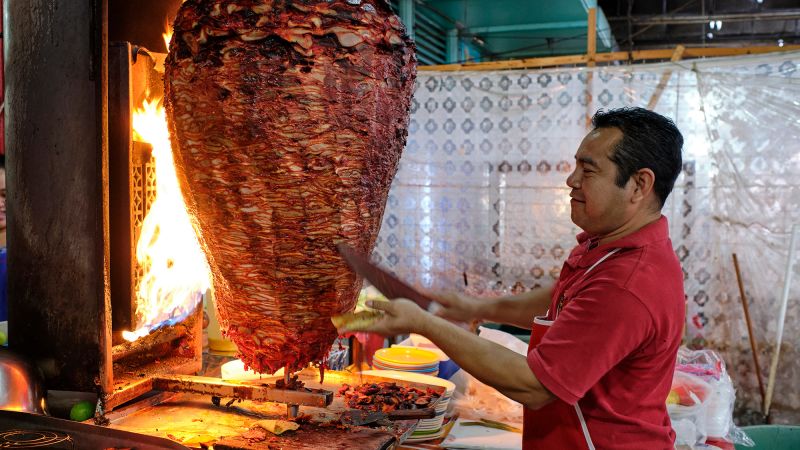
How roasted meats went spinning all – Raul Morales, a chef known for his al pastor tacos, often finds himself recognized by fans outside of his regular work hours. During a recent visit to Universal Studios Hollywood, Morales, who runs Taqueria Vista Hermosa in Los Angeles, was seen waiting in line when a crowd erupted in calls of “Chef Al Pastor!” His laughter echoed as he recalled the origin of the nickname, which traces back to generations of family tradition. Morales, a third-generation artisan, has inherited a recipe that balances ancient techniques with modern flair, crafting tacos filled with tender, spice-laden pork shaved from a rotating vertical spit.
A Culinary Legacy in Motion
While Morales’ kitchen represents a contemporary fusion of heritage and innovation, the practice of roasting meat on a spit has deep historical roots. Food historian Ken Albala, a professor at the University of the Pacific, notes that this method is among humanity’s oldest cooking techniques. Evidence of such spits dates back to the Aegean region in the 10th century BCE, where iron tools were discovered in tombs associated with male warriors. These findings suggest that roasting meat was not just a practical act but a cultural ritual tied to masculinity and communal bonding.
“When you celebrate a victory, you would go out and sacrifice an animal to the gods, which would basically be like a big barbecue,” Albala explained.
Roasting meat on a spit is more than a method—it’s a process that transforms the texture and flavor of the dish. Albala emphasizes that the meat isn’t cooked directly over the flames but beside them, allowing for a slow, even heat that enhances its richness. “Any place you have a pointy stick or a sword, people are going to figure out very quickly … if you cook with it off to the side of the fire, it’s going to taste much more interesting,” he said. This technique, though ancient, has evolved over centuries, adapting to new cultures and cuisines.
The Ottoman Empire’s Role in Shaping Modern Spins
Centuries later, the Ottoman Empire refined the concept, introducing a specialized approach that would later become known as döner. Mary Işın, author of “Bountiful Empire: A History of Ottoman Cuisine,” points to a 1620 manuscript commissioned by Ottoman statesman Hafız Ahmed Paşa as a key artifact. Miniature paintings in the manuscript depict cooks slicing meat from rotating spits, hinting at a sophisticated culinary tradition. These depictions suggest that spit-roasted meats were not merely sustenance but a symbol of status, likely reserved for royal or elite gatherings.
“In those miniatures, you can see it’s an upper-class thing,” Işın remarked.
The term for this technique, however, shifted over time. While the Ottomans referred to it as “çevirme kebabı” or “turned kebabs” in 15th-century texts, the word “döner” eventually gained prominence. Işın notes that “döner” didn’t appear in print until 1908, but the term was likely already in common use by then. The evolution of the name reflects the dish’s journey from royal tables to street corners, a transition that mirrors its widespread appeal.
From Ancient Feasts to International Favorites
The historical thread connecting spit-roasted meats to modern cuisine is both intricate and fascinating. In ancient Greece, references to roasted meat appear in the Homeric epics *The Iliad* and *The Odyssey*, as documented by Susan Sherratt, an emeritus professor at the University of Sheffield. These texts imply that roasting was a communal activity, often tied to celebrations and shared meals. The practice then spread across civilizations, with variations emerging in different regions.
“Feasts of spit-roasted meat appear in the Homeric epics,” Sherratt wrote in the journal *Hesperia*.
By the time of the Ottoman Empire, the technique had become more precise. The miniature paintings from the 17th century reveal a method of layering thin slices of raw meat onto a spit, creating a dense stack that spins and cooks uniformly. This innovation not only improved efficiency but also transformed the dish into a portable and accessible food. As the Ottoman Empire expanded its influence from central Europe to North Africa and the Arabian Peninsula, the recipe traveled with it, adapting to local tastes and ingredients.
The Modern-Day Rebirth of a Timeless Tradition
Today, the legacy of these ancient techniques is evident in dishes like al pastor, shawarma, and döner, each bearing unique cultural imprints. Morales’ tacos, for example, blend traditional Mexican flavors with the spinning spit method, a practice that has been passed down through generations. Yet the global popularity of such foods is a testament to their adaptability. As migrants carried these recipes across continents, they incorporated new meats and spices, creating regional variations while maintaining the core spinning technique.
Shawarma, which traces its roots to the Ottoman term “çevirme,” has become a staple in Middle Eastern cuisine, while döner, with its Turkish origins, thrives in European cities. The dish’s ability to evolve yet retain its fundamental method of preparation underscores its universal appeal. Even in the 19th century, foreign visitors like French traveler François Pouqueville praised the dish, declaring it “the most delicious in the country.” This early endorsement hints at the dish’s growing international recognition.
“Foreigners agree that this dish is the most delicious in the country, and I am perfectly of the same opinion,” Pouqueville wrote in 1800.
As the world became more interconnected, the spinning spit’s influence expanded beyond its original borders. From the bustling streets of Istanbul to the taco stands of Los Angeles, the technique has endured as a symbol of both tradition and innovation. Its journey across cultures is a reminder that food is not just a necessity but a narrative of human connection, adaptation, and shared history. Morales’ story, like that of countless others, is part of this global tapestry—a celebration of how ancient practices continue to shape modern palates and cuisines.
The next time you enjoy a plate of rotating meat, consider its long and winding path. From the warriors of the Aegean to the chefs of today, the spinning spit has remained a constant, evolving with each culture it touches. Whether it’s the richly seasoned pork of al pastor, the fragrant lamb of shawarma, or the thinly sliced beef of döner, these dishes carry the weight of history while embracing the present. Their story is one of migration, resilience, and the enduring power of flavor to unite people across time and space.
