
Putin and Trump held ‘businesslike’ 90-minute July 4 call, Moscow says
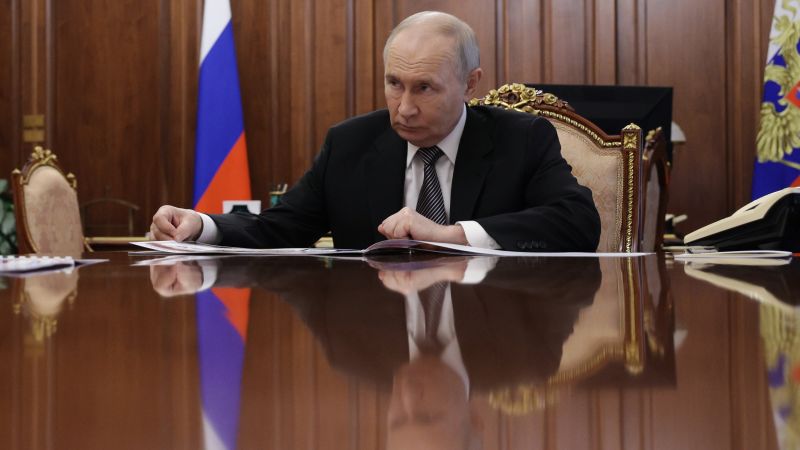
Vladimir Putin and Donald Trump Engage in Productive July 4th Call, Moscow Reports
Putin and Trump held businesslike 90 minute – On July 4th, Russian President Vladimir Putin and U.S. President Donald Trump engaged in a 90-minute telephone conversation, during which Trump reiterated his willingness to assist in ending the conflict in Ukraine, according to the Russian Foreign Ministry. The dialogue, described as “businesslike and highly constructive,” occurred just days before a pivotal NATO summit in Turkey, which is set to begin on Tuesday. This meeting coincided with intensified Russian military operations in Ukraine’s eastern Donetsk region, a strategic area central to Moscow’s goals. Meanwhile, Ukrainian forces continued their efforts to strike Russian energy infrastructure, highlighting the ongoing tension between the two sides.
Strategic Timing and Battlefield Dynamics
The call took place amid critical developments in the war. Russian forces had recently escalated their push in Donetsk, aiming to secure more territory in the Donbas region, which the Kremlin has long claimed as a key objective for ending the conflict. In contrast, Ukraine has maintained a steady campaign to disrupt Russian supply lines, with recent strikes targeting key energy facilities. The timing of the conversation—before the NATO summit—underscored the diplomatic importance of the dialogue, as the U.S. seeks to balance its military support for Ukraine with broader alliance interests.
According to the Russian Foreign Ministry, Putin personally congratulated Trump on the 250th anniversary of the U.S. Declaration of Independence, extending the gesture to the American people. The ministry emphasized that the exchange was “a significant milestone in the development of relations between our countries,” suggesting a shift toward pragmatic cooperation. However, Ukrainian officials have been cautious, noting that the call was part of a broader effort to negotiate a political resolution while maintaining pressure on Russia.
Ukraine’s Perspective and the Path to Peace
Ukrainian President Volodymyr Zelensky described his recent call with Trump as “very good,” expressing optimism about the prospects for ending the war. “There is a real chance to bring this conflict to a close, and America’s determination is crucial,” he stated in a Saturday address. Zelensky’s remarks aligned with a growing sentiment that U.S. leadership could play a decisive role in shaping the outcome of the war. Yet, he also cautioned against complacency, noting that Russia’s battlefield claims often overstate their progress.
During the call, Trump reaffirmed his commitment to facilitating a ceasefire, a stance that has been consistent throughout the year. However, the Russian side stressed its preference for a political resolution, accusing Kyiv and its European allies of prolonging the conflict to maintain international support. “Our president outlined the current situation on the front lines, where Russian forces are advancing confidently,” the ministry added, framing the conversation as a reaffirmation of Moscow’s military momentum.
Disinformation and the Battle for Donbas
Amid the negotiations, the Kremlin announced that Russian troops had captured the town of Kostyantynivka in Donetsk, calling it an “important milestone” in the campaign to control the Donbas region. The Foreign Ministry highlighted this as a demonstration of Russia’s strategic gains, but Ukrainian military sources disputed the claim, suggesting it was part of a disinformation campaign. “Russian soldiers have infiltrated the town, but counter-sabotage efforts are ongoing,” a Ukrainian defense official told CNN. A unit stationed in the area uploaded video footage to challenge the assertion, labeling it as “disinformation designed to create the illusion of success.”
Zelensky echoed this skepticism, stating that the Russian claim was “another lie to generate a news story.” He emphasized that while progress on the battlefield is steady, the narrative of a Russian victory remains exaggerated. “The conflict will form the backdrop to the NATO summit, where the U.S. has signaled a need to ‘rightsize’ its contributions to the alliance’s force model,” the ministry noted. This move, which the White House announced last month, reflects a strategic recalibration of U.S. involvement in the war, though it does not signal a reduction in support for Kyiv.
Energy Infrastructure as a Target
The war has seen Ukraine intensify its attacks on Russian energy infrastructure, a tactic aimed at weakening Moscow’s war economy. Over the past month, eight oil refineries have been hit by Ukrainian drones, with more than 60 storage tanks destroyed or severely damaged. These strikes have targeted critical sites, including refineries in St. Petersburg, which Zelensky described as “sources of revenue for Russia’s war.” The attacks have disrupted supply chains, forcing Moscow to divert resources to repair damaged facilities.
In addition to refineries, Ukrainian forces have launched strikes on ports and military factories, further straining Russia’s logistical capabilities. The military also reported that drones had targeted fuel and power facilities in Crimea, an area annexed by Russia in 2014. Satellite imagery from the Institute for the Study of War (ISW) shows a noticeable decline in nighttime electric light in Crimea compared to a year ago, indicating reduced activity in the region. This data supports the Ukrainian claim that their strikes are effectively undermining Russian control over the territory.
Broader Implications for the NATO Summit
The NATO summit in Turkey is expected to address the evolving dynamics of the war, with the U.S. likely to leverage its influence to secure additional support for Ukraine. The summit will come after the White House’s decision to “rightsize” its contributions to NATO’s force model, citing the need to reduce overreliance on American forces. This adjustment has sparked debate about the long-term implications for collective defense and the pace of military operations in eastern Ukraine.
Despite the U.S. strategic shift, Trump’s continued engagement with Putin suggests a desire to maintain dialogue. The Russian Foreign Ministry noted that the call reinforced the importance of diplomacy in resolving the conflict, though it also criticized Kyiv’s allies for stoking the war. “The U.S. is now prioritizing its global commitments, but its support for Ukraine remains essential,” the ministry stated, acknowledging the complex balance between military and diplomatic approaches.
Independent Analysis and Battlefield Realities
The Institute for the Study of War (ISW) has analyzed the Russian military’s battlefield claims, arguing that they are part of a broader narrative to portray a Russian victory as inevitable. “Exaggerated reports of territorial gains in Donetsk are used to undermine Ukrainian morale and justify continued aggression,” the think tank said. This aligns with Ukrainian assertions that the conflict is far from over, with recent gains in the south offsetting losses in the east.
Zelensky’s team has stressed that the war is not a one-sided victory for Russia. While Moscow claims progress, Ukraine’s counteroffensives in the south have recaptured areas previously lost, demonstrating resilience. The recent strikes on energy infrastructure further complicate Russia’s war effort, with the U.S. and its allies likely to emphasize these disruptions in their diplomatic efforts. As the NATO summit approaches, the call between Putin and Trump will be scrutinized for its potential to influence the future of the conflict.
“Ukrainian defenders continue to hold their positions along designated lines,” the Ukrainian military added, highlighting the persistence of resistance despite Russian advances.
The interplay between military action and diplomacy remains central to the conflict. With both sides vying for international support, the July 4th call between Putin and Trump underscores the ongoing negotiations to find a lasting resolution. As the NATO summit looms, the dialogue will be a key factor in shaping the next phase of the war, balancing the ambitions of Moscow with the resolve of Kyiv and its allies.
