
Tricorn hats or Trump rally? Americans have July Fourth options
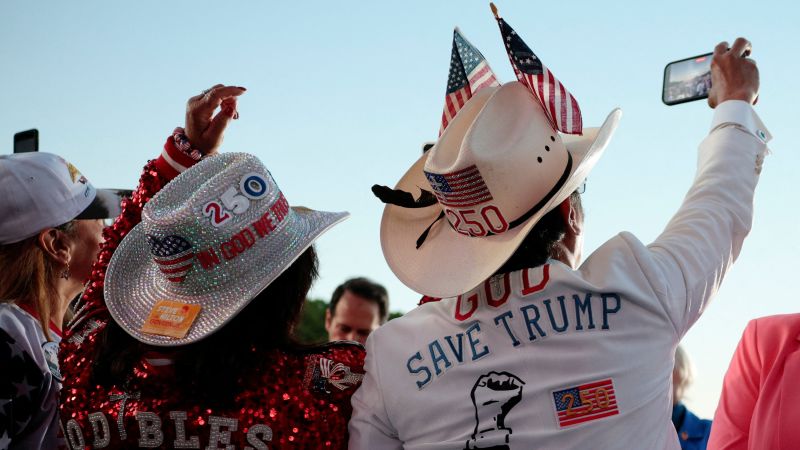
July Fourth Celebrations: A Nation Divided Between Tradition and Trump’s Vision
Tricorn hats or Trump rally Americans – As the United States marks its 250th anniversary of the Declaration of Independence, the nation finds itself at a crossroads. The document, which laid the foundation for American democracy, is now being reimagined through the lens of contemporary politics. While the traditional July Fourth festivities on the National Mall aim to unite citizens in celebration of shared ideals, Donald Trump has positioned the event as a platform to promote his political agenda. His approach, however, has sparked debate about whether the day will remain a symbol of collective patriotism or become a showcase for his distinctive brand of leadership.
Historically, July Fourth has been a time for unity, with Americans from all walks of life gathering to honor the principles of liberty and self-governance. But this year’s festivities, led by a Trump-aligned group called Freedom 250, promise a different tone. The organization has transformed the National Mall into a stage for what Trump calls “the most spectacular TRUMP RALLY of them all, a ‘TRIBUTE TO AMERICA.’” This rebranding reflects his broader strategy to intertwine national celebrations with political messaging, even as he challenges the very ideals the document represents.
“THE LARGEST FIREWORKS SHOW IN HISTORY,” Trump declared in a recent social media post, framing the event as a triumphant moment for the nation. Yet, this vision of grandeur contrasts with the logistical challenges and controversies surrounding the celebration. Freedom 250, the group spearheading the festivities, has yet to disclose the total cost of the event, despite its ambitious goal of breaking a Guinness World Record. The National Mall, once a symbol of democratic unity, now hosts a spectacle that blends patriotism with partisanship.
While the original intent of the Declaration of Independence was to articulate grievances against British rule, Trump’s interpretation emphasizes his own narrative. His rallies, featuring military bands and his personal playlist, have become a focal point for his supporters, with “YMCA” by the Village People making an unexpected appearance as a tribute to the document’s phrase “We hold these truths to be self-evident.” This choice underscores how the event has evolved into a personalized expression of American identity, rather than a broad celebration of the nation’s founding principles.
Amid these changes, the political divide in America has become starkly apparent. Even as the country comes together to commemorate its history, it remains fractured over issues that extend beyond the Fourth of July. The recent Supreme Court rulings, which have split along ideological lines, highlight this divide. For instance, justices debated the implications of the Declaration’s wording, with the majority affirming that the Constitution guarantees citizenship to all people born in the United States. This discussion, while rooted in legal interpretation, mirrors the broader societal tensions that have defined the past decade.
Freedom 250’s efforts to reorient the festivities have not gone unchallenged. The group, which took over the planning from the bipartisan America 250 organization, has faced criticism for its handling of the events. Logistical hurdles, including inconsistent attendance and a notable display of a Confederate flag, have raised questions about the organization’s ability to deliver a cohesive celebration. Additionally, the absence of participation from all 50 states underscores the growing regional disparities in how the nation’s history is being commemorated.
In contrast to the 1976 bicentennial, which drew an estimated 1 million people to the National Mall, this year’s events face a more fragmented audience. The 1976 celebration, held in the aftermath of Watergate and the Vietnam War, symbolized a collective sense of renewal and hope. Yet, the logistical challenges of that era—such as abandoned cars causing traffic jams that lasted into the next day—were met with resilience. President Gerald Ford, for example, used the occasion to emphasize national unity, delivering speeches in Philadelphia and other key locations to connect with the public. Today, however, the focus has shifted from communal reflection to individualized political expression.
Trump’s takeover of the celebrations has also been met with skepticism. Congress initially created America 250, a bipartisan entity, to ensure a balanced approach to commemorating the 250th anniversary. But after staffing disagreements, the White House established Freedom 250 as a separate organization, with the National Guard maintaining a visible presence in DC. This move has been seen as a way to control the narrative, aligning the festivities with his vision of American progress. While some praise the organization for its energetic approach, others argue that it has overshadowed the more inclusive spirit of the original celebrations.
Freedom 250’s events have already sparked controversy. For example, hosting a UFC fight night on the White House lawn during Trump’s birthday was criticized as a gladiatorial spectacle that trivialized the ideals of democratic governance. Similarly, the upcoming IndyCar race through Washington’s streets in August is expected to draw attention, but it may also highlight the contrast between the nation’s past and present. These events, while innovative, have raised concerns about their symbolic significance and whether they truly honor the legacy of the Declaration of Independence.
Meanwhile, the absence of PBS from broadcasting the National Mall fireworks show has further fueled discussions about the politicization of the event. The public broadcaster, which Trump and his allies cut funding for last year, has opted out of the display, marking a departure from decades of tradition. This decision has been interpreted as a reflection of broader ideological shifts, with media outlets now choosing to align with political narratives rather than maintain a neutral stance. As a result, the Fourth of July may become less about shared national values and more about competing visions of America’s future.
Despite these challenges, Trump’s efforts to rebrand the celebrations have captured the attention of many. His rallies, filled with military fanfare and patriotic music, aim to reframe the July Fourth narrative as one of unifying strength and national pride. Yet, the question remains: can such a spectacle bridge the divides that have grown in American society over the years? While the fireworks will undoubtedly dazzle, the event’s success may hinge on its ability to balance celebration with reflection, ensuring that the nation’s ideals are not lost in the clamor for political dominance.
As the 250th anniversary unfolds, the National Mall stands as a testament to both the enduring power of American tradition and the evolving nature of its public expression. Whether the day will be remembered as a unifying celebration or a partisan spectacle may depend on how the event is received by those who attend. For now, the contrast between the past and present—between the bipartisan spirit of 1976 and the current political climate—remains a defining feature of the nation’s July Fourth festivities.
