
A 3,200-pound space observatory may soon fall from orbit. A risky endeavor just launched to save it
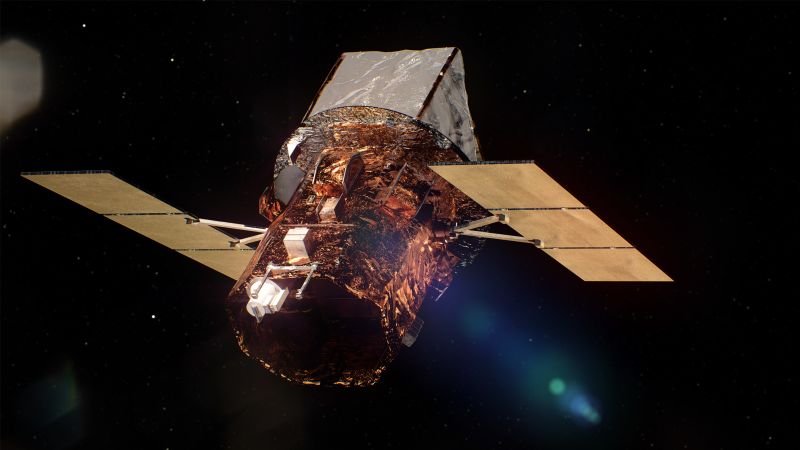
NASA’s Swift Observatory in Rescue Mission to Save 3,200-Pound Space Asset
A 3 200 pound space observatory – As Earth’s orbit becomes increasingly crowded, NASA faces a pivotal moment to salvage its 3,200-pound space observatory, the Swift satellite, which has spent nearly two decades studying cosmic phenomena. A daring robotic mission, launched recently, aims to reposition the aging spacecraft and prolong its scientific contributions. This effort, spearheaded by a commercial partner, represents a groundbreaking attempt to rescue a satellite not originally designed for in-orbit repairs, showcasing the growing importance of space sustainability.
The Challenge of Deteriorating Orbit
The Swift Observatory, launched in 2004, has been instrumental in capturing gamma-ray bursts and supernovae, providing critical data on the universe’s most violent events. However, recent solar activity has pushed the satellite closer to reentry, threatening to end its mission this fall. At an altitude of about 185 miles (300 kilometers), atmospheric drag has accelerated its descent, prompting NASA to initiate a last-ditch effort to stabilize its orbit. The observatory’s weight—3,200 pounds—has made maneuvering it a complex engineering challenge.
The satellite’s trajectory is being affected by solar flares and coronal mass ejections, which have expanded Earth’s atmosphere and increased drag. NASA engineers, based at Penn State University, have already implemented measures like reducing power use and adjusting orientation, but these have only delayed the inevitable. With the 3,200-pound space observatory approaching its end, the robotic rescue mission offers a rare chance to extend its operational life and preserve decades of research.
Katalyst’s Robotic Rescue Mission
American company Katalyst Space Technologies has taken on the task of designing and deploying the rescue vehicle, dubbed the LINK satellite. This spacecraft, weighing 880 pounds and measuring 5 feet in height, is engineered to dock with Swift and inject it with enough thrust to raise its orbit. The mission was completed in a tight nine-month window, highlighting the urgency of the situation. The LINK satellite, equipped with solar panels spanning 20 feet, will undergo rigorous testing before attempting the delicate docking maneuver.
After overcoming delays due to weather and a software glitch, the LINK satellite was launched on June 17, 2026, aboard a Northrop Grumman Pegasus XL rocket. The rocket was deployed from the Stargazer aircraft over the Kwajalein Atoll, a strategic location for space launches. The 3,200-pound space observatory’s survival hinges on this mission, which aims to prevent its reentry and secure additional data from its orbiting position. Success could set a precedent for future space maintenance efforts.
Scientific Value and Cost Implications
The rescue mission is driven by the need to preserve the 3,200-pound space observatory’s scientific legacy. Since its deployment, Swift has revolutionized our understanding of high-energy cosmic events, offering insights that newer telescopes like the James Webb Space Telescope cannot yet provide. For NASA, extending its lifespan could save millions in replacement costs and ensure continuity in critical research. “This mission demonstrates that even satellites not built for servicing can be revitalized,” noted Shawn Domagal-Goldman, NASA’s division director of astrophysics.
While the 3,200-pound space observatory is not a replacement for upcoming projects, its proven technology remains invaluable. The successful docking of the LINK satellite would mark a turning point in space operations, proving that orbital adjustments are feasible with existing tools. The mission also highlights the importance of maintaining a robust network of satellites, as their loss can create gaps in scientific data collection and increase the risk of space debris.
The Future of Orbital Rescue
If the rescue mission succeeds, it could pave the way for a new era of space sustainability. The ability to manipulate a 3,200-pound space observatory’s orbit offers a model for future missions that may extend the life of other satellites. This innovation aligns with NASA’s broader goals of reducing space debris and ensuring long-term access to orbital resources. The 3,200-pound space observatory’s survival is not just a technical achievement but a symbolic step toward a more resilient space infrastructure.
Experts predict that this mission will serve as a blueprint for future orbital rescues, encouraging investment in in-space servicing technologies. The 3,200-pound space observatory’s journey from a decades-long scientific tool to a testbed for innovation underscores the evolving nature of space exploration. As the LINK satellite prepares to engage with Swift, the world watches closely, hoping this daring effort will secure the observatory’s place in the cosmos for years to come.
