
Ocasio-Cortez endorses Abdul El-Sayed in Michigan Senate race
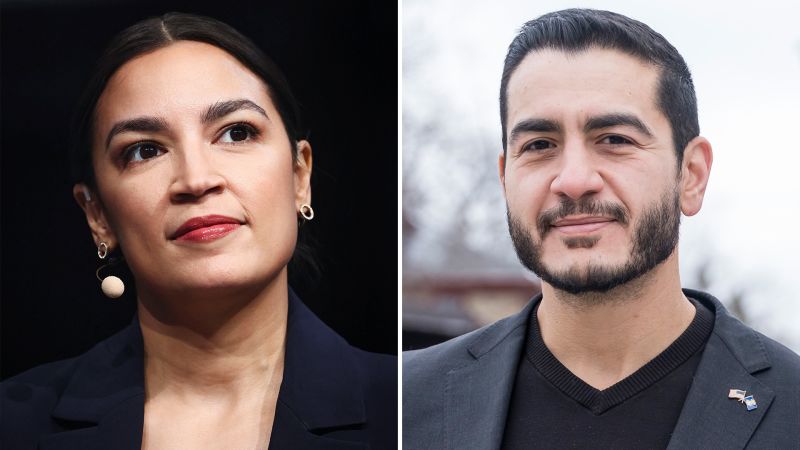
AOC’s Endorsement Bolsters El-Sayed’s Bid in Michigan Senate Race
Ocasio Cortez endorses Abdul El Sayed – On Thursday, Alexandria Ocasio-Cortez, the Democratic representative from New York, officially endorsed Abdul El-Sayed in the highly anticipated Michigan Senate primary. This move marks a pivotal moment in the race, as El-Sayed, a progressive candidate, continues to challenge the establishment’s preferred choice in the swing state. Ocasio-Cortez’s endorsement comes amid a broader debate within the Democratic Party about balancing ideological purity with electoral viability.
Ocasio-Cortez’s Strategic Move
Ocasio-Cortez, known for her dynamic political presence, has been deliberate in her endorsements this cycle. While she previously supported El-Sayed during his 2018 gubernatorial campaign, her backing this time carries added weight due to the high stakes of the upcoming election. The congresswoman, who has drawn attention for her potential presidential ambitions in 2028, chose to align herself with El-Sayed despite concerns from party leaders about his left-leaning positions.
In contrast to Ocasio-Cortez’s cautious approach, Senator Bernie Sanders has embraced several progressive candidates, signaling a divide within the party’s leadership. Ocasio-Cortez’s decision to withhold her support from her former chief of staff, Saikat Chakrabarti, who ran unsuccessfully for a House seat in California, highlights her focus on candidates with a clear vision for national change. Similarly, she did not endorse two democratic socialists backed by Zohran Mamdani, who emerged victorious in New York’s recent primaries.
The Michigan Senate primary, set for August 4, is viewed as a critical test for the Democratic Party’s strategy. With the goal of reclaiming congressional control, the race has drawn significant attention, especially since Michigan was won by President Donald Trump in 2024. El-Sayed’s campaign, which emphasizes bold policy proposals, aims to rally support from working-class voters and challenge the status quo.
The Candidates in the Race
El-Sayed’s candidacy has sparked both admiration and skepticism. While he has drawn endorsements from figures like Maryland Senator Chris Van Hollen, some Democrats in Washington remain cautious, questioning whether his progressive stance will translate into a November victory. Senate Minority Leader Chuck Schumer, for instance, has argued that centrist Rep. Haley Stevens, backed by establishment Democrats, holds the best chance of securing the seat.
Stevens, a moderate candidate, has garnered support from the American Israel Public Affairs Committee (AIPAC), a key lobbying group. Her alignment with AIPAC contrasts with El-Sayed’s fiery rhetoric on Israel, which has become a central issue in the race. El-Sayed has called Israeli Prime Minister Benjamin Netanyahu a “war criminal” and labeled the military campaign in Gaza as a “genocide” following Hamas’ October 7 attacks. This stance has resonated with progressive voters but has also raised concerns about his appeal to broader constituencies.
Liberal state senator Mallory McMorrow, another contender, has similarly positioned herself as a progressive voice. She previously described the Israeli military action in Gaza as a “genocide” during a campaign event last fall, though she later emphasized that the definition of the conflict matters less than achieving a “solution.” McMorrow’s stance has drawn endorsements from prominent figures like Senator Elizabeth Warren, further solidifying her position within the party’s left flank.
Divided Views on Israel’s Role
Support for Israel has become a major flashpoint in the Michigan Senate race, reflecting deeper ideological divides. El-Sayed’s strong critique of the Israeli government has galvanized his base but also created tension with voters who prioritize national security. Michigan’s unique demographic makeup, with sizable Arab American and Jewish communities in and around Detroit, means that the issue carries significant weight for both major parties.
El-Sayed’s comments on Netanyahu and the Gaza conflict have been framed as a bold stance for progressive values, but they also highlight the challenge of appealing to moderate voters. Meanwhile, Stevens has aligned herself with AIPAC, positioning her as a candidate who supports Israel’s actions. This contrast underscores the broader debate within the Democratic Party about how to balance progressive ideals with the need for broad electoral appeal.
McMorrow, while sharing El-Sayed’s criticism of Israel’s military campaign, has taken a more measured approach. She acknowledged the complexity of the conflict, stating that the label “genocide” is important but secondary to the goal of reaching a “solution.” This nuanced position has allowed her to attract support from both progressive and moderate Democrats, though she has made it clear she will not seek backing from AIPAC.
Broader Implications for the Democratic Party
El-Sayed’s campaign is part of a larger trend of progressive candidates gaining traction across the country. Recent victories in New York, where democratic socialists emerged as winners, have demonstrated the growing influence of left-leaning voices. However, some establishment Democrats argue that these wins are concentrated in liberal strongholds and may not reflect the party’s broader appeal.
House Minority Leader Hakeem Jeffries, for example, has cautioned that progressive successes in a handful of primaries, such as those in New York, should not be seen as a blueprint for November. “What happens in a few races, even in the bluest cities, is not necessarily indicative of what’s needed for the general election,” Jeffries told CNN. “We must prioritize common-sense Democrats who can unite the base and take on the extreme Republicans who have dominated the agenda.”
Despite these concerns, El-Sayed has been gaining momentum. His ability to attract endorsements from both grassroots activists and establishment figures like Van Hollen suggests a growing coalition. The Michigan race is seen as a microcosm of the larger battle within the Democratic Party, where progressive candidates and centrist leaders are vying for influence over the party’s direction.
Looking Ahead to November
As the August 4 primary approaches, the race remains tightly contested. El-Sayed’s endorsement by Ocasio-Cortez is expected to energize his campaign, particularly among younger and more ideologically aligned voters. However, Stevens and McMorrow are not without their strengths, with Stevens benefiting from the backing of influential establishment figures and McMorrow drawing from her grassroots connections.
El-Sayed’s message of bold action and defiance of political elites has been a defining feature of his campaign. In a statement, he praised Ocasio-Cortez for her role in reshaping American politics, calling her “a beacon of courage and integrity.” He emphasized that her leadership has shown how to prioritize the needs of everyday people over the interests of powerful institutions.
The outcome of the Michigan Senate race will have far-reaching implications. If El-Sayed secures the nomination, his campaign could serve as a template for other races where progressive candidates are challenging the party’s traditional leadership. Conversely, if Stevens or McMorrow prevails, it may signal a shift toward more centrist strategies in the race for congressional control.
The race has also brought attention to the importance of mobilizing diverse voter blocs. Michigan’s Arab American and Jewish communities, which play a vital role in shaping the state’s political landscape, will be key to determining the winner. El-Sayed’s focus on social justice and economic equality has positioned him as a candidate who can bridge these groups, but Stevens’s support from AIPAC may give her an edge in suburban and rural areas.
With the Democratic Party’s future hanging in the balance, the Michigan Senate race has become a focal point for national strategists. The interplay between progressive ideals and pragmatic politics will likely define the next several weeks as candidates refine their messages and campaign efforts intensify.
