
OpenAI in talks to give Trump administration a 5% stake in the company, FT reports
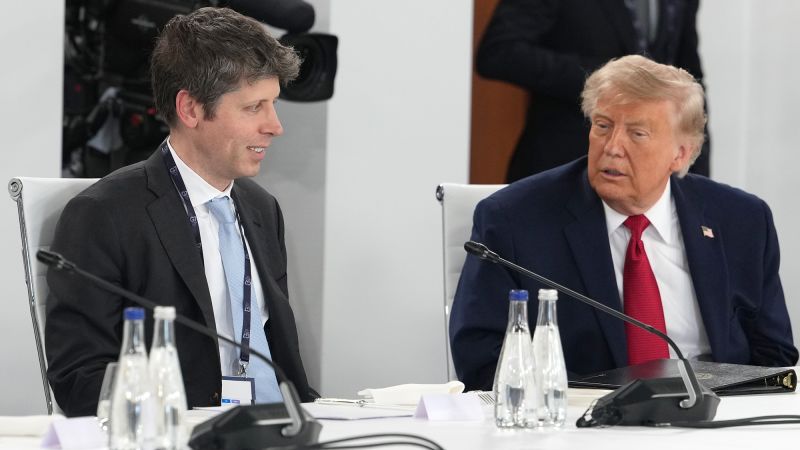
OpenAI in Talks to Offer Trump Administration 5% Stake, Reports Financial Times
OpenAI in talks to give Trump – Amid escalating government oversight of artificial intelligence companies, OpenAI—the firm behind the widely used ChatGPT—has reportedly entered early discussions about allocating a 5% equity stake to the Trump administration, according to a report by the Financial Times. The proposal, which would see similar arrangements extended to other U.S. AI firms, aims to share the economic gains of the technology with the public, potentially addressing concerns about its impact on employment and national security. While OpenAI has not officially confirmed the talks, the company’s CEO, Sam Altman, has defended the idea as a way to ensure broader public benefit from AI advancements.
Government Scrutiny and Strategic Partnerships
The Financial Times revealed the plan in a Thursday update, citing two individuals with knowledge of the discussions. These sources described the talks as part of a broader effort to create a framework for government involvement in AI development. The White House has been exploring partnerships with leading AI firms to leverage the industry’s growth, with Trump’s administration emphasizing the importance of American technological dominance. OpenAI and its competitor Anthropic, the developer of Claude AI, have both faced delays in releasing their next-generation models due to regulatory pressure.
“The plan would allow the public to participate in the financial upside of AI, ensuring that its benefits are shared more broadly,” said one of the unnamed individuals, referencing Altman’s argument.
OpenAI’s CEO, Sam Altman, has previously advocated for a “public wealth fund” to distribute AI-driven economic gains to all citizens, regardless of their financial status. This concept, outlined in April, suggests that the government could act as a shareholder, investing in AI companies and reaping returns for the public. The idea aligns with Trump’s vision of positioning the U.S. as a global leader in emerging technologies. However, the exact terms of the deal remain under negotiation, with some uncertainty about how the 5% stake would be structured.
A 5% equity share in OpenAI would translate to a valuation of approximately $42.6 billion, based on a March funding round that placed the company’s worth at $852 billion. This stake would grant the Trump administration a financial interest in the firm’s future growth, potentially influencing its strategic direction. The proposal also includes similar commitments from other U.S. AI companies, such as Anthropic, which recently announced that the U.S. government had lifted export controls on its most advanced models following talks with officials. Anthropic’s decision to open up its Claude AI models highlights the evolving relationship between tech firms and regulators.
Regulatory Hurdles and Industry Implications
OpenAI’s plans have been complicated by the White House’s request to limit the release of its upcoming GPT 5.6 model to a select group of government-approved partners. This move underscores concerns about the model’s advanced capabilities, which could have significant implications for national security. The White House has been pushing for greater oversight of AI, with Trump advocating for policies that ensure the public’s stake in technological progress. While OpenAI has declined to comment on the specifics, the potential for government involvement in its operations raises questions about the balance between innovation and regulation.
“We are considering how to align AI development with public interests, ensuring that its benefits are accessible to all,” stated a source familiar with the discussions.
Both OpenAI and Anthropic are preparing for stock market listings, which would provide transparency into their financials and open new avenues for public investment. The proposed 5% stake could be managed through a mechanism akin to the Alaska Permanent Fund, a state-run investment vehicle that channels oil revenues into dividends for residents. By adopting a similar model, OpenAI aims to create a sovereign fund that distributes AI-generated wealth across the nation. However, the plan may require congressional approval, adding a layer of complexity to its implementation.
Recent actions by the U.S. government, such as its 10% investment in Intel worth $8.9 billion in August, set a precedent for state involvement in tech firms. This move, which supported Intel’s expansion in semiconductor technology, could signal a broader strategy of capitalizing on strategic industries. OpenAI’s proposal to share AI equity with the public may be part of this trend, though it faces challenges in gaining consensus across the AI sector. Industry leaders remain divided, with some companies expressing support for the idea and others questioning its feasibility.
A Shift in AI Governance
Trump’s administration has positioned AI as a cornerstone of its economic and technological agenda, with plans to meet with top executives to explore public ownership models. The push for government stakes in AI firms reflects a desire to align private innovation with national priorities, such as job creation and security. However, the proposal also invites debate over the role of public versus private interests in shaping the future of artificial intelligence.
As the AI boom accelerates, the question of how to balance corporate profits with public welfare becomes increasingly critical. OpenAI’s potential 5% stake could serve as a pilot program, demonstrating how government partnerships might work in practice. The company’s decision to engage in these talks, despite its reluctance to comment publicly, highlights the growing pressure to demonstrate accountability in a rapidly evolving industry. Whether this model gains traction depends on its ability to address concerns about equity distribution, regulatory oversight, and the long-term implications for AI development.
The Financial Times report adds to a growing narrative about the intersection of technology and governance. While the details of the proposed arrangement remain fluid, the idea of public stakes in AI firms has sparked discussions about the future of the industry. As OpenAI and its rivals navigate this landscape, the outcome could shape how AI innovations are integrated into the fabric of American society, influencing everything from economic growth to national security. The coming months will reveal whether these talks lead to a transformative shift in AI policy or remain a theoretical exercise in corporate and governmental collaboration.
In summary, the proposal to grant the Trump administration a 5% stake in OpenAI represents a strategic move to align AI progress with public interests. While the company and the White House have not yet finalized the terms, the discussion highlights the importance of addressing societal concerns as AI continues to reshape industries. The potential for similar arrangements with other firms could signal a new era of government involvement in the tech sector, with the ultimate goal of ensuring that the benefits of AI are shared more equitably across the population.
