
American Airlines flight aborts takeoff in Miami after business jet enters the same runway
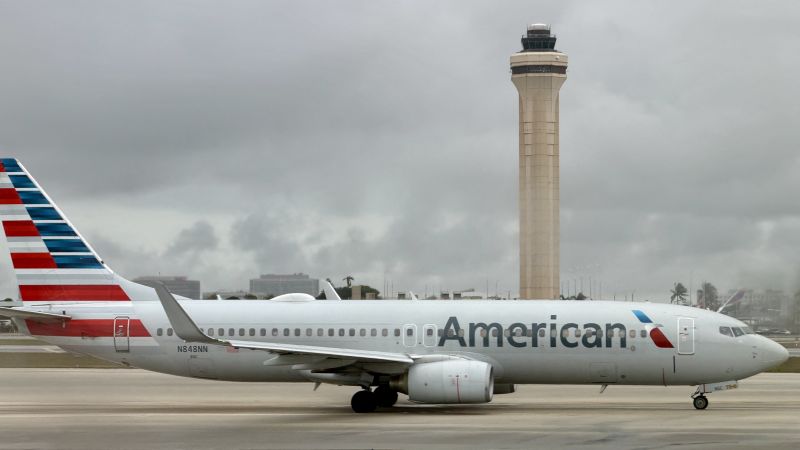
American Airlines Flight Aborts Takeoff in Miami Amid Runway Conflict
American Airlines flight aborts takeoff in Miami – On Saturday evening, an American Airlines flight bound for Bermuda had to halt its takeoff at Miami International Airport after a business jet intruded onto the same runway. The incident, which occurred around 6 p.m. ET, created a moment of high tension as the two aircraft came dangerously close to colliding. According to a spokesperson for American Airlines, the flight crew made the decision to stop the takeoff following instructions from air traffic control, which had been alerted to the presence of another plane on the runway.
Routine Disrupted by Unexpected Entry
The aborted takeoff of Flight 308 was triggered when the crew observed the business jet, operated by NetJets, entering the active runway. The two planes were as close as a third of a mile apart at the peak of the incident, raising concerns about the safety protocols in place during aircraft movements. The airline’s statement emphasized that the decision to cancel the takeoff was made swiftly to prevent any potential collision, underscoring the priority of passenger safety in such scenarios.
“You just crossed an active runway,” the air traffic controller said, as captured in a LiveATC.com recording of the incident.
The controller’s voice was clear in the audio clip, which highlights the urgency of the moment. The pilot of the business jet, identified as EJA434, responded with a mix of confusion and apology, according to the transcript. “You just told me to cross the runway, sir,” the pilot said, attempting to clarify the sequence of events. The controller corrected him, stating, “No, we said Amerijet 461,” reinforcing the communication breakdown that led to the near-miss.
Third-Party Operations and Systemic Concerns
The business jet’s operation during the incident was managed by a third-party maintenance vendor, a detail that has sparked discussions about oversight in aviation procedures. NetJets, a private jet company, confirmed that the flight was under the control of an external operator at the time. While this arrangement is standard for many commercial airlines, the situation raises questions about coordination between different entities during critical moments of flight.
The FAA, which regulates air traffic control in the United States, is currently under scrutiny for its handling of runway conflicts. The incident in Miami adds to a growing list of aviation mishaps in recent weeks, drawing attention to potential vulnerabilities in the system. On Friday, a United Airlines passenger jet narrowly avoided a collision with a drone while landing in New Jersey, another alarming event that occurred just days before the Fourth of July holiday. These incidents suggest a pattern of close calls, prompting calls for enhanced monitoring and communication protocols.
Impact on Operations and Passenger Safety
American Airlines’ statement following the event highlighted the importance of crew vigilance and the airline’s commitment to transparency. “We appreciate the quick actions of our crew members and thank our customers for their understanding,” the spokesperson said, acknowledging the disruption but assuring the public of the airline’s dedication to safety. The flight, which had been preparing for departure, eventually took off later that evening, with no reported injuries or damage.
The Miami incident serves as a reminder of the high stakes involved in air traffic management. Runway incursions—where an aircraft, vehicle, or person enters a runway without proper authorization—are a significant risk in busy airports. The FAA’s clearance system relies on precise communication, and even a minor lapse can lead to severe consequences. The business jet’s pilot, while seemingly at fault, may have been operating under a different protocol or misunderstanding the instructions, according to aviation experts.
Broader Implications for Air Travel
As the Fourth of July holiday approaches, the sequence of recent aviation incidents has heightened awareness about the potential for human error and mechanical failures. The Miami event, combined with the drone encounter in New Jersey, has prompted airlines and regulatory bodies to review their procedures for managing high-traffic periods. The FAA has been contacted by CNN for further comment, signaling the beginning of a deeper investigation into the incident.
Runway safety is a top priority for aviation authorities, yet incidents like these remain a challenge. The Miami incident involved a routine takeoff, but the presence of the business jet created a critical situation. Investigators will likely examine whether the business jet followed proper protocols, whether the air traffic control instructions were clear, and whether the American Airlines crew had sufficient time to react. Such analyses are essential for identifying systemic issues and implementing preventive measures.
The FAA’s role in ensuring safe air traffic flow is pivotal, and this incident underscores the need for continued vigilance. With the holiday season bringing an influx of travelers, the potential for errors increases, making it imperative for airlines and controllers to maintain strict adherence to safety guidelines. American Airlines’ response to the incident, as well as the broader industry reaction, will be closely watched to determine if additional training or technological upgrades are required.
Looking Ahead: Lessons from the Incident
While the immediate cause of the Miami incident is under investigation, the event has already sparked a renewed focus on runway safety. Airlines are now emphasizing the importance of real-time communication and the use of advanced technologies, such as automated alerts and improved tracking systems, to minimize risks. The incident also highlights the role of private aviation companies in maintaining operational standards, as NetJets’ third-party control was a key factor in the situation.
Passengers and crew members are being reminded of the critical steps involved in takeoff procedures. The quick decision by the American Airlines crew to abort the takeoff demonstrates the effectiveness of training and the importance of staying alert. As the FAA and other regulatory bodies work to address such incidents, the aviation industry remains committed to enhancing safety measures to protect both people and property.
This is a developing story, and further updates are expected as the investigation into the Miami incident progresses. The FAA’s response will be crucial in determining whether changes to current protocols are necessary. Meanwhile, the event serves as a stark example of how even routine flights can be disrupted by unexpected occurrences, reinforcing the need for continuous improvement in air traffic management systems.
Aviation professionals are analyzing the incident to understand its root causes and how similar situations can be avoided in the future. The business jet’s intrusion onto the runway, though brief, has raised concerns about the coordination between different aircraft and the clarity of communication in high-pressure environments. As the industry moves forward, the lessons learned from this event will be vital in shaping safer practices for all travelers.
