
The World Cup game that no one wants to win
A Unlikely World Cup Matchup: Cape Verde’s Cinderella Run and the Surprising Dynamics of Group J
The World Cup game that no one – In a stunning turn of events, the 2026 World Cup has become a platform for underdogs to shine, with Cape Verde emerging as the tournament’s unexpected heroes. The African island nation, often overlooked in global soccer rankings, has defied the odds by securing a spot in the knockout rounds. Their initial shock to the soccer world came in the form of a draw against Spain in their opening match, a feat that has now set them on a collision course with Argentina, the reigning world champions and Lionel Messi’s team. This matchup, born from a series of unpredictable outcomes, promises to be one of the most thrilling underdog vs. powerhouse confrontations in recent memory.
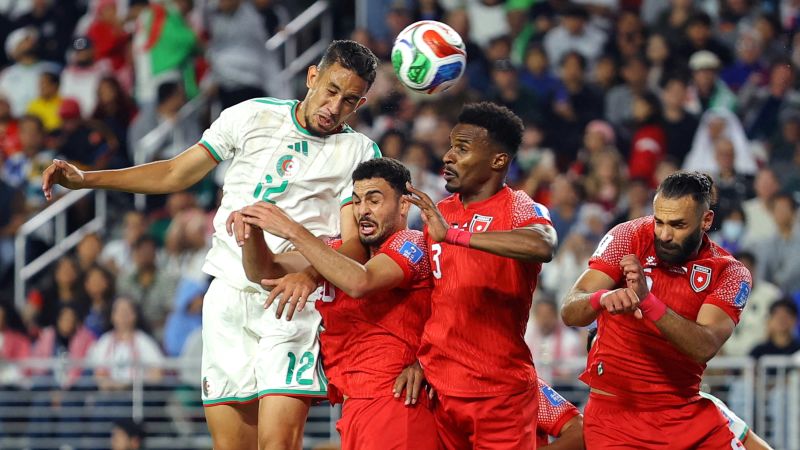
As the group stage progresses, the intricacies of FIFA’s revised qualification rules have created a fascinating scenario in Group J. Both Austria and Algeria find themselves in a precarious position where neither team can afford a decisive victory. A draw, in this case, would be the optimal outcome for Algeria, as it would secure third place and a favorable draw in the Round of 32—potentially avoiding a clash with Spain, which had already clinched its group position. Conversely, Austria would benefit from a loss, which would place them third but still grant access to the knockout rounds through their strong third-place standing. This strange quirk of the tournament format has turned a simple match into a strategic chess game, with each team weighing the consequences of their choices.
Meanwhile, the path of Cape Verde continues to unfold. The nation’s progress has been a marvel, given their tiny population and limited resources. After a draw with Saudi Arabia in Houston, they are now set to face Argentina—a team with a storied history and a roster of elite talent. This development has sparked discussions about the broader implications of FIFA’s new rules, which have introduced a level of complexity not seen in previous editions of the World Cup. The tournament’s structure, which allows for more twists in the qualification process, has created a unique environment where even the smallest nations can make bold strides.
“This sort of strange situation does happen occasionally in soccer, and definitely at tournaments like the World Cup,” says CNN’s Kyle Feldscher. “It’s also occurred in league matches, with fans hoping their own team loses because winning would only help their rivals.”
The Group J dilemma is a prime example of how tournament dynamics can shift the focus from pure competition to strategic survival. Algeria, which has yet to secure a spot in the Round of 32, faces a critical decision: should they aim for a win, a draw, or even a loss? A win would guarantee them second place and a showdown with Spain, a formidable opponent. A draw, however, would leave them third and allow them to bypass the European champions. For Austria, the stakes are similar. A loss would mean a third-place finish, but it would also result in a Round of 32 encounter with Switzerland—a team that poses less of a threat than Spain. This creates a paradox where both teams are incentivized to avoid a win, even though it’s their primary objective in a regular match.
Such scenarios are not uncommon in soccer, but they gain added significance in the context of a World Cup. The pressure to advance to the next stage is immense, and players are often trained to chase victories. Yet, in this case, the rules of the game have been reshaped by the tournament’s structure. Momentum plays a crucial role, as teams that lose early in the group stage can still find their way to the knockout rounds through favorable results. This has led to a situation where managers must balance their desire to win with the need to conserve energy for later stages of the tournament.
Algeria’s position in Group J is particularly precarious. With a loss, they would not only risk elimination but also jeopardize their chances of facing a less challenging opponent in the Round of 32. This dilemma has forced the African team to rethink their approach, considering the potential consequences of each outcome. On the other hand, Austria’s team may find themselves in a more comfortable position if they lose, as they would still have a chance to progress through the third-place rankings. This creates a split in strategy, where both teams are essentially playing for a draw or a loss, rather than a win.
As the World Cup unfolds, the narrative around Cape Verde’s journey has captivated fans. The nation’s progress is a testament to the unpredictable nature of soccer, where even the smallest teams can achieve greatness. Their upcoming match against Argentina, however, will test their resilience and ability to adapt. While Argentina’s roster is stacked with world-class players, Cape Verde’s determination and underdog spirit could create an unforgettable showdown. This match is not just about winning; it’s about the emotional journey of a team that has defied expectations at every turn.
Elsewhere in the tournament, the dynamics of other groups provide a contrasting backdrop. In one of the more straightforward matches, England faces Panama, a team that has already been eliminated from contention after two consecutive losses. For England, the game is a chance to solidify their position as group leaders, though a draw or even a win would ensure they top the standings regardless of Croatia and Ghana’s result. The Three Lions, known for their strong performances in the past, are confident in their ability to dominate the match, especially after their 6-1 victory over Panama in 2018. However, they may also look to rest key players who are dealing with minor injuries, making this match a strategic balancing act.
The Croatian and Ghana matchup is another key event in the group stage. Both teams are aware that a win would be sufficient to advance to the knockout rounds, but a draw could also be beneficial. Ghana currently holds a slight advantage in the standings, and a draw would allow them to secure second place without risking a potential loss. Croatia, meanwhile, is in a position where a loss might not end their World Cup dreams, as they could still qualify as a lucky loser. This scenario highlights the layered complexities of the World Cup, where outcomes are not always dictated by performance alone.
As the tournament progresses, these unique situations underscore the unpredictable nature of soccer. While the majority of matches follow the traditional goal-scoring narrative, the World Cup’s structure has introduced scenarios where teams might find themselves playing for a draw or a loss. This adds an extra layer of intrigue, as fans are drawn into the strategic decisions of managers and the psychological battles of players. For Cape Verde, the path ahead is one of hope and determination, while for Austria and Algeria, it is a game of calculated risks. And in the broader context of the tournament, these moments remind us why the World Cup remains one of the most exciting events in sports.
