
Israel’s military and tech industry race to counter Hezbollah’s latest threat
Hezbollah’s Drones Challenge Israel’s Defense and Tech Sector
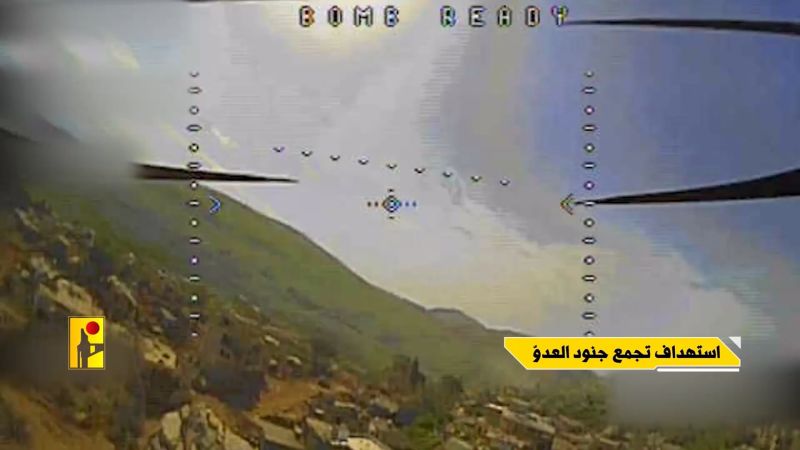
Israel s military and tech industry – Israel’s military and tech sector are now locked in a critical battle to counter Hezbollah’s growing use of advanced drone technology. As tensions in the Middle East escalate, the militant group has deployed compact, fiber-optic-equipped drones that are redefining the conflict’s battlefield dynamics. These unmanned systems, often no larger than a dinner plate, can bypass traditional air defenses and strike with precision, targeting critical assets such as armored vehicles and military installations. The challenge is not just in detecting them, but in neutralizing their threat before they cause damage. This has triggered an urgent collaboration between Israel’s defense forces and tech innovators to develop cutting-edge solutions.
Hezbollah’s Tactical Shift: Drones as a Strategic Weapon
The drones operate using real-time video transmission, allowing operators to conduct precise strikes on vulnerable points. Recent attacks have targeted Israeli Merkava tanks and Iron Dome batteries, with at least 12 troops confirmed killed since the conflict resumed in March. Unlike earlier models that relied on radio signals, these fiber-optic drones are quieter and harder to track, making them a formidable asymmetric weapon. This shift in Hezbollah’s tactics has forced Israel to rethink its defensive strategies, as the threat now extends beyond conventional warfare.
Defense officials have highlighted the urgency of addressing this emerging danger. Chief of Staff Eyal Zamir recently stated,
“The drone threat is a challenge, but we will overcome it.”
This sentiment reflects the military’s determination to adapt quickly. While physical measures such as mesh netting and close-range firearms are being deployed, their effectiveness depends on timely detection. The IDF has extended netting lines to entangle incoming drones and issued shotguns with specialized rounds to disable them at short ranges.
Private Tech Firms Join the Fight
Israel’s military is now partnering with private tech firms to enhance its capabilities against the drone threat. Last month, a meeting of defense and technology experts convened to discuss novel approaches. Among the key players was Shai Kurianski, co-founder of Airwayz, a company specializing in low-altitude airspace management. Kurianski emphasized the need for extended warning times, stating,
“Most of the warnings that the soldiers have – it’s when they hear the drone coming and they have about three, four seconds.”
His team claims their integrated sensor system can provide up to 30 seconds of advanced notice by combining optical, acoustic, and radar data.
Kurianski’s innovation is part of a broader push to leverage technology in countering Hezbollah’s capabilities. The system’s ability to distinguish between friendly and hostile drones in real time underscores the importance of predictive analytics in modern conflict. This collaboration between the military and tech sector highlights how rapid advancements in AI and sensor fusion are shaping Israel’s defense strategy. The stakes, as Kurianski put it, are deeply personal:
“It’s our children out there in Lebanon that are getting those FPV explosives and we will not wait with that.”
The drone threat has also sparked debates about Israel’s preparedness. Ukrainian officials, who first encountered this technology two years ago, warned of its potential to disrupt traditional warfare. These drones, costing as little as $300 to $400 each, can be mass-produced and deployed swiftly, making them a cost-effective tool for Hezbollah. Despite these concerns, some Israelis question the military’s pace of response. “What ceasefire?” locals in the north ask, expressing doubt about the sustainability of peace agreements when the threat continues unabated.
As the conflict evolves, the synergy between Israel’s military and tech sector remains central to its defense efforts. While physical barriers and firearms offer immediate protection, the integration of AI and sensor technologies represents a more strategic approach. This dual strategy exemplifies how Israel is adapting to asymmetric warfare, using its technological expertise to stay ahead of Hezbollah’s innovations. The race to develop effective countermeasures continues, with both sectors working tirelessly to safeguard the nation from evolving threats.
