
Why JD Vance is downplaying Richard Nixon’s corruption
JD Vance’s Praise for Nixon Sparks Debate on Corruption Perceptions
A Strategic Move in the 2028 Presidential Race
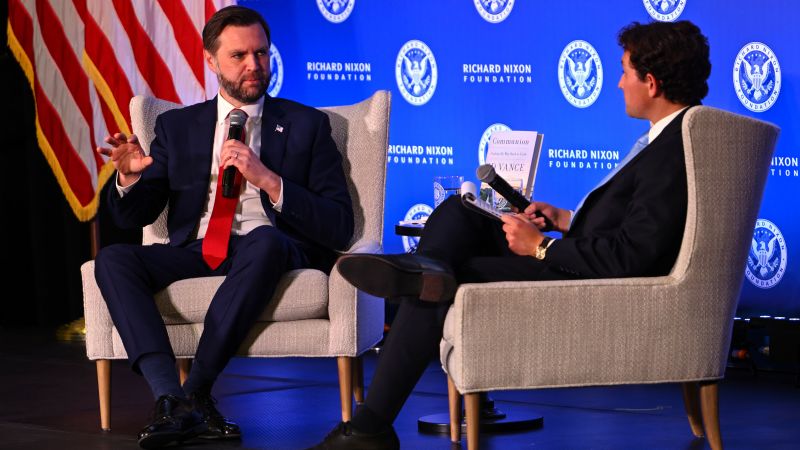
Why JD Vance is downplaying Richard – JD Vance, a prominent figure in the 2028 presidential race, recently drew attention for his remarks at the Nixon Presidential Library and Museum in California. During the event, he made a case for Richard Nixon’s political legacy, casting a critical eye on the controversies that once defined the former president’s tenure. This act of highlighting Nixon’s strengths while downplaying his scandals has ignited discussion about the role of historical figures in shaping contemporary political narratives and the potential influence on public opinion about current leaders like Donald Trump.
“I think that his historical legacy is enjoying a bit of a renaissance — but I think deservedly so,” Vance stated. “As I joked … backstage, if Watergate happened tomorrow, it would be like a 12-hour news story. Like, the idea that it would have taken down a presidency is crazy.”
Vance’s comments, delivered with a mix of humor and strategic intent, draw a direct parallel between Nixon’s resignation in 1974 and the current efforts to scrutinize Trump’s actions. He suggested that the “deep state” — a term often used to describe bureaucratic or institutional forces opposed to conservative policies — played a pivotal role in Nixon’s downfall, much like it did in Trump’s first term. This comparison implies that the same entities now targeting Trump may have a pattern of undermining leaders perceived as resistant to their influence.
While Vance’s assertions about Nixon’s legacy are not entirely unfounded, they also hint at a broader political strategy. The former vice president’s alignment with Nixon could be an attempt to rehabilitate the image of a president who remains a polarizing figure. A recent Gallup poll from December 2024 revealed that 54% of Americans rated Nixon as “below average” or “poor,” with only 12% placing him in the “above average” or “outstanding” category. This places Nixon among the least admired presidents in recent history, even among Republicans, where 39% gave him negative marks compared to 19% who viewed him positively.
Despite these numbers, some conservative voices have sought to reshape public perception of Nixon in recent years. In 2023, Vivek Ramaswamy, a then-GOP presidential candidate, visited the Nixon Library to argue that the former president was “the most underappreciated leader of modern American history.” Similarly, other media outlets such as Politico, Time, and NBC News have echoed this sentiment, emphasizing Nixon’s enduring relevance in today’s political discourse. However, the broader public’s skepticism persists, raising questions about how effectively these efforts have resonated.
Vance’s comparison of Nixon’s fall to Trump’s potential challenges is not merely an academic exercise. It aims to frame corruption as a temporary setback rather than a defining flaw. By suggesting that Watergate would not be as impactful today, Vance implies that modern institutions may be less effective at uncovering wrongdoing — or that the public has grown desensitized to political scandals. This argument aligns with the idea that Trump’s controversies could be viewed through a similar lens, reducing their perceived severity in the eyes of voters.
Yet, the irony of Vance’s position is evident. Nixon, despite his achievements, remains a symbol of political scandal, and Vance’s comments may inadvertently reinforce the notion that corruption is an inevitable part of leadership. His emphasis on the “deep state” as a recurring antagonist suggests a narrative where external forces are more to blame than individual leaders, a theme that could be leveraged to shield Trump from criticism. However, the persistence of Nixon’s negative image among the general public complicates this strategy.
Experts note that Vance’s alignment with Nixon may also be a calculated move to position himself as a unifying figure. By adopting a critical view of the “deep state,” he positions Trump as a victim of political machinations, which could resonate with voters disillusioned by the current administration. This approach mirrors how some political figures have historically used Nixon’s legacy to deflect blame from their own parties or leaders. The key question is whether Vance’s strategy will help him gain traction in the 2028 election or if it will further cement the association between Nixon’s scandals and Trump’s controversies.
Adding to the discussion, Vance’s personal connection to Nixon’s story is notable. He framed his own political journey as akin to Nixon’s, citing shared experiences such as being a vice president and facing media skepticism. This parallel suggests a desire to align himself with a figure who, despite his flaws, is seen as resilient in the face of political pressure. However, the effectiveness of this analogy depends on how the public interprets Nixon’s legacy in the context of today’s challenges.
Analysts also highlight the significance of Vance’s timing. As the 2028 election approaches, the focus on corruption may shift depending on the political landscape. For instance, if Democrats regain control of Congress after the November midterms, they could launch sweeping investigations into Trump’s administration. This scenario would create a perfect backdrop for Vance’s argument that corruption allegations are often politically motivated, a claim that could gain traction if the media and public perceive the process as biased.
While the current administration has managed to obscure some of Trump’s scandals through its control of the Justice Department and congressional oversight, the looming threat of a new legislative majority could change this dynamic. Vance’s remarks, therefore, serve as a preemptive strategy to normalize the idea that political corruption is not always a decisive factor in a leader’s fate. By linking Nixon’s scandal to Trump’s current situation, he may be trying to shift the narrative in favor of his own candidacy and the broader Republican movement.
In conclusion, Vance’s praise for Nixon reflects a nuanced approach to political messaging. It blends historical analysis with strategic intent, aiming to redefine the role of corruption in modern politics. Whether this effort succeeds in softening public perception of Trump or strengthens Vance’s own image as a leader who can withstand scrutiny remains to be seen. The debate over Nixon’s legacy, however, underscores the power of historical parallels in shaping contemporary political discourse.
