
Look of the week: Saint Laurent’s see-through shoes reveal fashion’s growing foot fetish
The Foot Fetish Takes Center Stage
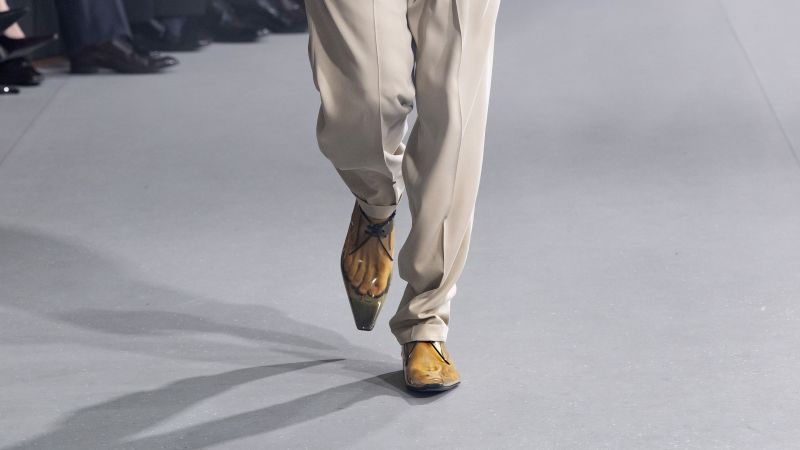
Look of the week – As the fashion world continues to evolve, a growing fascination with the feet has emerged, reshaping the way designers approach footwear. This week, the Summer 2027 Saint Laurent collection in Paris sparked a heated discussion, with Anthony Vaccarello’s choice of see-through oxfords becoming a defining moment. The creative director’s decision to bare the feet in a lineup dominated by tailored suits and structured jackets pushed the boundaries of traditional elegance, blending allure with a touch of audacity. The show, held under the sweltering heat of a record-breaking June day, added a visceral dimension to the display, as models’ toes glistened with sweat inside the transparent shoes.
Saint Laurent’s Transparent Statement
The collection opened with a sleek slate blue suit, its fluid trousers and boxy, 80s-inspired jacket exuding retro sophistication. Yet the runway was disrupted by a daring twist: a pair of clear vinyl oxfords that revealed the models’ feet in full. The French capital, grappling with a relentless heatwave, amplified the visual impact, as the perspiration from the models’ toes contrasted sharply with the polished, synthetic upper. This juxtaposition of sensuality and restraint became a conversation starter, with critics and fans alike dissecting the design’s implications.
Further down the line, the show introduced a series of shoes in earthy tones—accordion-folder brown and taupe—pairing corporate hues with the tailored silhouettes of the collection. The result was a surreal blend of office-appropriate aesthetics and runway experimentation, evoking the eerie ambiance of a cubicle siren. The combination of unbreathable materials and stifling weather created a distinctive effect, with condensation pooling on the shoes’ surfaces like a visual metaphor for the season’s tension between comfort and allure.
Interestingly, the foot focus extended beyond the runway. “Heated Rivalry” star Connor Storrie, a frequent presence at high-profile events, arrived in a black vinyl trench coat, which he peeled off to reveal a casual ensemble of tank top and shorts. His knee-high latex boots, however, offered a striking contrast to his relaxed outfit, underscoring the duality of the trend—both the refined and the rebellious. This interplay of styles suggested that the foot fetish isn’t just about transparency but also about the desire to blur the lines between the mundane and the extraordinary.
A Historical Perspective on Footplay
The current obsession with feet is not entirely new. Fashion has long been influenced by the human form, but the shift toward emphasizing the lower extremities marks a significant change. Margiela’s Tabi boots, introduced in the 1990s, were a pioneering example of this trend, incorporating a Japanese split-toe design into a contemporary context. These boots, often described as “shock trotters,” challenged conventional notions of footwear by prioritizing form over function, a concept that now seems to be gaining traction again.
Today’s designers are drawing inspiration from both past and present. Jonathan Anderson, who transitioned from Loewe to Dior, has consistently leaned into avant-garde footwear, working closely with Nina Christen to create pieces that defy expectations. Balloon pumps, soap-shaped heels, and lily-shaped sandals have not only captured attention but also redefined what luxury can look like. The Row, despite its minimalist ethos, has also embraced this trend, with its jelly shoes and mesh flats becoming highly sought-after items, even among those who typically prioritize its high-end outerwear.
Meanwhile, Tory Burch has maintained a balance between tradition and innovation, introducing collections that cater to a blend of preppy and edgy styles. Her recent high-vamp pumps, adorned with neon orange accents, reflect a broader movement toward bold, statement-making footwear. These designs, while rooted in classic aesthetics, inject a modern flair that resonates with younger audiences seeking both sophistication and a touch of rebellion.
The Role of Social Media and Consumer Shifts
As the fashion industry increasingly relies on social media to drive engagement, the focus on feet aligns with the demand for visually striking content. The era of celebrity-filled front rows, once a mainstay of runway shows, has given way to a more democratized approach. While stars like Kim Kardashian and Hailey Bieber still command attention, the emphasis has shifted toward the garments themselves—and, more specifically, the feet they conceal or expose.
Handbags, once the centerpiece of luxury fashion, have seen a decline in prominence. Fashion and culture journalist Amy Odell recently noted that the ultra-exclusive Birkin bag has become so common that its exclusivity feels diluted. In contrast, shoes remain a versatile and affordable element of fashion, allowing brands to experiment without the same level of risk. This accessibility has made footwear a canvas for both innovation and controversy, from the delicate transparency of Saint Laurent’s oxfords to the audacious exposure of Chanel’s sandals.
The viral nature of these designs underscores their cultural resonance. The recent trend of revealing feet—whether through see-through shoes or laced sandals—has sparked debates about the boundaries of fashion. Is this a playful nod to the human body, or does it signal a deeper shift in how we perceive luxury? The answer, it seems, lies in the duality of the designs: they are both elegant and provocative, appealing to a spectrum of tastes and sensibilities.
The Future of Foot-Centric Fashion
With Spring 2027 still a year away, the foot fetish appears to be gaining momentum. Designers are no longer content with subtle nods to the feet; they are making it a central theme. The success of Saint Laurent’s collection suggests that transparency and exposure are not just fleeting trends but part of a broader reimagining of fashion’s priorities. As brands strive to create memorable pieces that generate conversation, the feet have become an unexpected yet powerful focal point.
While some may argue that this shift reflects a preoccupation with the body’s most intimate parts, others see it as a natural evolution of fashion’s role in culture. The interplay between the feet and the rest of the outfit—a relationship once overlooked—now holds symbolic weight. In a world where even the most basic garments can spark debate, the feet, with their vulnerability and visibility, offer a compelling narrative. As the industry moves forward, the question remains: will this focus on the feet endure, or is it simply a passing phase in the ever-changing landscape of style?
“Fashion has always been about storytelling, and the feet are an untapped part of the human body that can carry a lot of meaning.”
Whether seen as a bold statement or a nostalgic nod, the foot-centric designs of 2027 are redefining what it means to be fashionable. From the shimmering oxfords of Saint Laurent to the whimsical sandals of Chanel, the trend suggests that the feet are no longer just a part of the body—they are a subject of art, a symbol of status, and a canvas for innovation. As the season progresses, it’s clear that the foot fetish is here to stay, challenging designers and consumers alike to rethink their relationship with fashion’s most intimate details.
