
Israel to withdraw from two areas in Lebanon under newly signed agreement
Israel to Withdraw from Two Key Areas in Lebanon, Marking a Trilateral Agreement
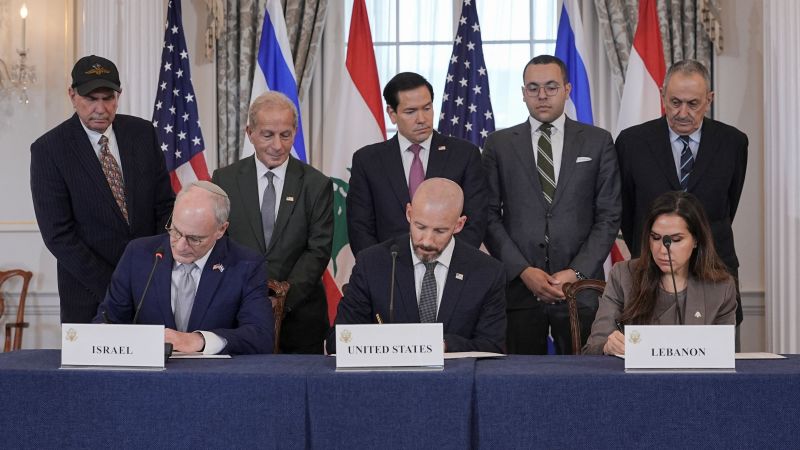
Israel to withdraw from two areas – After four days of high-level discussions in Washington, Israel has agreed to withdraw from two strategic regions in southern Lebanon, handing over the territories to the Lebanese military. This decision, announced by Prime Minister Benjamin Netanyahu, is part of a new agreement that aims to set the stage for a broader peace deal between the two nations. The trilateral arrangement, involving Israel, Lebanon, and the United States, represents a significant step toward resolving long-standing tensions in the region.
A Shift in Territorial Control
Under the terms of the agreement, Israeli forces will reduce their presence in two designated areas: one located north of the Litani River and the other south of it. These zones, which have been under Israeli occupation for years, are now set to be transferred to the Lebanese Armed Forces (LAF) as part of a pilot program. The move is expected to test the feasibility of a more permanent settlement, with the hope that it will lead to broader territorial concessions in the future.
Lebanon’s Ambassador to the U.S., Nada Hamadeh Moawad, emphasized the importance of the agreement, calling it a “first step on the road to restoring Lebanese sovereignty and territorial integrity.” She highlighted the symbolic value of reclaiming these areas, which had been a focal point of Israeli military operations. Meanwhile, Netanyahu stated that the withdrawal would allow Israel to retain control over much of the territory in southern Lebanon, provided that Hezbollah remains armed and active.
“This agreement is a major victory for Israel,” Netanyahu said in a statement. “It enables us to maintain our strategic position while offering Lebanon a chance to reclaim its land. The withdrawal will be conditional on Hezbollah not being disarmed.”
Netanyahu also framed the agreement as a countermeasure against external pressures, particularly from Iran. “Iran has been trying to force us out of southern Lebanon by force,” he added. “Today, Israel, Lebanon, and the United States are declaring that this is none of their business.” His comments underscored the geopolitical significance of the deal, positioning it as a demonstration of Israel’s autonomy in the region.
US Mediation and Diplomatic Efforts
The United States played a central role in facilitating the negotiations, hosting a fifth round of talks aimed at bridging the gap between Israel and Lebanon. Despite the lack of formal diplomatic ties between the two countries, the Trump administration sought to create a framework for cooperation. Secretary of State Marco Rubio described the signing ceremony as “the beginning of the beginning,” acknowledging the challenges ahead but expressing confidence in the agreement’s potential.
“There’s a lot of work to be done, but we understand the importance of this step,” Rubio said. “This is not just a local issue—it has implications for regional stability and the security of both nations.”
Lebanon’s President Joseph Aoun praised the U.S. for its role in hosting the talks, stating that the agreement would allow the country to “return to its fully liberated land under the sovereignty of a Lebanese state.” His remarks pointed to Iran’s influence through Hezbollah, which has long been a factor in Lebanon’s internal politics. Aoun’s acknowledgment of the agreement’s symbolic nature highlighted its broader strategic goals.
Contradictions and Strategic Considerations
While the agreement outlines a withdrawal, some Israeli officials have expressed reservations. Defense Minister Yoav Gallant previously stated that the military would not pull back from Lebanon even if the U.S. insisted. However, the Israeli Defense Forces (IDF) announced a temporary reduction in its forces, leaving room for interpretation. The statement provided to CNN made no explicit mention of territorial withdrawals, suggesting that the decision remains flexible.
Analysts note that the agreement may serve dual purposes: it could be seen as a diplomatic victory for Lebanon, while also allowing Israel to retain a strategic foothold. The areas south of the Litani River, in particular, have been a key point of contention, with their control affecting both military and economic dynamics. By transferring these zones to Lebanese forces, the deal may signal a willingness to share power, though not entirely.
Hezbollah’s Response and Political Reactions
Reactions from Lebanon’s political landscape have been mixed. While the government has welcomed the agreement, Hezbollah’s parliamentary member Hassan Fadallah criticized it, arguing that the group had rejected direct negotiations with Israel. “Whoever shakes hands with the enemy is a criminal like them,” Fadallah said in a statement to the pro-Hezbollah news channel Al-Mayadeen. His comments reflect the ongoing divide within Lebanon, where some factions see the agreement as a concession to Israeli interests.
Despite Hezbollah’s opposition, the agreement has been framed as a unifying effort by the Lebanese government. President Aoun’s statement, which emphasized the country’s sovereignty, aligns with the broader goal of reducing Iranian influence. The pilot program, part of the latest ceasefire agreement, is expected to be a test case for future negotiations, potentially paving the way for a more comprehensive resolution.
Historical Context and Regional Implications
The withdrawal from these areas comes amid a long history of conflict between Israel and Lebanon, marked by periodic clashes and military operations. The areas in question—north and south of the Litani River—have been strategically important for Israel, serving as a buffer zone against Hezbollah’s militant activities. By vacating part of this territory, the agreement could weaken Hezbollah’s position while strengthening Lebanon’s claim to its land.
Netanyahu’s decision to withdraw forces from certain regions also reflects Israel’s broader strategy of balancing military presence with diplomatic gains. The move is described as a “symbolic” step, intended to signal goodwill to Lebanon and the international community. However, it does not mean a complete withdrawal, as Israel retains control over much of the area. This conditional approach may help maintain security while advancing peace talks.
The agreement has been viewed as a critical development in the Middle East, where tensions between Israel and its neighbors have often been exacerbated by external actors. By facilitating this step, the U.S. has positioned itself as a key player in regional stability, while Lebanon and Israel attempt to redefine their relationship. The success of this pilot program could determine the future of their negotiations, potentially leading to a lasting peace.
As the agreement moves forward, its implementation will be closely monitored. The Lebanese military’s entry into these areas will test their capacity to manage the region effectively. Meanwhile, Israel’s continued presence in southern Lebanon ensures that the conflict remains a focal point of regional diplomacy. The deal also highlights the complex interplay between local actors and external powers, with Iran’s influence still a key concern for both sides.
For now, the agreement stands as a testament to the progress made through sustained dialogue. However, the path to a broader peace remains uncertain, with Hezbollah’s rejection of direct talks indicating that challenges lie ahead. As the story continues to develop, the international community will watch closely to see how this framework shapes the future of Israel-Lebanon relations.
