
National Geographic’s new $300 million museum lets you relive 138 years of exploration
Experience a Century of Discovery at National Geographic’s $300 Million Museum
National Geographic s new 300 million – With the unveiling of National Geographic’s $300 million museum, the iconic society celebrates its 138-year journey of exploration. Located in Washington, DC, this new attraction replaces the previous museum, which closed in 2023. The 100,000-square-foot facility, opening June 26, 2023, is designed to transport visitors into the world of discovery, blending immersive technology with hands-on learning to honor both historical and modern explorers. By reimagining the narrative of exploration, the museum offers a unique glimpse into the legacy of scientific curiosity and global adventure.
A Portal to Earth’s Wonders
Upon entering, guests are greeted by a dynamic courtyard where life-sized wildlife sculptures come to life. A jaguar pounces toward a capybara, while a penguin tenderly cradles its chick, symbolizing the interconnectedness of ecosystems. The space is designed to evoke awe, with curved wooden walls projecting videos of glaciers, deep-sea trenches, and nomadic communities. A circular skylight allows natural light to flow through the building, reinforcing the museum’s mission to connect visitors with the planet’s natural beauty. This environment sets the stage for a deeper exploration of the world’s most captivating stories.
The Heart of National Geographic’s Legacy
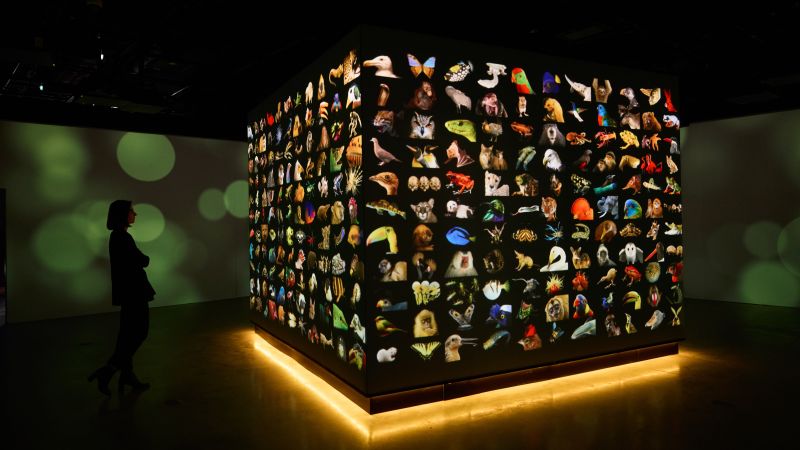
The first floor of the museum pays homage to the society’s enduring tradition of photography. A digital wall displays every magazine cover ever published, offering a visual timeline of the publication’s history. Interactive stations trace the journey of a story from field research to publication, while a digital darkroom lets visitors experiment with the photographic process. The “In Focus” exhibit highlights iconic images, including early night photography of wildlife and the poignant final portrait of Sudan, the last northern white rhinoceros, who died in 2018. These elements showcase how National Geographic’s $300 million museum preserves the essence of its groundbreaking work.
“This museum tells the story of amazing humans who’ve explored, from our founding in 1888 up to the present day,” said Emily Dunham, chief campus and experiences officer. Her statement reflects the museum’s goal of celebrating both past and present explorers. Through multimedia displays and interactive features, visitors can engage with the narrative of discovery in a way that feels personal and impactful.
Engaging the Next Generation
For younger audiences, the museum offers an interactive experience that feels like a storybook come to life. A hidden passageway leads to the “Geoverse,” a 270-degree theater that transports guests into the cloud forests of Peru and the deserts of Australia. Exhibits are tailored to spark curiosity, with activities that encourage tactile exploration and storytelling. The museum aims to inspire a new wave of explorers by making the wonders of the world accessible and engaging, ensuring that National Geographic’s $300 million investment resonates with future generations.
Tools of the Trade
The “Rolex Explorers Landing” exhibit highlights the personal gear and stories of National Geographic’s field researchers. A mokoro, a traditional dugout canoe, is displayed as part of Africa’s Okavango basin exploration. Steve Boyes, a conservationist and explorer, shared his emotional connection to the artifact, saying, “These are my grandfather’s binoculars,” recalling his first sighting of four leopards in a single frame. The museum also features replicas of tools used in historic expeditions, such as the JIM suit worn by Sylvia Earle in the 1970s to dive 1,250 feet underwater. These artifacts serve as tangible reminders of the society’s commitment to pushing the boundaries of discovery.
“I’m driven by a sense of urgency, having the privilege of seeing what most people cannot,” Sylvia Earle once remarked. Her legacy is preserved in the museum’s JIM suit exhibit, which symbolizes National Geographic’s $300 million museum’s dedication to environmental stewardship and scientific innovation. By showcasing these tools, the institution bridges the gap between the field and the gallery, making the work of explorers relatable and inspiring.
