
FAA investigates close call between two aircraft at intersecting runways at Boston Logan International Airport
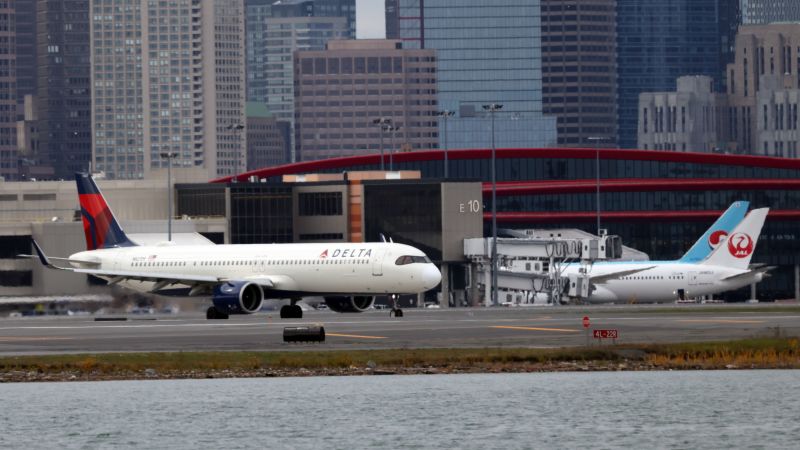
FAA investigates near-miss incident involving two aircraft at Boston Logan International Airport
FAA investigates close call between two aircraft – The Federal Aviation Administration (FAA) has launched an inquiry into a near-miss incident at Boston Logan International Airport on Saturday, June 20, 2026. According to flight tracking data, a critical moment occurred when Delta Air Lines Flight 2351, which was in the process of landing, had to abruptly abort its approach around 11:30 a.m. at the same time American Airlines Flight 3161 was accelerating for takeoff on a runway that intersected the path of the Delta aircraft.
Details of the Close Call
Delta’s pilots executed an emergency go-around maneuver, diverting the plane to ascend and avoid a potential collision with the American Airlines flight. The Airbus A319 operated by American Airlines landed safely, and passengers disembarked without incident, as confirmed by a Delta spokesperson in a statement released to CNN. The event, which brought the two planes within hundreds of feet of each other, has been analyzed by CNN using data from Flightradar24, highlighting the proximity of the aircraft during the critical phase of the incident.
The air traffic control audio, captured by ATC.com, reveals that the American Airlines pilot was asked by the controller about the flight’s status. The pilot responded, stating that the tower had given clearance for takeoff. This exchange underscores the complexity of managing intersecting runways, where precise coordination is essential to prevent conflicts. While the FAA has taken the lead in investigating the incident, American Airlines has yet to provide further details, deferring all questions to the agency.
Broader Context of Aviation Safety Concerns
This incident adds to a growing list of aviation-related near-misses and accidents in the United States, which have sparked renewed scrutiny of safety protocols. In recent months, the country has witnessed a series of incidents, including four major plane crashes, as well as a persistent increase in turbulence-related reports. The Boston Logan near-miss is notable for its similarity to other recent cases, prompting experts to question whether systemic issues may be contributing to these events.
Aviation professionals emphasize that such incidents, while concerning, are part of the routine challenges faced in air travel. However, the frequency of these events has raised alarms. “The aviation industry operates with a high degree of safety, but these occurrences are becoming more common,” noted a source close to the FAA’s internal review. “It’s important to understand the root causes and ensure that measures are in place to mitigate risks.” The FAA’s investigation is expected to focus on factors such as communication between air traffic controllers and pilots, runway spacing, and environmental conditions at the time of the incident.
Understanding the Go-Around Procedure
A go-around, also known as an aborted landing, is a standard maneuver used in aviation to prevent potential collisions or other hazards. Pilots are trained to initiate this action when they detect a risk, such as an incorrect positioning of another aircraft on the runway, sudden changes in wind direction, or an unstable approach. The procedure involves quickly retracting the landing gear and climbing back to a safe altitude, allowing the aircraft to reposition itself for a subsequent landing attempt.
Michael McCormick, a former FAA air traffic manager and associate professor at Embry-Riddle Aeronautical University, explained the significance of go-arounds in a previous interview with CNN. “These maneuvers are not uncommon and are a vital part of ensuring safety,” McCormick said. “While they can be unsettling for passengers, they are routine and reflect pilots’ readiness to act swiftly in high-pressure situations.” He added that pilots practice go-arounds in flight simulators regularly, making them an ingrained part of their training.
Despite the jarring experience for some passengers, go-arounds are considered a necessary safety measure. The incident at Boston Logan serves as a reminder of the challenges associated with managing intersecting runways, where planes must navigate tight spaces while adhering to strict protocols. Aviation experts are calling for a deeper analysis of the situation to determine whether adjustments to air traffic control procedures or runway management systems are needed to prevent future occurrences.
Implications for Aviation Safety
The FAA’s investigation into this incident may lead to broader recommendations for improving safety in high-traffic airports. Boston Logan, one of the busiest in the Northeast, is frequently cited for its complex runway configurations, which can increase the likelihood of close calls. The agency is expected to evaluate whether current procedures are sufficient to handle such scenarios or if additional safeguards, such as enhanced communication systems or updated training programs, should be implemented.
While the recent near-miss at Boston Logan has been resolved, it underscores the importance of vigilance in aviation. McCormick pointed out that even with advancements in technology, human error and situational awareness remain critical factors in flight safety. “Pilots and controllers are trained to handle these situations, but the pressure of high-volume operations can sometimes test their ability to react,” he explained. “Every incident is a learning opportunity to refine processes and enhance safety.”
As the FAA delves deeper into the details, the incident will be monitored closely by aviation authorities and industry stakeholders. The outcome of this investigation could influence future safety regulations, particularly in airports with intersecting runways. For now, the focus remains on understanding how the two aircraft came so close to each other and ensuring that such events are minimized in the future. The safety of air travel remains a top priority, and the aviation community continues to work toward maintaining the high standards that have long defined the industry.
The Boston Logan incident also highlights the ongoing challenges of turbulence, a phenomenon that has seen an uptick in reports over the past year. While turbulence is typically not life-threatening, it can lead to significant discomfort for passengers and, in severe cases, contribute to incidents that require emergency actions. The FAA and other regulatory bodies are actively researching the causes of turbulence to develop better predictive models and improve flight planning.
As the aviation sector navigates these challenges, incidents like the one at Boston Logan serve as a catalyst for innovation and improvement. Whether through enhanced training, improved technology, or revised operational procedures, the goal remains the same: to ensure that air travel continues to be one of the safest modes of transportation. The FAA’s investigation into this particular event is just one step in a larger effort to address the evolving demands of modern aviation.
