
The son of a Super Bowl winner solidifies rowdy Seattle as a US soccer stronghold
The Son of a Super Bowl Winner Cements Seattle’s Legacy as a Soccer Powerhouse
A Historic Match at a Reimagined Venue
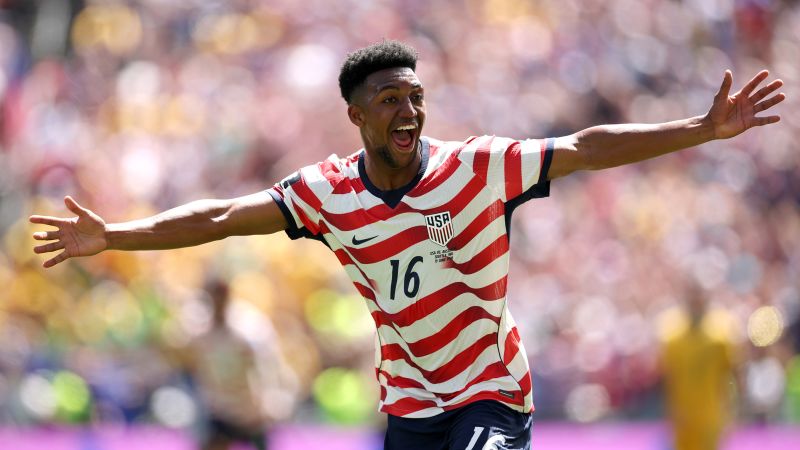
The son of a Super Bowl – Lumen Field, once known as the home of the Seattle Seahawks, has undergone a symbolic transformation for the 2026 World Cup. Renamed Seattle Stadium by FIFA, the venue now serves as a backdrop for the nation’s most anticipated soccer matches. For Alex Freeman, this setting holds personal significance. On Friday, he etched his name into the annals of U.S. soccer history, scoring a pivotal goal against Australia to secure a 2-0 victory and advance the United States to the Round of 32. The 21-year-old defender’s performance was more than a personal triumph—it was a continuation of a legacy that began three decades earlier.
A Father’s Influence, A Son’s Ascension
Alex Freeman’s father, Antonio Freeman, is a name etched in the memories of Green Bay Packers fans. A former NFL wide receiver, Antonio won Super Bowl XXXI in 1996, leading his team to a 31-10 rout over the Seattle Seahawks. The game, played at the now-demolished Kingdome, is a shared story between the Freeman family and the city of Seattle. Antonio’s seven receptions and two touchdowns that day are now a distant echo, overshadowed by his son’s recent heroics. Alex, who plays as a defender for La Liga’s Villarreal, has long been inspired by his father’s success. “It’s a full-circle, family moment,” he reflected after the match, his voice tinged with emotion. “I think for me it just shows how great the family tree is.” While he acknowledged his father’s influence, Alex emphasized his own journey. “He can be great, but I can be great in my own way,” he said. “It’s amazing to have a dad who’s successful and can guide me through moments like these.”
A Goal That Nearly Cost Him Everything
Freeman’s breakthrough came with a twist. In the 38th minute, a high-speed challenge with Australia’s Paul Okon-Engstler left both players dazed. The collision, a 50/50 aerial battle, forced Freeman to the ground for nearly a minute and a half. Medical staff assessed the injury, checking for a concussion, but the young defender returned to the action. Minutes later, the United States was already leading 1-0, and Freeman seized the opportunity. He intercepted a parried shot by teammate Sergiño Dest, heading the ball into the net. The moment was pure elation, shared with fellow defender Chris Richards, until the linesman raised the offside flag. The crowd, which had gathered in anticipation, held its breath as the video assistant referee (VAR) reviewed the play. After a tense two-minute wait, the goal was confirmed. Seattle’s fans erupted, their cheers echoing through the stadium. Freeman’s reaction was a mix of disbelief and joy. “I was very anxious to see whether it was a goal or not,” he recounted, his smile revealing the weight of the moment. “When it was announced, I looked back and saw my teammates running at me. I was like, ‘Oh Lord’—and then I had to run with them. It just made me very emotional.”
A City That Roars with Passion
Despite the noon kickoff, Seattle’s stadium was packed well before the match began. The city’s soccer enthusiasts, a loyal and vocal group, had already made their presence known downtown the night before. Their energy was palpable, a testament to the growing prominence of the sport in the region. The fans, often referred to as the “12th man” in U.S. soccer lore, seemed ready to carry the team’s momentum into the World Cup. Manager Mauricio Pochettino recognized Freeman’s potential early, naming him a starter for the first two Group D matches. The decision proved rewarding, as the young defender played a key role in shutting down Paraguay and then Australia. His resilience in the face of injury and his composure during the VAR review underscored his readiness for the global stage.
A Teammate’s Pride and the Broader Impact
Freeman’s achievement wasn’t just a personal milestone—it resonated within the team. U.S. striker Folarin Balogun praised the moment, calling Alex “such a humble kid” who “has so much competitiveness.” “For him to get his first World Cup goal on home soil, it’s a special evening,” Balogun added, highlighting the significance of the event for a city that has long embraced soccer. The Freeman family’s connection to Seattle’s sports history is more than symbolic. Antonio’s Super Bowl victory in 1996 and Alex’s World Cup goal in 2026 create a timeline of excellence that bridges two generations. While the Kingdome has long since been replaced by Lumen Field, the spirit of competition that once defined the stadium now lives on in the younger Freeman.
Looking Ahead to a Bright Future
As the U.S. team prepares for its next challenge, Freeman’s performance serves as a reminder of the city’s deep-rooted passion for soccer. Seattle’s transformation from a city that once hosted NFL games to a soccer stronghold has been gradual but steady. The Freeman story adds another chapter to this narrative, proving that the sport’s legacy can thrive through family and tradition. For Alex, the moment was a culmination of years of dedication. “Having a father figure like Antonio has been invaluable,” he noted, reflecting on the lessons learned from his dad’s career. “It’s not just about the competitiveness—it’s about the mindset, the work ethic, and the belief that you can achieve greatness.” Freeman’s journey is emblematic of a new era in U.S. soccer, where young talent like him can emerge from cities like Seattle. The stadium, once a site of football history, now stands as a stage for soccer’s next stars. As the World Cup progresses, the Freemen’s story will continue to inspire, a blend of heritage and innovation that defines the sport’s evolution in America.
With the 2026 World Cup reaching its midpoint, the Freeman family’s legacy remains a powerful force. The son of a Super Bowl champion has not only honored his father’s achievements but also carved his own path in the annals of U.S. soccer. As the U.S. team continues its campaign, Freeman’s performance in Seattle will be remembered as a defining moment for the city—and for the next generation of players who call it home.
