
Italian foreign minister cancels trip to US over Trump’s comments about Meloni
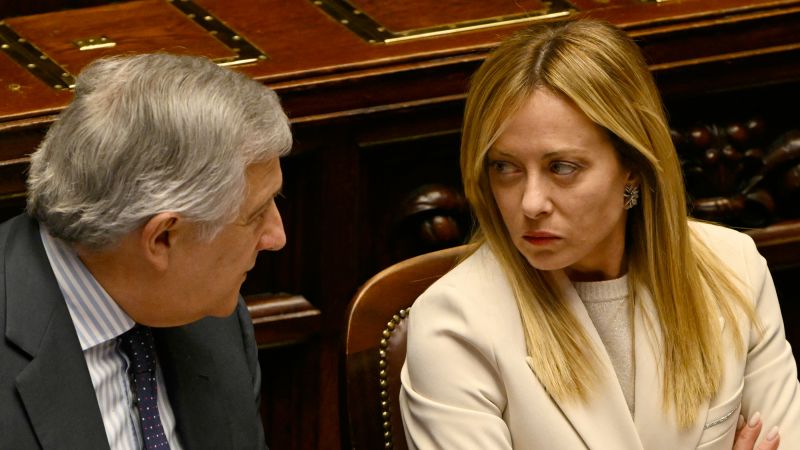
Italian Foreign Minister Cancels U.S. Trip Over Trump’s Remarks on Meloni
Italian foreign minister cancels trip to US – Italy’s foreign minister has canceled a planned visit to the United States, citing recent comments by President Donald Trump about Prime Minister Giorgia Meloni. The decision, announced on Friday, occurs just days before the Italy-US Business, Investment, Science and Innovation Forum in Miami, where the minister was set to meet with U.S. Secretary of State Marco Rubio. This marks the second time this year that Tajani has postponed a diplomatic engagement, underscoring growing tensions between Rome and Washington. The move follows Trump’s alleged remarks, shared in an interview with Italian TV outlet La7, which suggested Meloni had “begged” for a photo during the G7 summit in France. The remarks, which have been dubbed and translated, have sparked sharp criticism from Italian officials.
Trump’s Controversial Comments and Meloni’s Reaction
During the interview, Trump claimed that Meloni had requested a photo opportunity at the G7 summit, implying that she had acted with “weakness” in the face of global challenges. The statement, translated by La7, has been widely criticized as overly harsh and dismissive of European leadership. Meloni swiftly denied the claim, calling Trump’s remarks “completely fabricated” in a video posted on X. “Donald Trump’s statements are completely fabricated. I’m frankly shocked,” she said, expressing frustration with the U.S. president’s treatment of European allies. “I don’t know why the president of the United States behaves this way towards his own allies, and it’s not the first time it’s happened,” she added, highlighting the inconsistency in Trump’s approach.
The prime minister emphasized Italy’s independence, stating, “But you must remember one thing: Italy and I never beg.” This defiant statement underscores the political rift between Trump and Meloni, despite their shared ideological alignment on issues like immigration and trade. The foreign minister’s cancellation of the trip signals a shift in Italy’s diplomatic strategy, with the government now adopting a more assertive stance against U.S. criticism. The incident has reignited debates about the reliability of Trump’s foreign policy and its impact on transatlantic relations.
The Impact on U.S.-European Diplomacy
The canceled trip adds to a series of diplomatic setbacks for Trump, who has faced growing skepticism from European leaders. While the G7 summit had initially shown signs of unity, the recent dispute has exposed deepening tensions in the U.S.-European alliance. Tajani’s decision to pull out of the meeting highlights the sensitivity of the relationship, particularly as Italy and the U.S. collaborate on critical issues such as energy independence and supply chain resilience. The State Department had planned the meeting to strengthen bilateral ties, but Trump’s remarks have cast doubt on its purpose.
Italian officials have called the comments “disrespectful” and “unwarranted,” noting that Meloni’s leadership has been a cornerstone of U.S.-Italy cooperation. The foreign minister’s trip cancellation is seen as a symbolic gesture, reflecting the government’s determination to protect its national image. The White House has yet to issue an official response, leaving the situation open to interpretation. CNN has sought comments from both the administration and the State Department to clarify the incident, but the delay has fueled speculation about the depth of the diplomatic rift.
Historical Tensions and Strategic Shifts
Giorgia Meloni, a staunch advocate of nationalist policies, has long been a key ally of Trump in Europe. However, their relationship has grown increasingly strained since the start of Trump’s second term. Meloni’s refusal to support the U.S. in the war against Iran, for example, was labeled “unacceptable” by the president. This incident, combined with the recent remarks, has led to a more confrontational dynamic between the two leaders. The Italian government’s decision to cancel the trip is part of a broader effort to assert its independence and challenge what it perceives as U.S. overreach.
While Trump has historically praised Meloni for her leadership, his recent remarks suggest a more critical tone. This shift may reflect broader frustrations with European allies, as the U.S. seeks to realign its global partnerships. The canceled U.S. trip has become a focal point of the debate, with analysts questioning whether Trump’s comments were an isolated incident or part of a larger pattern of undermining European unity. As Italy continues to navigate its foreign policy, the focus keyword “Italian foreign minister cancels trip” remains central to discussions about the transatlantic alliance’s stability.
