
Why Republicans think they can save their House majority at the US-Mexico border
Why Republicans think they can save their House majority at the US-Mexico border
The Border Strategy: A Key Battleground
Why Republicans think they can save – As the midterms approach, Republicans are positioning the US-Mexico border as a pivotal area to secure their slim hold on the House of Representatives. The party’s campaign organization, the National Republican Congressional Committee (NRCC), is focusing on flipping three key border districts in November while defending two others. This strategy is built on the belief that local issues, particularly those tied to immigration, can counterbalance national challenges like public discontent with the economy and the unpopular policies of the current administration.
Redistricting and Targeted Incumbents
In Texas, the GOP’s recent redrawing of congressional boundaries was partly aimed at challenging two Democratic representatives who have long represented border regions. These districts, which historically leaned toward Democrats, are now seen as potential opportunities for Republican gains. The shift is based on the assumption that the party has made significant strides in appealing to Hispanic voters since Trump’s 2020 presidential campaign. However, this optimism is tempered by the fact that national approval of Trump among Latino voters has declined sharply since he assumed office.
According to CNN exit poll data, Trump secured 46% of the Latino vote in 2024, compared to just 32% in 2020. This uptick was crucial in helping him reclaim the presidency. Yet, across the country, Latino voters have grown increasingly critical of his policies, as highlighted by a Pew Research Center survey from April. The report showed Trump’s approval rating among Latino supporters dropped by 27 percentage points during his second term, raising questions about his continued appeal in the midterm elections.
Local Dynamics vs. National Trends
Despite the national downturn, Republicans argue that border districts offer a unique political landscape where immigration remains a top priority. They believe that the reduced number of unauthorized crossings under Trump’s administration has shifted public sentiment in their favor. Rep. Richard Hudson, NRCC chair, emphasized that majority-Hispanic districts are “prime targets” for the GOP. “We’ve made significant progress in connecting with that community,” he stated, noting that the NRCC is deploying resources to ensure these districts become reliable Republican strongholds.
“Hispanics represent a crucial voting bloc, and majority-Hispanic districts are our best opportunities to gain ground,” Hudson added, underscoring the NRCC’s focus on mobilizing voters in areas where cultural and political alignment seems more achievable.
However, Democratic strategists remain skeptical. Bridget Gonzalez, a spokesperson for the Democratic Congressional Campaign Committee, warned that Latino voters are “energized and showing up” to challenge Republican dominance. “They will be the ones who deliver the House for Democrats,” she said, highlighting the importance of these voters in determining the election’s outcome.
Challenges in the Field: Incumbents and Opponents
One of the Republicans’ primary targets is Rep. Henry Cuellar of Texas, a Democrat who has faced backlash for his criticism of Biden’s handling of the border. Cuellar, a long-standing representative of South Texas, argued that the GOP’s reliance on Trump’s past success with Hispanic voters is a flawed assumption. “They’re operating under a false premise that Trump’s early gains translate to midterm victories,” he said, pointing to the broader economic concerns that have eroded voter support.
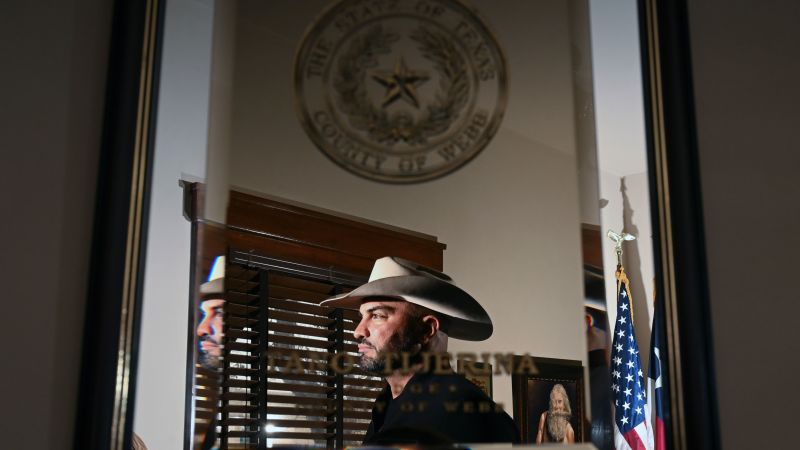
Cuellar will face a formidable opponent in Tano Tijerina, a local official who recently switched parties. Tijerina, the county judge of Webb County, cited the “radicalization of national Democrats” as his reason for the shift. He praised Trump’s actions in the Iran conflict, even while acknowledging the war’s unpopularity. “Sometimes we have to take a step back to take two steps forward,” Tijerina remarked, suggesting that the Republican strategy is designed to win over voters through a combination of national achievements and localized efforts.
“The GOP thinks they can erase the damage they’ve done by supporting candidates with Hispanic surnames,” Gonzalez noted. “But Latino voters are not just numbers—they’re people with clear priorities, and they’re ready to make their voices heard.”
Other races, such as the contest between Eric Flores and Democratic Rep. Vicente Gonzalez in Texas’ 34th Congressional District, also reflect the GOP’s belief in their ability to leverage border-related issues. Flores, a former federal prosecutor, is expected to run on a platform emphasizing law and order, a theme that resonates with voters concerned about immigration enforcement. Hudson, meanwhile, credited Trump’s leadership as a key factor in the NRCC’s strategy, stating that the president’s policies have created a “tailwind” for Republican candidates in these regions.
Will the Border Advantage Hold?
With as many as six border districts in play, the outcome of these races could be decisive for the House majority. The GOP is betting that local concerns about immigration and the economy will outweigh national dissatisfaction. Yet, the effectiveness of this strategy depends on the ability to mobilize Hispanic voters, a group that has grown more critical of Trump’s policies since his re-election.
Cuellar himself acknowledged the complexity of these districts, noting that they often reflect a different political environment than the rest of the country. “They’re not just about immigration—they’re about trust in leadership and the impact of policies on everyday life,” he said. The challenge for Republicans is to translate this trust into votes, even as the national mood turns against the administration.
A Broader Test for the GOP
The battle in border districts is more than a local effort; it’s a broader test of the Republican Party’s ability to maintain support in a rapidly changing electorate. While Trump’s policies on immigration have been a point of contention, they’ve also provided a focal point for the GOP to rally voters around. The question remains whether this strategy can sustain momentum in the face of economic anxiety and a divided national outlook.
With the midterm elections fast approaching, the race for these border seats will be closely watched. For Republicans, it’s a chance to turn the tide in their favor, even as the national landscape continues to shift. For Democrats, it’s a critical opportunity to reclaim ground in areas where their influence has been challenged. The final result could determine the future of congressional control for the next two years, making the border a decisive battleground in this year’s elections.
