
Trump unveils a new presidential airplane
New Presidential Aircraft Unveiled by Trump
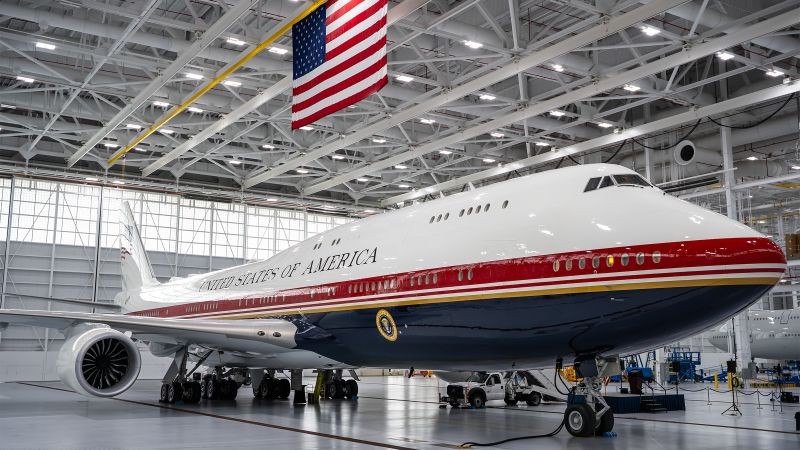
Trump unveils a new presidential airplane – At Joint Base Andrews, President Donald Trump showcased a recently acquired presidential aircraft, a luxury jet provided by the Qatari government. The plane, now adorned with the American flag’s colors and the phrase “United States of America” prominently displayed on its fuselage, represents a temporary solution to address the aging fleet of modified Boeing 747-200s that have served as Air Force One since 1990. This transition comes as the U.S. Air Force prepares to debut two newly modified Boeing planes, which are expected to be operational by late 2027. The Qatari jet, however, is already ready for immediate use, offering a bridge until the next generation of presidential aircraft is fully commissioned.
Historical Context and Design Evolution
The current aircraft, which have been in service for over three decades, were originally designed with a light blue color scheme, a tradition initiated by Jacqueline Kennedy in the 1960s. This iconic hue has remained a staple of presidential travel, symbolizing both elegance and national pride. However, the new plane breaks from this legacy, featuring a navy blue and white body with bold red stripes. The design shift reflects a modernization effort aimed at blending functionality with a fresh, patriotic aesthetic. While the previous aircraft were retrofitted with presidential amenities, the Qatari jet required fewer interior alterations, allowing for a faster preparation timeline.
According to the Air Force, the new plane will soon begin “commissioning flights,” a phase described as a rigorous final test to ensure operational readiness. These flights are part of a broader evaluation process to confirm the aircraft’s compliance with safety and security protocols. “From the beginning, we meticulously evaluated every requirement to accelerate delivery while maintaining the high standards expected of the presidential mission,” emphasized Secretary of the Air Force Troy Meink. “This effort proves that the U.S. Air Force can move fast without sacrificing quality, security, or reliability.”
Trump’s Frustration with Delays
President Trump has expressed growing impatience with the delays in completing the next generation of Air Force One planes. The current Boeing 747-200s, which have been modified over the years to meet presidential needs, are nearing the end of their service life. The Pentagon’s acceptance of the Qatari jet last year marked a strategic move to expedite the transition. Since then, the Air Force has worked closely with Boeing to adapt the aircraft for its intended purpose, leveraging existing infrastructure to streamline the process.
The Qatari jet’s quicker timeline is attributed to its pre-existing design and the reduced need for extensive interior modifications. Unlike the Boeing 747s, which underwent significant retrofitting to include advanced communication systems, secure compartments, and VIP amenities, the new plane retains much of its original configuration. This decision allowed the Air Force to focus on critical updates without prolonging the project. “The commander in chief’s safety and security are our highest priorities,” noted Meink. “We’ve prioritized efficiency without compromising on the standards required for such a vital mission.”
Operational Readiness and Strategic Implications
The unveiling of the Qatari jet underscores the Air Force’s ability to adapt and innovate in the face of logistical challenges. By repurposing a civilian aircraft, the service has managed to bypass some of the bottlenecks associated with building new presidential planes from scratch. The Qatari donation, a significant gesture of international collaboration, highlights the growing partnerships between the U.S. and Gulf nations in defense and transportation sectors. While the jet is not a replacement for the upcoming Boeing models, it provides a reliable alternative for presidential travel during the interim period.
Analysts suggest that this temporary solution could also serve as a testing ground for future modifications. The Air Force plans to use the commissioning flights to identify any potential issues and refine the aircraft’s capabilities. This approach allows for a more iterative development process, ensuring that the final Boeing planes are optimized for the needs of the presidency. Additionally, the Qatari jet’s presence may have symbolic value, reinforcing the U.S.’s global influence and the strategic importance of diplomatic ties.
Comparisons and Future Plans
The new aircraft’s design and functionality stand in contrast to the older Boeing 747s, which have been in service since the early 1990s. While the original planes were heavily customized to include features like a presidential suite, advanced radar systems, and a secure communication hub, the Qatari jet offers a more streamlined experience. This difference in approach reflects the Air Force’s effort to balance modernization with practicality. However, the Boeing models are expected to incorporate cutting-edge technology, including improved fuel efficiency, enhanced passenger comfort, and state-of-the-art defense systems.
The timeline for the Boeing planes has been a point of contention for Trump’s administration, with delays threatening to extend beyond his presidency. The Qatari jet, on the other hand, has been rapidly integrated into service, demonstrating the Air Force’s capacity to deliver critical assets on a shorter schedule. “This plane is a testament to the U.S. Air Force’s ability to act decisively,” said a spokesperson. “It ensures that the president can continue to travel with the necessary level of security and comfort, even as the next generation of aircraft takes shape.”
Public and Political Reception
The public response to the new plane has been mixed, with some praising its modern design and others questioning its adequacy compared to the Boeing models. Critics argue that while the Qatari jet meets basic operational needs, it lacks the full range of amenities expected of a presidential aircraft. However, supporters highlight its role in maintaining continuity during the transition period. The Air Force has also emphasized that the plane’s capabilities, including its ability to operate in high-threat environments, are comparable to the older models.
As the plane prepares for its first official flights, it becomes a focal point for discussions about the future of presidential transportation. The decision to use a Qatari aircraft raises questions about the role of foreign partnerships in U.S. defense logistics. Nevertheless, the Air Force maintains that the current effort is a necessary step to ensure the president’s mobility is not disrupted. “Our goal is to provide the best possible support for the nation’s leader,” Meink reiterated. “This aircraft is a temporary measure, but one that ensures stability during the development of the long-term solution.”
The Qatari jet’s introduction also serves as a reminder of the broader challenges in acquiring high-profile government assets. While the Air Force has successfully expedited the process, the administration continues to push for faster delivery of the Boeing planes. With the president’s term ending in 2029, there is a sense of urgency to complete the next iteration of Air Force One. The new plane, therefore, is not just a symbol of current capability but also a step toward future readiness, bridging the gap between the past and the next chapter in presidential air travel.
