
China didn’t qualify for the World Cup. But its fans still have a star: a card-wielding referee
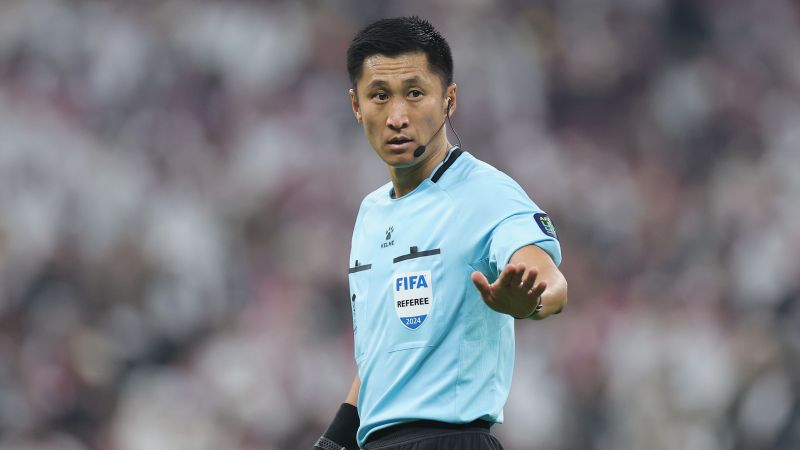
China’s World Cup Defeat Sparks Fandom for Card-Wielding Referee
China didn t qualify for the World – For many nations, the World Cup represents a moment of collective pride, with players donning national jerseys and waving farewell to supporters before heading overseas. Yet, this year’s Chinese team has once again missed the cut, leaving fans to find unexpected solace in a different representative: Ma Ning, a referee whose strict demeanor has earned him the moniker “Card Master.” Despite his controversial reputation, the 46-year-old has become a symbol of hope for Chinese soccer enthusiasts, who are now rallying behind him as the country’s sole referee at the tournament.
A Nation’s Unlikely Soccer Hero
Ma Ning’s journey to international prominence began years before the World Cup, but his rise to fame was cemented in 2015 during a heated Shanghai derby. In that match, he issued nine yellow cards and three reds, a performance that sparked a frenzy on social media. The incident, often referred to as the “Card Master” origin story, highlighted his reputation for unwavering discipline, even as it divided fans. While some praised his decisiveness, others criticized his rulings, particularly during domestic games where he has frequently drawn jeers from spectators.
“Other countries watch their own teams play matches, we watch our own referee hand out cards.”
This sentiment has now taken on a new tone in recent weeks. Chinese social media platforms have seen a surge in support for Ma, with hashtags tied to his name generating millions of views. The national pride he once sparked as a divisive figure has transformed into admiration, as fans eagerly anticipate his performances. One RedNote user humorously remarked, “His luggage is probably all filled with yellow and red cards,” while another quipped, “You don’t need a boarding card, just show them a red one.”
The Business of Refereeing
Ma’s World Cup participation has not gone unnoticed by China’s corporate sector. Major brands such as Lenovo and Hisense have sponsored his appearance, underscoring the cultural weight he carries. His social media presence has also grown significantly, with his RedNote account amassing over 210,000 followers since its launch last month. One of his first posts featured a photo of him at the airport, captioned “Let’s go!”—a rallying cry that resonates with fans who see him as a bridge between their soccer struggles and international recognition.
Beyond the World Cup, Ma has long been a fixture in China’s top-tier league, the Chinese Super League. His expertise has also taken him to international stages, including the Asian Football Confederation (AFC) Champions League. Since becoming a FIFA-certified referee in 2011, he has built a reputation for consistency, even if his decisions remain a topic of debate. His World Cup debut in Qatar four years ago came as a fourth official, and now he returns to the global spotlight with the role of main referee.
China’s Soccer Ambitions and Setbacks
China’s World Cup dream has been a long-standing goal, but it has faced repeated hurdles. The nation’s team last qualified in 2002, a campaign that ended in the group stage after failing to score a single goal. Since then, Beijing has pursued a vision of global soccer dominance, with President Xi Jinping famously declaring his three wishes for the country: to qualify, host, and win the World Cup. While these aspirations have not yet materialized, the support for Ma Ning suggests a shift in how the public engages with the sport.
The Chinese Super League, once a beacon of ambition, has seen its trajectory shaped by factors like poor financial management, alleged corruption, and the disruptions of the pandemic. These challenges have stalled progress, yet Ma’s role as a referee has become a focal point for fans. His presence at the World Cup offers a rare opportunity for the country to showcase its sporting culture on a global stage, even in the absence of a team.
“I only know famous players like Cristiano Ronaldo, Messi, and Mbappé,” said Debbie Wang, a self-proclaimed soccer novice. “I am extremely curious about how many cards Ma Ning will issue.”
For many, Ma’s career represents the resilience of Chinese soccer. Ted Cui, a fan from Beijing, praised his work, calling him “one of the best referees in China and even in all of Asia.” Cui, who has watched numerous games under Ma’s guidance, believes his performance in the World Cup will serve as a testament to the country’s efforts. “We will support him,” he added, emphasizing the emotional connection fans have with the referee.
A New Chapter for Chinese Referees
Ma is not alone in this World Cup journey. Two other Chinese officials—assistant referee Zhou Fei and video assistant referee Fu Ming—will also be part of the tournament. This trio marks a milestone for the nation, as it aims to elevate its presence in international football. Ma’s vision for the event includes learning from world-class referees and sharing that knowledge with China’s domestic coaching community.
“I hope to earnestly learn from the world’s most outstanding referees,” Ma told Chinese state media before departing for the Americas. “By bringing valuable experience back to China, we can strengthen the training and development of our own referees.” His words reflect a broader ambition: to use the World Cup as a platform for growth, even in the absence of a national team.
The contrast between China’s team and Ma’s role is striking. While the squad struggles with qualification, the referee has become a focal point of national identity. This phenomenon underscores the emotional investment fans have in the sport, even when outcomes are uncertain. For Ma, the spotlight is a double-edged sword—his strict calls remain a point of contention, but his presence at the World Cup has united a diverse group of supporters.
As the tournament unfolds, Ma’s performance will be closely watched, not just for its technical precision but for its cultural significance. His journey from domestic controversy to international acclaim highlights the evolving narrative of Chinese soccer. Whether he will bring the same level of scrutiny to the field as he did in the Shanghai derby remains to be seen, but his role as a symbol of perseverance is clear.
For fans like Debbie Wang and Ted Cui, Ma’s World Cup matches are more than just games—they are a chance to see China represented on a global stage. Despite the 12- to 16-hour time difference, many plan to follow his every decision, a testament to the national pride he has sparked. As the tournament kicks off in Mexico, Canada, and the US, Ma Ning’s story may prove to be one of the most compelling aspects of the event, even if it’s not the one that makes headlines.
China’s ongoing quest for soccer success may continue to face obstacles, but the support for Ma Ning offers a glimmer of optimism. His career, marked by both criticism and admiration, now serves as a reminder of the country’s enduring connection to the sport. Whether his refereeing style will resonate with the world or remain a point of debate, one thing is certain: Ma has become more than just a referee—he is a cultural icon in a nation that still dreams of World Cup glory.
