
What was it all for? US-Iran agreement brings bitter rivals full circle
The Cycle of Conflict: US-Iran Nuclear Deal Revisited
What was it all for US Iran – As the Middle East braces for a new round of tensions, the specter of a 60-day deadline looms over Iran’s nuclear program. President Donald Trump has once again expressed hope for a diplomatic resolution, even as Tehran’s leadership remains defiant. Meanwhile, Israel pushes for more military intervention, setting the stage for a familiar conflict scenario. This recurrence of events has sparked comparisons to a pivotal moment in April 2025, when the first Israeli strikes on Iran’s nuclear facilities and a subsequent US attack created a cycle of escalation. The past year of hostilities has now returned the region to a similar crossroads, raising questions about the effectiveness of repeated diplomatic efforts.
A Fractured Timeline of Diplomacy and War
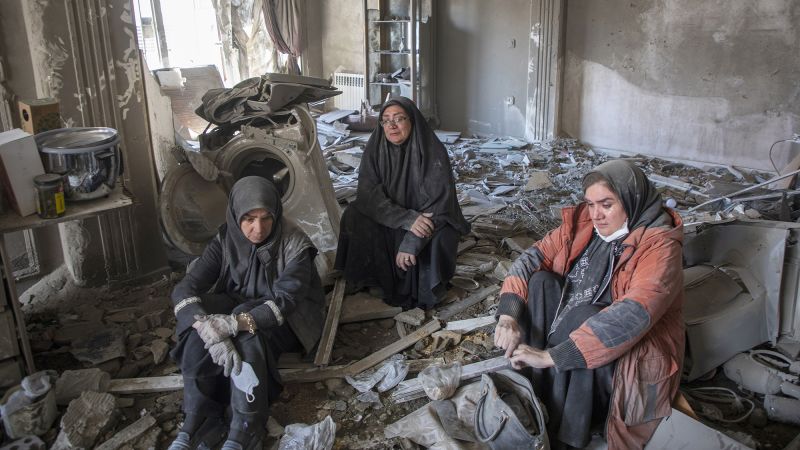
March 2025 marked a turning point when Trump first proposed a two-month window for Iran to negotiate a nuclear deal, or face military action. His envoy, Steve Witkoff, later traveled to Oman in April 2025 to revitalize talks, only for the situation to unravel by June 13. Israel’s “Operation Rising Lion” initiated the conflict, targeting Iran’s security infrastructure and claiming to disrupt its missile capabilities. The resulting 12-day war saw significant destruction, with estimates of over 3,000 Iranian lives lost, many civilian, and an additional 3,600 Lebanese casualties, according to local health officials.
Following the attacks, the United States launched its own campaign, asserting that its strikes had “obliterated” Iran’s nuclear program. Yet, the cycle of violence has continued, with Trump once again pressing for a quick resolution. This pattern of brinkmanship has left both nations questioning the value of their efforts. The repeated use of military force in the name of diplomacy has sparked debates about whether these actions are truly strategic or merely a repetition of past mistakes.
“Obliterated” – a word that echoes through the halls of Washington as the US claims victory in its latest strike on Iran’s nuclear facilities. But the exactness of the term is contested, with some intelligence analysts doubting the full extent of the damage.
The recurrence of this scenario is not accidental. The Middle East has seen similar dynamics before, where diplomacy and military action intertwine in a seemingly endless loop. In 2025, the first strikes by Israel were followed by a US attack, a sequence that now mirrors the current situation. The question remains: What has changed since the last cycle, or is the region simply trapped in a repeating pattern of conflict?
Legacy of Decapitation and Diplomacy
Historically, the US and Israel have relied on targeted strikes to weaken Iran’s leadership. The February 28 attacks, which eliminated key figures in Iran’s nuclear program, were followed by a period of uncertainty. Trump’s strategy in March 2025 aimed to leverage this instability, offering a deadline to prevent further escalation. However, the outcome has been a mix of success and ambiguity. While the attacks disrupted Iran’s capabilities, the subsequent political chaos has left the country’s leadership in disarray, complicating efforts to reach a lasting agreement.
Now, the same playbook is being applied. Trump’s latest approach suggests a return to the tactics that defined the earlier phase of hostilities. The Iranian leadership, battered by recent losses, is once again under pressure. But the succession process has arguably entrenched hardline elements in power, making compromise more difficult. The new Supreme Leader, Mojtaba Khamenei, who survived an attack that claimed his father, wife, and son, appears resistant to quick reconciliation. This mirrors the situation in Afghanistan, where the US’s repeated raids on Taliban leaders left a generation of vengeful successors in charge, rather than moderates.
Despite the trauma, Iran’s desire for a nuclear weapon remains strong. The assassination of its leadership and the destruction of key facilities have intensified the urgency for self-reliance. However, the current state of Iran’s nuclear infrastructure is more fragile than it was in April 2025. With facilities reduced to rubble and scientific expertise strained, any new bomb would require accelerated production under intense scrutiny. The once-clear path to a nuclear capability now appears more precarious, yet not entirely out of reach.
What Lies Ahead for the Middle East?
The White House faces two critical challenges: assessing the gains of the past year’s violence and determining whether this cycle has made a nuclear deal more or less likely. The immediate result of the 2025 conflict was a significant blow to Iran’s capabilities, but the long-term impact is less certain. Trump’s insistence on a 60-day deadline hints at a broader strategy, one that blends diplomacy with the threat of force. This approach has worked before, but the stakes have shifted.
Iran’s leadership, now more fragmented and hardened, may respond with renewed defiance. Yet the destruction of its nuclear facilities and the loss of key personnel have created a window for negotiation. The key to this new phase lies in whether the surviving leaders of Iran will recognize the futility of prolonged conflict. Trump’s hopes rest on the idea that grief and instability will force Iran’s hand, much like it did in 2025. However, the lessons of past decapitation strikes—such as the unintended elevation of hardliners—have not been fully heeded.
As the US and Israel press forward, the cycle of escalation seems poised to continue. The current memorandum of understanding, with its 60-day deadline, echoes the terms of the earlier agreement. Yet, the environment has changed. Iran’s leadership is more fragmented, its facilities more vulnerable, and its strategic patience thinner than before. The challenge for Trump’s administration is to avoid repeating the mistakes of the past while navigating the complexities of a nation on the brink of collapse.
In the end, the true test of this new approach will be whether the fighting subsides. For now, the Middle East remains locked in a pattern of cycles, where diplomacy is a temporary reprieve between waves of violence. The question is no longer whether a deal is possible, but whether the parties involved will be willing to pause and seek one before the next chapter of conflict begins.
