
Trump’s UFC 80th birthday bash looks to rescue his tarnished macho image
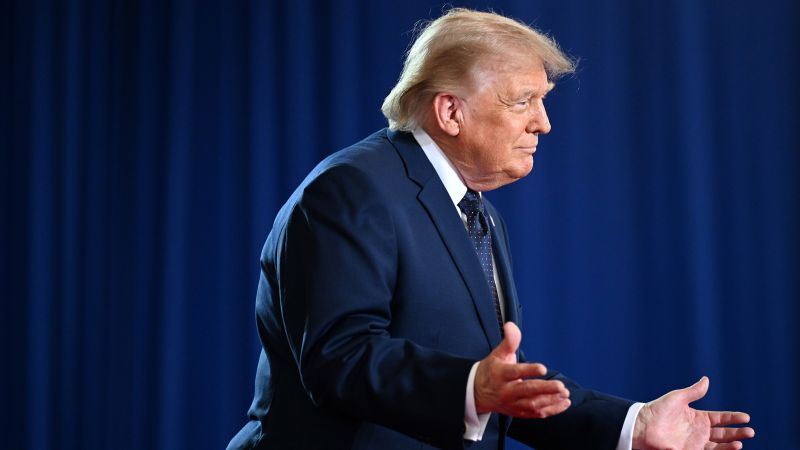
Trump’s UFC 80th Birthday Bash Aims to Reinforce His Masculine Image
Trump s UFC 80th birthday bash – President Donald Trump’s 80th birthday celebration on Sunday took an unexpected turn when it became a stage for showcasing his macho persona through an ostentatious UFC event held on the South Lawn of the White House. The spectacle, which featured men competing in hand-to-hand combat within a cage, was framed as a tribute to America’s 250th anniversary. Yet, the event also serves a deeper purpose: to counteract the perception of weakness that has crept into his public image over the past year.
Trump’s attempts to project strength have long been a cornerstone of his political brand. From claiming the CIA informed him that the new Iranian Supreme Leader, Mojtaba Khamenei, might be gay to suggesting that Texas Senator James Talarico is transgender and a vegan, his allies have used such assertions to amplify his masculine narrative while casting doubt on others. These characterizations, though often unfounded, align with a broader strategy to position himself as the unyielding force in national politics.
“Fight. Fight. Fight.” – A phrase that has become synonymous with Trump’s rhetoric, echoing his physical resilience after surviving an assassination attempt in Butler, Pennsylvania. The incident, which occurred in March 2026, left him bloodied but standing, a moment he has repeatedly leveraged to reinforce his image as a survivor and leader.
While the UFC event may seem like a lighthearted celebration, it underscores a growing reliance on performative displays to sustain his reputation. Trump’s 2024 presidential campaign was heavily influenced by his appeal to young men, a demographic he sought to win over by aligning with figures like Joe Rogan, whose podcast audience often resonates with his populist messaging. This shift helped secure a 15-point swing in the young male vote compared to 2020, a significant indicator of his evolving strategy.
War, Strikes, and the Struggle for Perception
Despite his efforts, Trump’s second term has revealed a disconnect between his public persona and the reality of his leadership. His administration has engaged in a series of aggressive military actions, including striking more than a dozen countries and ousting two foreign leaders. The Department of War, a rebranded entity under his tenure, has been central to these operations. Yet, the cumulative impact of these actions has not translated into unshakable public confidence.
Recent polls suggest that Americans are increasingly skeptical of Trump’s leadership capabilities. According to a Washington Post-ABC News survey, at least 53% of respondents now question whether he is a strong leader, a figure far higher than previous years. A Reuters-Ipsos poll from March 2026 even indicated that 58% of Americans believe he is not an effective world leader, up from 51% in 2023. These numbers reflect a shift in perception, particularly as the war in the Middle East has dragged on, inflation remains stubbornly high, and economic anxiety continues to grow.
Trump’s challenges in maintaining his image are compounded by physical and mental signs of aging. While he once criticized opponents for being “low energy,” he has appeared visibly more exhausted in recent months, with his movements slowing and his speech occasionally wandering. The White House, known for its ability to accelerate the aging process of its occupants, has not shielded him from these changes. At public events, he has been seen nodding off, a stark contrast to the vibrant, authoritative figure he once projected.
His reliance on repetitive talking points has also drawn criticism. Trump’s public appearances often feature the same themes—economic strength, military dominance, and anti-establishment fervor—reinforcing a narrative that has become increasingly narrow. While this consistency has been a hallmark of his campaigns, it has also left room for skepticism, particularly in an era where audiences crave nuance and depth.
From Strength to Uncertainty
Once a symbol of unshakable confidence, Trump’s leadership is now under scrutiny. In 2017, a Post-ABC poll found that only 51% of Americans believed he was a strong leader, but that number has since risen to 58% in a January 2026 CNN poll, signaling a deepening erosion of trust. The same poll revealed that 53% of respondents felt he was not an effective world leader, a statistic that highlights the public’s growing doubts about his ability to navigate complex global challenges.
These concerns are not limited to his policies. Polls also indicate a rising perception that Trump’s mental sharpness is waning. His administration’s handling of the Iran conflict, which has involved accusations of war crimes and questionable decisions, has fueled this narrative. The public’s skepticism extends to his judgment on domestic matters as well, with many questioning his capacity to manage the federal government efficiently.
Yet, Trump continues to double down on his masculine image, using the UFC event as a vehicle to reassert his dominance. The fight, which took place on the White House lawn, was intended to highlight his physical vigor and leadership strength. However, it also exposed the tension between his public displays and the private reality of his administration. While the event may have drawn attention, it did little to counteract the growing perception that he is no longer the unchallenged leader he once was.
His rebranding efforts, such as the “Department of War” and the proposed “triumphal arch” in Washington, aim to solidify his legacy as a decisive, powerful figure. But these initiatives have not been enough to reverse the tide of public opinion. Even his rhetoric—once a powerful tool—has begun to reflect the challenges he faces. Anti-transgender comments and condescending interactions with female journalists have drawn criticism, suggesting a broader struggle to maintain his image as the quintessential strongman.
As the 80th birthday bash concluded, the question lingered: How long can a leader whose brand is so deeply tied to strength sustain that perception when the facts tell a different story? The UFC event may have offered a temporary boost to his macho image, but it also served as a reminder of the uphill battle he faces in a political landscape that is increasingly questioning his authority. Whether through physical prowess or political maneuvering, Trump remains committed to the role of the dominant figure—albeit one whose grip on public confidence is now slipping.
In the end, the event was a calculated attempt to recapture the essence of his early political appeal. A man’s man, a formidable businessman, and a leader who thrives on spectacle—these traits once defined his success. Now, as the numbers show, they may be his greatest challenge. The UFC fight was more than a birthday celebration; it was a statement, a chance to prove that the strength he projects is still relevant. But as the polls suggest, the American public may no longer be convinced.
