
‘Who are we cheering for?’ Iranian Americans face their most complicated World Cup
‘Who are we cheering for?’ Iranian Americans face their most complicated World Cup
Who are we cheering for Iranian – As the World Cup kicks off in Los Angeles, the city’s SoFi Stadium hosts Iran’s national team for their debut match under unique and tense circumstances. For the first time in the tournament’s history, a host nation—America—finds itself at war with one of its competitors. This geopolitical backdrop has cast a shadow over the sporting event, creating a complex emotional landscape for Iranian Americans across the country. For many, the game is not just about soccer; it’s a test of identity, allegiance, and the delicate balance between patriotism and political dissent.
The conflict has made the logistics of Iran’s participation challenging. Visa delays, immigration restrictions, and travel bans have complicated the situation, while the symbolic choices in the team’s attire have sparked deeper debates. At the heart of this discussion is the national flag, which Iran’s players proudly wear during matches. The jersey’s design—red, white, and green—mirrors the colors of the Iranian flag, but the inclusion of the Islamic emblem and the phrase “Allahu’ Akbar” has stirred controversy among diaspora communities.
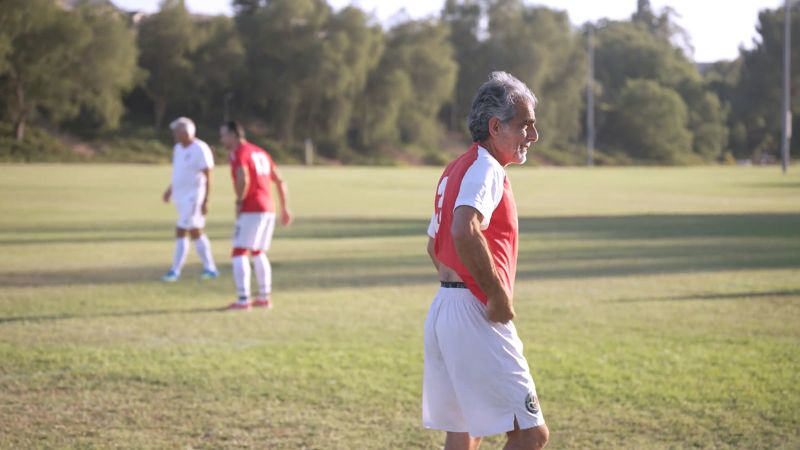
Nader Adeli, 65, the captain of Arya Football Club, holds up the jersey and chuckles: “We are Iranian! We are Aryan, alright?” The club, based in Moorpark, San Fernando Valley, is composed entirely of Iranian or Iranian American players. As they prepare for a Wednesday evening game against a local recreational league team, the players are acutely aware of the larger stakes. Less than 50 miles away, Iran’s national team will take the field for their first World Cup match, with the stadium now renamed for the occasion. The contrast between the club’s identity and the nation’s political situation is stark, yet both are deeply tied to the same sense of pride.
Flag Controversy and Identity Tensions
The debate over Iran’s flag has become a microcosm of broader cultural and political divisions. The official Iranian flag features a white stripe with the Islamic emblem and the Arabic slogan “Allahu’ Akbar,” a symbol of the country’s theocratic governance. However, some Iranians prefer the older Sun and Lion flag, which represents the pre-revolution monarchy and has since become associated with opposition groups. This emblem, with its golden lion holding a curved sword, is seen by some as a more authentic representation of Iranian heritage.
Ramin Ghashghaei, a 61-year-old Arya FC defender and immigration attorney, is among those who favor the Sun and Lion design. “This is not my flag. To me, that’s a terrorist organization, period,” he says. His stance reflects a growing sentiment within the diaspora that the official flag is a tool of political control, rather than a unifying symbol. Yet, the World Cup’s governing body, FIFA, has imposed strict rules on what can be displayed in stadiums. Their stadium code of conduct prohibits “banners, flags, apparel, and other paraphernalia that are of a political, offensive, and/or discriminatory nature.”
This policy has frustrated Iranian fans and their American counterparts. Many worry that the presence of the Sun and Lion flag could be restricted, forcing them to choose between cultural expression and the rules of the game. A protest is planned outside the stadium during Iran’s opening match, highlighting the community’s determination to voice their concerns. The event has reignited discussions about the role of politics in sports, with some questioning whether the national team can truly represent all Iranians.
Political Divides in the Persian Community
The war has also deepened divisions within the Iranian diaspora. In February 2026, when US airstrikes killed Iran’s Supreme Leader Ali Khamenei, crowds in Westwood—known as “Tehrangeles”—gathered to celebrate the event. They chanted “Thank you, President Trump” and “Thank you, Bibi Netanyahu” while waving the Sun and Lion flag. This moment symbolized a shift in sentiment, with some viewing the attacks as a step toward regime change.
However, not all Iranians shared this enthusiasm. Others remained cautious, arguing that the strikes did not guarantee the fall of the Islamic government. Skepticism about the human cost of war and questions about Trump’s motivations lingered. “Do you support the Islamic Republic or you don’t? If you do, then maybe you get a priority to be in the team,” says Ghashghaei, who sees the national team as a political construct rather than a purely sporting entity. For him, the decision to cheer for Iran is a personal choice, but the team’s composition feels deeply connected to the country’s ideological priorities.
Meanwhile, Omeed Askary, a 26-year-old Iranian American attorney in New York, draws a parallel between Iran’s national team and the US team. “I’m an American. I want American athletes to do really well,” he explains. “Does that mean I support President Trump, his administration, ICE, even the American military’s operations? Of course not. I still want my team to succeed.” His perspective underscores the complexity of loyalty—how a shared love for sports can coexist with political differences.
Askary’s analogy highlights the dual nature of identity for Iranian Americans. While they may embrace American values, they also carry a deep connection to their ancestral homeland. This duality is evident in the broader debate over Iran’s participation in the World Cup. For some, the team represents a link to their roots; for others, it embodies the very regime they oppose. The tournament, held every four years, has become a focal point for these tensions, with its global stage amplifying the personal and political stakes.
The flag controversy, political divisions, and the unique context of the World Cup have created a challenging environment for Iranian Americans. As they watch their teams compete, they are forced to navigate questions of allegiance and identity. The situation is further complicated by the ongoing war, which has kept the community on edge. Despite assurances from Trump that an agreement is forthcoming, the conflict shows no signs of abating. For now, the World Cup remains a symbol of both unity and division, a reflection of the Iranian diaspora’s complex relationship with their heritage and their adopted home.
Arya FC captain Adeli, though critical of the team’s political ties, remains committed to supporting Iran’s national squad. “I love soccer—it’s inherently part of Persian culture,” he says. “We talk about it in family gatherings, elders, youngsters, women and men in the stadium cheering, going at each other. That’s beautiful.” Yet, his support for the team is tempered by a recognition of the political undercurrents. He sees the selection process as influenced by connections and ideologies, a system that may not align with the ideals of inclusivity and fairness.
As the first match day approaches, the Iranian American community is left grappling with the question: Who are they cheering for? The answer may vary from person to person, but the experience of watching the World Cup is undeniably shaped by the war and its lingering effects. For these fans, the game is more than a competition—it’s a mirror reflecting the struggles of identity, the weight of history, and the delicate dance between culture and politics.
