
Apple’s big Siri update is here. Now the real challenge begins
Apple’s Major Siri AI Overhaul Launched; Next Steps in the AI Race
Apple s big Siri update is here – Apple has unveiled a significant overhaul of its Siri AI, marking a pivotal moment for the company’s digital assistant after years of lagging behind competitors in the artificial intelligence space. The new iteration, unveiled on Monday, aims to position Siri as a versatile tool capable of handling complex tasks, rivaling the capabilities of OpenAI’s ChatGPT and Google’s Gemini. However, while the announcement signals progress, analysts suggest that the real test for Apple lies in translating these features into sustained user engagement and profitability.
From Catch-Up to Innovation: Siri’s AI Evolution
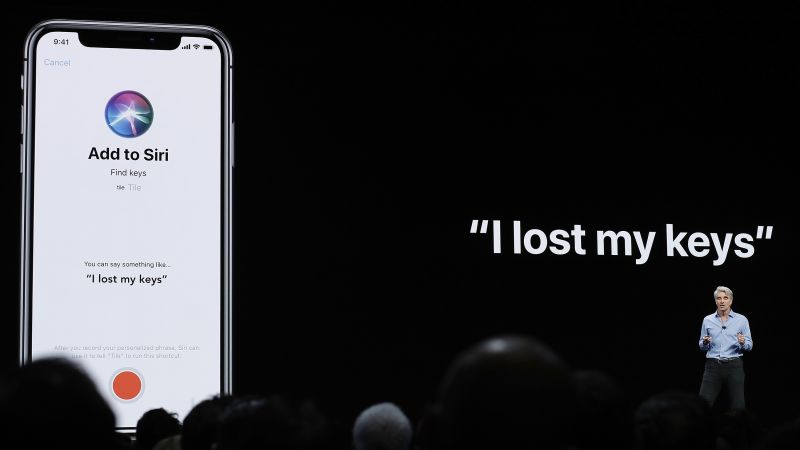
The update, dubbed Siri AI, introduces a suite of enhancements designed to integrate more deeply with Apple’s ecosystem. Among its capabilities, the assistant will analyze an iPhone’s screen to extract and respond to questions, offering users a more proactive experience. Personal context will also be woven into interactions, allowing Siri to tailor responses based on user behavior and preferences. These improvements, Apple claims, are part of a broader push to transform Siri from a basic voice-activated tool into a central component of the iPhone’s software suite.
Apple’s digital assistant, which has been in development for over a decade, is now being rebranded with a focus on AI-driven functionality. The company’s ambition is clear: to ensure Siri competes effectively in a market where AI capabilities have become a key differentiator. The beta version of Siri AI is set to launch later this year, with Apple hoping that its upgraded features will attract users to newer models of the iPhone and encourage adoption of premium services like iCloud+.
Monetization Concerns and Analyst Perspectives
Despite the technical advancements, skepticism remains around how Apple will monetize its AI offerings. Analysts have long questioned whether Siri could generate enough revenue to justify its position as a core product. In a research note following Apple’s event, Barclays pointed out that previous updates felt more evolutionary than revolutionary, dubbing the company a “laggard in AI” with no standout applications and a “questionable monetization strategy.”
“Updates felt more evolutionary vs revolutionary, and we continue to view (Apple) as a laggard in AI with no killer apps and a questionable monetization strategy.”
Apple has yet to provide detailed plans for how it will turn Siri AI into a revenue generator. While the company has historically leveraged technology to drive profits, this time around, the challenge is whether it can convince users to pay for AI-powered features. Morgan Stanley analysts acknowledged the potential but emphasized that Apple’s progress would likely be a “marathon, not a sprint.” They noted that the announcements “provided clearer paths to monetizing AI,” but cautioned that success would depend on long-term execution rather than short-term hype.
The pressure to monetize AI is mounting, especially as competitors like OpenAI and Anthropic, both on the brink of public listings, face scrutiny over their ability to deliver consistent returns. Apple, however, has been protected by its dominant iPhone sales, which accounted for record revenue in the March quarter. This financial stability has allowed the company to maintain a strategic focus on integrating AI into its existing products, even as it seeks to expand into new markets.
AI Features and Hardware Requirements
Apple’s AI ambitions are closely tied to its hardware, with certain features requiring the latest models to function optimally. For instance, advanced Siri AI functions such as improved voice dictation and the ability to customize vocal tones for more expressive interactions are only accessible on the iPhone 17 Pro, iPhone 17 Pro Max, and iPhone 15 Pro. These devices, equipped with enhanced processing power and memory, are essential for running the more demanding AI features.
According to Morgan Stanley estimates, over 1.3 billion iPhones currently in use do not support these latest capabilities. This means that even if users upgrade to newer models this fall, they may do so primarily for performance improvements or longer battery life, rather than for AI enhancements. Paul Schell, a senior analyst at ABI Research, echoed this sentiment, stating, “I don’t think (AI is) driving upgrade cycles in the way that manufacturers were hoping that it would.”
Additionally, some Apple Intelligence features, such as expanded image generation limits and smart home camera integration with HomeKit, will require an iCloud+ subscription. This approach to monetization has sparked debate, with critics arguing that Apple’s reliance on hardware and subscription models may limit the accessibility of its AI tools to a broader audience.
Competitive Landscape and Strategic Shifts
Apple’s move to enhance Siri comes as Google and Samsung have been aggressively integrating AI into their platforms. Google’s Gemini, for example, has already found its way into Android, enabling features that cater to both personal and professional use cases. In contrast, Apple’s current strategy for Siri AI focuses on everyday tasks, such as retrieving location details from texts or managing routine app functions.
Carolina Milanesi, president and principal research analyst at Creative Strategies, highlighted this distinction, noting, “I’m looking for something, I’m replying to a text message, I’m trying to find the address of the restaurant that my friend mentioned last week — those kind of things.” She emphasized that Apple’s AI goals are more about enhancing user convenience than replacing traditional productivity tools. This aligns with the company’s broader strategy of embedding AI into its ecosystem without overtly positioning it as a standalone product.
One of the standout features demonstrated during the event was Siri’s ability to reference content from texts, allowing users to ask questions like, “Where’s Jeff’s new place?” and pull relevant information from recent messages. This level of integration could potentially increase user reliance on the iPhone’s software, but it also raises questions about whether such features will be enough to justify higher prices or subscription fees.
The Road Ahead for Apple’s AI Ambitions
As Apple moves forward, the success of Siri AI will hinge on its ability to balance innovation with usability. The company has already taken steps to ensure its AI tools are accessible to a wide range of users, but the challenge remains in making these features integral to daily iPhone usage. Analysts will be watching closely to see if the beta release can generate measurable interest, particularly among users who have yet to upgrade to the latest models.
For now, Apple’s latest AI push offers a glimpse into how the company is redefining its approach to technology. While the journey to compete with industry leaders like OpenAI and Google is just beginning, the potential for Siri to become a cornerstone of Apple’s future strategy is evident. Whether this translates into financial success will depend on the company’s ability to align its AI capabilities with consumer needs and preferences.
With the beta launch imminent and the iPhone 17 series approaching, Apple has positioned itself to leverage AI as a key driver of growth. However, the true measure of its progress will come in the months and years ahead as it seeks to convince users that AI is not just an add-on, but a fundamental shift in how they interact with their devices.
