
Brazil hopes to end a 24-year wait for World Cup glory. The pressure has never been greater
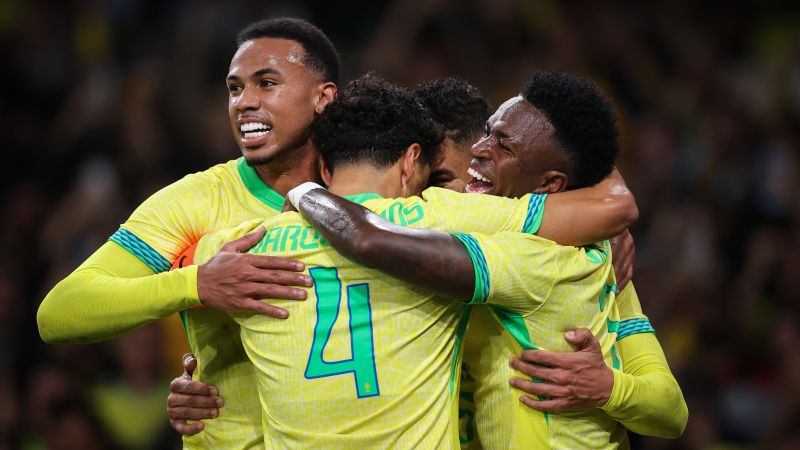
Brazil Hopes to End 24-Year World Cup Drought: Can They Break the Curse?
Brazil hopes to end a 24 year – Brazil hopes to end a 24-year wait for World Cup glory, with the nation’s national team facing its most critical moment in decades. Known for its rich footballing heritage, Brazil has long been the standard-bearer of global soccer, yet its last triumph came in 2002. Now, as the world watches the 2026 World Cup, the Seleção must overcome a legacy of disappointment and a generation of fans who have grown weary of near-misses. The pressure to deliver a sixth title is immense, and the stakes have never been higher for a team seeking redemption.
A Legacy of Five Titles
Brazil’s footballing legacy is defined by its five World Cup victories, each a testament to the nation’s skill and artistry. From the 1958 squad that included a teenage Pelé to the 1970 team that dazzled in Mexico, Brazil has set the benchmark for global excellence. However, since the 2002 final, the country has struggled to reclaim its former dominance. The 2014 semifinal exit, where they suffered a 7-1 humiliation against Germany, became a turning point. That defeat, dubbed the “Mineiraço,” still echoes in the minds of fans and analysts alike, underscoring a pattern of high expectations and crushing setbacks.
Despite their storied history, Brazil has faced a prolonged period of underachievement. In 2010, they were eliminated by the Netherlands in the semifinals, while in 2018 and 2022, they fell to France and the Netherlands, respectively, in the quarterfinals. The 2025 qualifiers further deepened the crisis, with Brazil finishing fifth in CONMEBOL, the lowest position since the 1994 tournament. The 4-1 loss to Argentina in Buenos Aires, without Messi, was a wake-up call, prompting captain Marquinhos to apologize and signaling a shift in coaching strategy.
The 2014 Disappointment
The 2014 World Cup semifinal against Germany remains a defining moment of Brazil’s struggles. A 5-0 deficit within the first 30 minutes set the tone for a 7-1 rout, leaving fans in despair and etching the memory into collective consciousness. This match, now synonymous with crushing defeats in sports, has become a benchmark for underperformance. “7-1 has entered the language,” remarked Tim Vickery, a South American soccer expert, in a
blockquote>blockquote>. “You just refer to any massive humiliating defeat, in any walk of life, as a 7-1. … That’s a stain on the carpet that’s not coming out anytime soon. The only way they can get over it is by winning the World Cup.”
Since 2014, Brazil has repeatedly faced elimination by European giants. The 2018 and 2022 tournaments saw them fall to France and the Netherlands, respectively, in the quarterfinals. These consistent exits have fueled a narrative of stagnation, especially with the recent controversies surrounding the Brazilian Football Confederation. The removal of Ednaldo Rodrigues in May 2025, following allegations of document manipulation, added to the uncertainty. This political turmoil coincided with the team’s worst qualifying campaign in history, intensifying the pressure on the new coaching staff.
Current Challenges and Low Expectations
As the 2026 World Cup approaches, Brazil’s hopes are pinned on a team determined to rewrite history. However, public sentiment is skeptical, with only 29% of Brazilians believing the Seleção can secure the trophy, according to a Datafolha survey from April 2025. This marks the lowest confidence level since the institution began tracking opinions in 1994. A further 46% of fans expect the team to advance no further than the quarterfinals, where they have been stopped in the past two editions. The challenge is not just on the field but in rebuilding trust after years of disappointment.
With the recent appointment of Carlo Ancelotti, Brazil aims to inject fresh tactics and renewed vigor into the squad. Yet, the road to victory is littered with obstacles, including the need to overcome a legacy of late-game collapses and the expectations of a nation that has long associated success with the World Cup. The 2025 qualifiers, which saw Brazil’s largest loss to Argentina since 1964, have become a symbol of the team’s struggles. Fans and pundits alike are now watching closely to see if the Seleção can finally break free from the 24-year drought and restore their place as football’s dominant force.
