
A perfectly American start to the USA’s 2026 World Cup
A Perfectly American Start to the USA’s 2026 World Cup
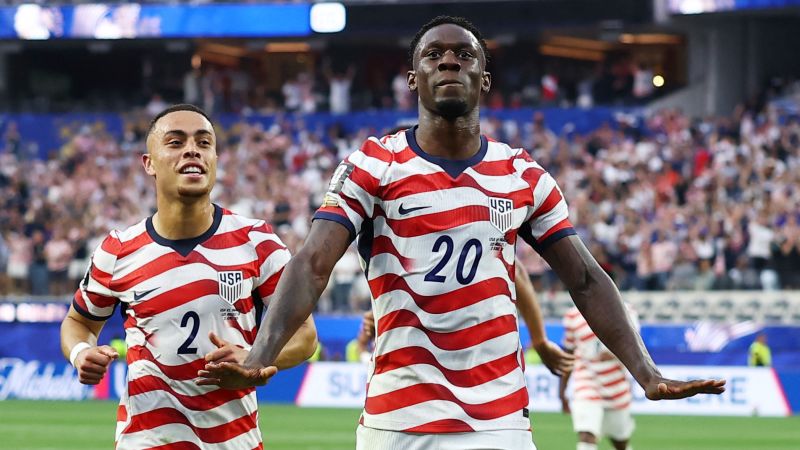
A perfectly American start to the USA – The United States made a resounding debut at the 2026 World Cup, capturing the attention of fans and analysts alike with a commanding 4-1 victory over Paraguay. This win, marked by a three-goal margin, was the nation’s first such feat since 1930, a moment that felt less like a sports event and more like a patriotic celebration. The game, played in a state-of-the-art stadium, was a vibrant showcase of American culture, blending tradition with modernity in a way that left little room for doubt about the team’s potential.
Folarin Balogun, the Nigerian-American writer and commentator, embodied the spirit of this historic opening match. His British accent, a product of growing up in England, contrasted with his roots in New York, symbolizing the country’s enduring identity as a cultural mosaic. Balogun’s description of the game as “dreamy” captured the essence of a nation rekindling its love for soccer. The performance of the U.S. team, with its blend of talent and determination, seemed to validate his words, as the crowd roared with support.
The stadium, a modern marvel, was transformed into a living embodiment of Americana. From the flags waving in the breeze to the iconic imagery on every surface, the atmosphere was electric. Fans outside the venue, dressed in a kaleidoscope of red, white, and blue, created a sea of color that extended into the stands. Some opted for the bold, sporting full eagle costumes or miniature replicas of the Statue of Liberty. Others brought a more personal touch, crafting hair ribbons, socks, and bandanas into patriotic symbols. The spectacle was akin to a Fourth of July parade, with the energy of a nation united in celebration.
While the focus was on the players, the spectators played an equally vital role in the triumph. The stadium buzzed with chants of “U-S-A!” that echoed through the air like a national anthem. As the game progressed, the crowd’s enthusiasm reached a fever pitch, culminating in a full rendition of “The Star-Spangled Banner.” The performance nearly overshadowed the professional singers, a testament to the unifying power of the moment. The synergy between the team and its supporters was palpable, with fans like Tom Cruise and David Beckham sharing the same space, and even Paris Hilton capturing the scene with her selfies.
Christian Pulisic, a key figure in the squad, was sidelined early in the second half due to an injury sustained in the left calf. His absence, however, did little to dampen the team’s momentum. Balogun noted the challenge of the U.S. team’s journey, describing the opening victory as a “dreamy” performance. “It was dreamy,” he repeated, emphasizing the surreal quality of the match. Despite the injury, the team’s cohesion and execution were impressive, with moments that highlighted their growing professionalism.
The U.S. men’s national team has long been tasked with elevating American soccer, a mission that feels both urgent and historic. Often seen as the golden generation, these players carry the weight of expectations, having been selected not just for their skills but for their ability to represent a nation that has struggled to fully embrace the sport. Their journey to the World Cup began with a prospects camp as U-14s, a foundation that has since matured into a team with genuine international credentials. This blend of talent and preparation is a critical factor in their success, as they now compete on a global stage.
As the match unfolded, the stadium’s energy was matched only by the music that filled the air. David Bowie and Queen’s “Under Pressure” played before the game, a seemingly ironic choice that underscored the tension between tradition and innovation. Yet, by the seventh minute, the team’s performance defused that pressure, with a deft pass from Pulisic to Weston McKennie setting the stage for an unexpected goal. The Paraguayan defender, in a moment of misfortune, inadvertently opened the door for Damián Bobadilla to become the first player to score for the U.S. in this tournament. The eruption that followed was a celebration of both skill and serendipity.
The opening victory was more than just a win; it was a cultural milestone. The U.S. team’s success, supported by a fanbase that transcended regional divides, reminded the world of the nation’s ability to come together. Yet, this moment also highlighted the contrast between the country’s global aspirations and its internal divisions. While the World Cup provided a temporary respite from these tensions, the challenge of maintaining such unity remains. The team’s performance, however, offered a glimpse of hope, proving that the American dream of soccer greatness is still alive.
As the game progressed, the blend of history and modernity became evident. The stadium, a symbol of contemporary architecture, hosted a tradition-rich event that felt both nostalgic and forward-looking. The presence of media personalities and sports icons added to the spectacle, creating an environment where the line between entertainment and competition blurred. This fusion of elements—music, fashion, and national pride—was a microcosm of the U.S. experience, where the melting pot of cultures once again came together.
For the U.S. team, this win was a turning point. It was a moment that signaled not just the beginning of a tournament, but the dawn of a new era in American soccer. The players, having proven their readiness, now carry the torch for a nation that has long sought to make its mark in the world of football. The victory, though just the first chapter, sets the stage for a compelling narrative that could reshape the global perception of American talent.
Looking ahead, the team’s journey will be as much about overcoming challenges as it is about celebrating successes. The opening match was a reminder of the power of collective effort, with fans and players alike contributing to a shared vision. As the World Cup progresses, the U.S. will face stiffer competition, but the foundation laid in this first game is promising. The blend of professionalism, cultural diversity, and fan enthusiasm has created a potent mix, one that could carry the team through to greater heights.
Ultimately, the 2026 World Cup opening match was a celebration of what America represents: a blend of cultures, a spirit of resilience, and an unyielding pursuit of excellence. The team’s victory, coupled with the vibrant fan engagement, serves as a beacon of hope for the future. It is a moment that, while brief, carries the weight of a nation rekindling its passion for the game. As the tournament continues, the U.S. will have the chance to prove that this is not just a dreamy beginning, but the start of something much larger.
