
Europe’s next-gen fighter jet is dead. What does that mean for the continent’s security ambitions?
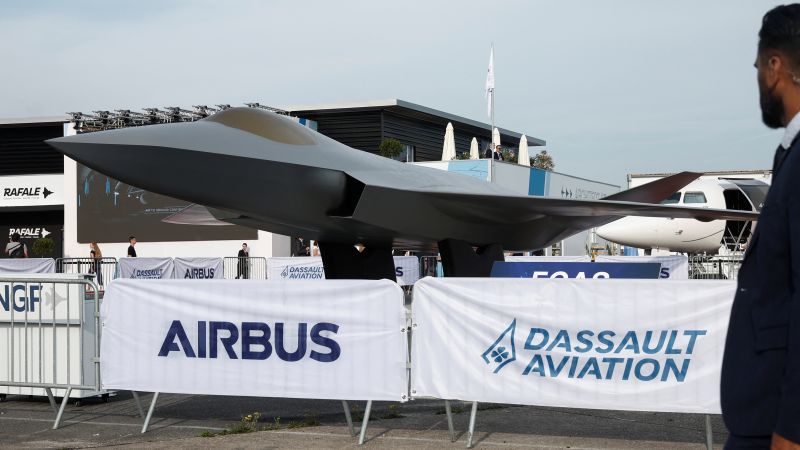
Europe’s Next-Gen Fighter Jet Project Canceled
Europe s next gen fighter jet is – The cancellation of Europe’s Future Combat Air System (FCAS) project marks a pivotal moment for the continent’s defense strategy. This initiative, once seen as a bold step toward a unified next-generation fighter jet, has now been abandoned due to unresolved disagreements between France and Germany. As the European Union strives to reduce reliance on foreign defense systems, the collapse of FCAS raises questions about the feasibility of ambitious, collaborative military projects. While the drone wingmen and digital combat network concepts may still thrive, the absence of a central aircraft could shift the region’s focus toward alternative partnerships or independent development paths.
France-Germany Divide Undermines Unified Vision
The FCAS project aimed to create a revolutionary fighter jet to rival the US F-35 Lightning II, combining advanced stealth technology with AI-driven combat systems. However, the lack of consensus between France and Germany has been its defining weakness. France prioritized a versatile, multi-role jet with cutting-edge maneuverability, while Germany emphasized a more traditional design with scalable capabilities. These diverging priorities, rooted in national defense strategies, created a rift that ultimately led to the project’s demise. The split highlights the challenges of aligning European ambitions with the realities of political and industrial collaboration.
Experts note that the French government, under President Emmanuel Macron, initially framed FCAS as a symbol of European unity. Yet, as the project progressed, Germany’s hesitancy to commit to a single design became apparent. “The Germans hesitated to push for a unified direction,” said the French defense ministry. In contrast, the German side argued that flexibility was necessary to accommodate the differing needs of aerospace firms Dassault Aviation and Airbus. This back-and-forth eroded the project’s momentum, with both nations ultimately prioritizing their own objectives over a shared vision.
Broader Implications for European Defense
The FCAS collapse underscores a larger challenge: maintaining cohesive defense strategies across Europe’s diverse nations. With a budget of 100 billion euros, the project was a massive investment, but its failure reveals the difficulty of coordinating complex, high-cost initiatives. France, known for its efficient aerospace production, may now take the lead in developing a standalone next-gen fighter, while Germany could explore partnerships with other nations like the US or Japan. The shift could redefine Europe’s approach to airpower, moving from centralized innovation to fragmented, national efforts.
Analysts warn that the loss of FCAS may slow Europe’s progress in advanced military technology. “The collapse of this project doesn’t mean the end of European collaboration, but it does signal a need for more adaptive strategies,” said Per Erik Solli of the Norwegian Institute of International Affairs. The FCAS’s legacy—though now incomplete—remains a testament to Europe’s potential in aerospace innovation. Its failure also highlights how political dynamics and industrial priorities can shape the continent’s defense landscape, even as it seeks to assert technological independence.
Looking Ahead: A New Era for European Airpower
Despite the setbacks, the FCAS’s drone wingmen and digital combat network concepts may still shape future European airpower. These components, developed in tandem with the fighter jet, could be integrated into other projects, offering a glimpse of the region’s technological capabilities. France, with its experience in producing advanced fighters like the Rafale, is expected to accelerate domestic efforts. Germany, meanwhile, may refocus on partnerships or diversify its defense investments to offset the loss of FCAS’s central aircraft.
As Europe navigates this transition, the need for renewed cooperation remains critical. The FCAS’s demise serves as a cautionary tale about the complexities of large-scale defense initiatives. While the next-gen fighter jet may no longer be a reality, the project’s components could still contribute to the continent’s evolving security landscape. The question now is whether Europe can find a way to balance national ambitions with collective goals in the race to develop next-generation airpower.
