
A mysterious ‘cold blob’ in the ocean has puzzled scientists. A new study says it’s an ominous sign
A Mysterious Cold Blob in the Ocean: A Climate Omen?
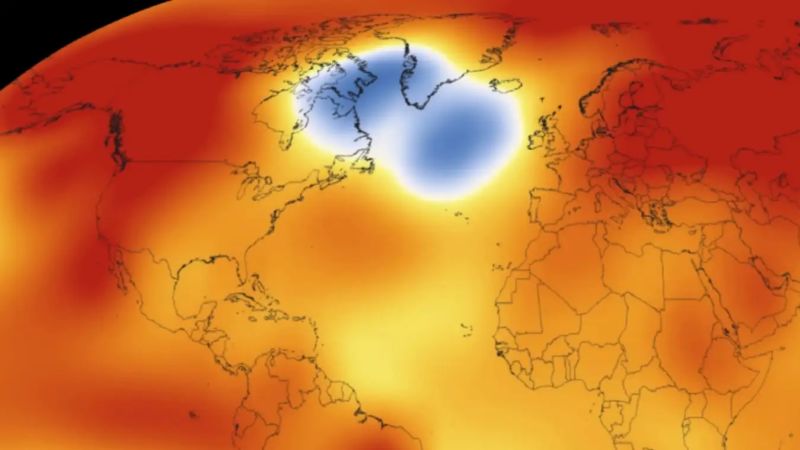
A mysterious cold blob in the ocean – Deep in the North Atlantic, a strange, cooling mass has baffled researchers, sparking concerns about its potential impact on global climate systems. Dubbed the “cold blob” by scientists, this region south of Greenland and Iceland is defying rising temperatures, showing a steady drop in heat absorption. The phenomenon, which could signal a significant shift in oceanic dynamics, has drawn attention from climate experts who are now analyzing its origins and implications. A new study highlights the cold blob as a possible indicator of a critical tipping point in Earth’s climate, suggesting that its formation is linked to the Atlantic Meridional Overturning Circulation (AMOC), a key driver of heat distribution across the globe.
Understanding the Cold Blob’s Impact
The cold blob has cooled by nearly 1 degree Celsius since 1900, according to recent data. This dramatic change has led scientists to investigate whether it is a result of atmospheric shifts or a reflection of deeper oceanic disruptions. The study’s findings suggest a connection to the AMOC, which has been slowing due to factors like melting ice sheets and freshwater influx. If the AMOC continues to weaken, the cold blob could serve as a warning sign of broader climate instability, potentially altering weather patterns and sea-level rise trajectories worldwide.
Researchers have long recognized the AMOC’s role in maintaining climate balance. This system acts as a giant conveyor belt, transporting warm, salty water northward and recycling it southward, influencing temperatures across continents. However, recent observations indicate the AMOC is losing strength, with some studies predicting a collapse within this century. The cold blob, now a focal point of analysis, may be a direct consequence of this weakening, as reduced currents lead to localized cooling. Its presence challenges assumptions about global warming, revealing complex interactions between oceanic and atmospheric forces.
The Science Behind the Cold Blob
Experts have linked the cold blob to changes in the Atlantic Meridional Overturning Circulation, a process vital for redistributing heat. The study combines historical data with advanced climate models, showing that the cooling extends beyond the surface, indicating a systemic slowdown in ocean currents. Researchers like Stefan Rahmstorf, a co-author of the study, argue that this phenomenon underscores the AMOC’s fragility. “The cold blob is not just a curiosity—it’s a symptom of a larger issue,” Rahmstorf explains, noting that the current AMOC state is weaker than at any point in the past millennium, with the potential for irreversible changes.
Other scientists, including René van Westen from Utrecht University, acknowledge the cold blob’s significance but caution against overinterpreting the data. While some studies suggest atmospheric conditions alone could create such a mass, van Westen highlights the importance of confirming these findings across multiple datasets. “The cold blob’s formation aligns with both real-world observations and model predictions, which strengthens its credibility,” he says. This consensus among researchers reinforces the idea that the cold blob is a critical marker of climate shifts, warranting further investigation.
Broader Climate Implications
The cold blob’s presence could have far-reaching effects. A weakened AMOC may lead to prolonged droughts in Africa, harsher winters in Europe, and accelerated sea-level rise along the US East Coast. These outcomes highlight the interconnected nature of Earth’s climate systems, where changes in one region can ripple globally. The study emphasizes that the cold blob is not an isolated event but part of a larger pattern of oceanic and atmospheric disruption. “If the AMOC fails, the cold blob could be the first visible sign of a climate emergency,” said Rahmstorf, underscoring the urgency of addressing this anomaly.
As the cold blob continues to expand, its role in climate science becomes more pronounced. The anomaly’s persistence raises questions about the resilience of the AMOC and the potential for cascading effects on weather systems. While the exact causes remain under scrutiny, the study’s findings suggest that the cold blob is a critical piece of the puzzle in understanding climate tipping points. Its cooling trend serves as a stark reminder of the delicate balance within Earth’s oceans and the need for sustained research to mitigate future risks.
